Dangerous Formulation Mistakes: A Survival Guide for Chemical Startups
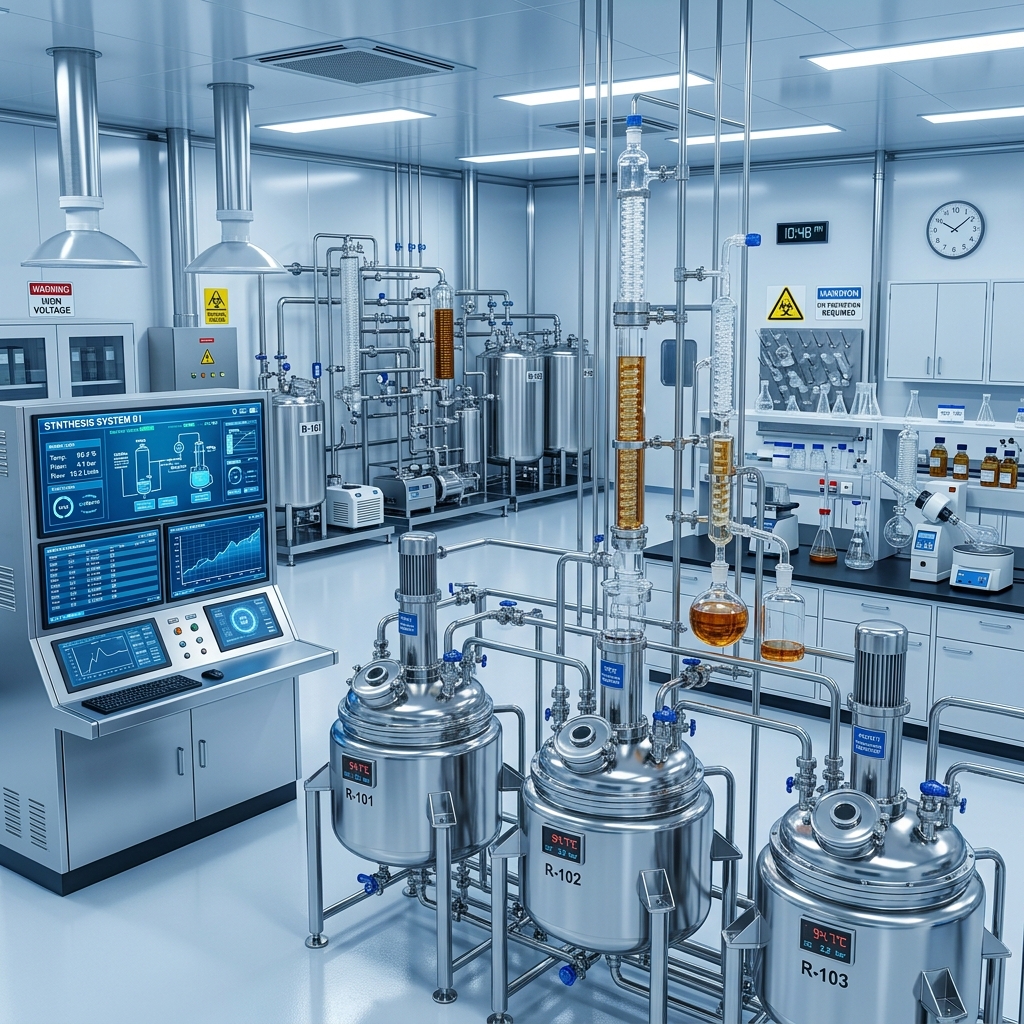
The transition from a successful laboratory prototype to a full-scale manufacturing business is one of the most volatile phases for any chemical startup. While the chemistry may work perfectly in a 500ml beaker, the physics of a 5,000-liter stainless steel reactor introduces complexities that can lead to catastrophic factory shutdowns if not properly managed. In the world of industrial formulations, a single miscalculation in viscosity, pH, or thermal coefficient isn't just a quality issue—it's a massive liability that can threaten the very existence of your facility.
Table of Contents
- 1. Chemical Incompatibility and Reaction Hazards
- 2. The Scale-Up Heat Transfer Crisis
- 3. Raw Material Variability and Sourcing Errors
- 4. pH Imbalance and Equipment Corrosion
- 5. Neglecting Regulatory Documentation (MSDS/GHS)
- 6. Technical Comparison: Common Formulation Disasters
- 7. Industrial Safety Management FAQs
Entrepreneurs often focus heavily on market fit and industry profits, sometimes overlooking the deep technical rigor required to sustain a safe manufacturing environment. Technical excellence is the foundation of long-term viability; without it, the risk of equipment damage, employee injury, and environmental fines becomes an unavoidable reality. Every formulation mistake covered here also carries a direct cost impact — rejected batches, downtime, and rework all erode margin, so pairing this safety guide with a proper formulation cost analysis gives founders the full operational picture. This guide explores the most dangerous formulation mistakes we have encountered in industrial consulting and provides actionable strategies to ensure your factory stays operational and profitable.
1. Chemical Incompatibility and Reaction Hazards
One of the primary causes of unexpected factory incidents is the inadvertent mixing of incompatible chemical species during the formulation process. This often happens not during the intentional blending of the product, but during raw material storage, line changeovers, or improper cleaning of shared equipment between batches. When two incompatible materials meet, the resulting reaction can be violent, releasing toxic gases or generating excessive heat that exceeds the reactor's design specifications.
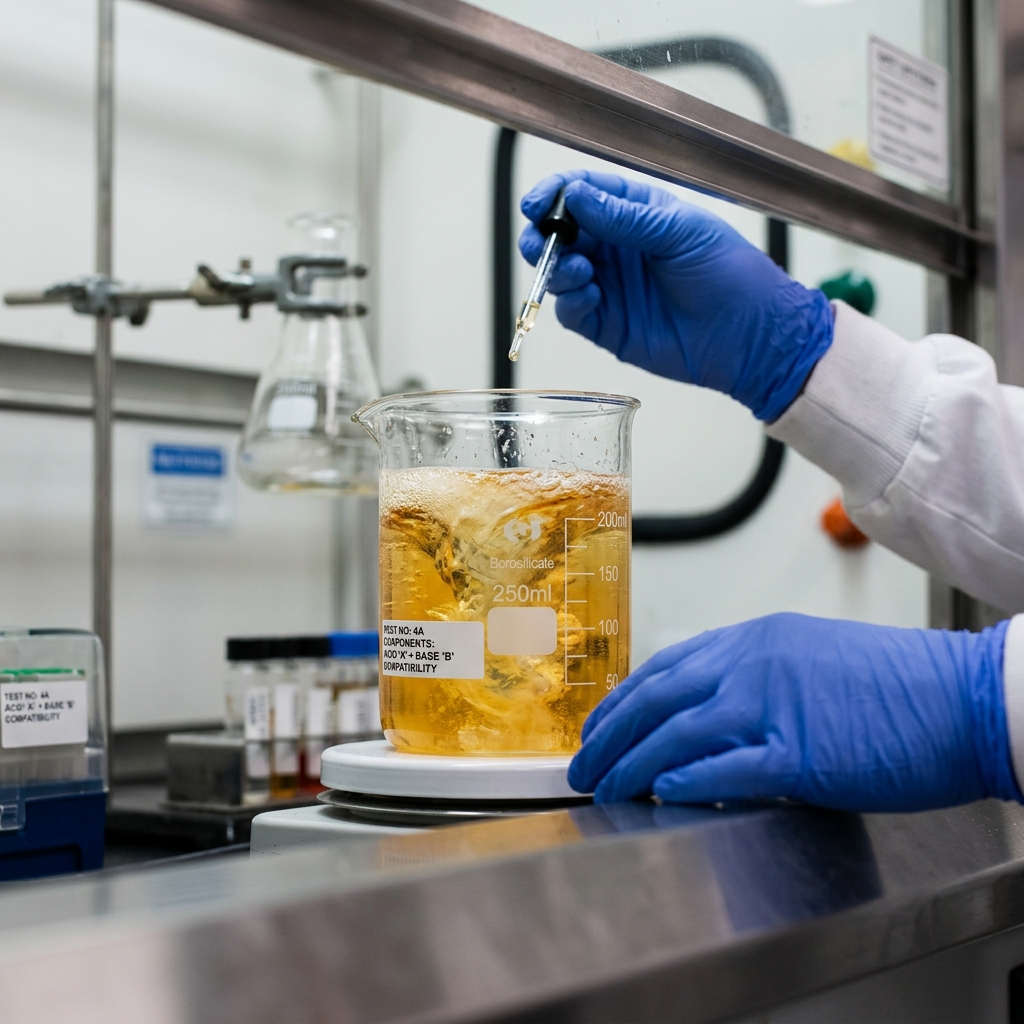
To prevent these hazards, a comprehensive compatibility matrix must be established before any manufacturing begins. This is particularly critical in startups where equipment is often multi-purpose and storage space is limited — a common setup for founders following a contract manufacturing or toll-blending model rather than owning a dedicated line for a single product. Relying on memory or "common sense" is a leading cause of industrial accidents; instead, data-driven safety protocols must be integrated into every step of the manufacturing business.
- Oxidizer/Reducer Segregation — Never store oxidizing agents near combustible organic materials or reducing agents.
- Cross-Contamination Protocols — Implement validated cleaning procedures for tanks and transfer lines, especially when switching between anionic and cationic surfactants.
- Small-Scale Compatibility Testing — Perform "jar tests" with every new batch of raw materials to ensure no unexpected turbidity, precipitation, or gas evolution occurs.
2. The Scale-Up Heat Transfer Crisis
Many entrepreneurs fail to realize that as you increase the volume of a formulation, the surface-area-to-volume ratio decreases significantly, making heat dissipation much more difficult. In a small lab flask, heat generated by an exothermic reaction (like the neutralization of a sulfonic acid) escapes easily. However, in a massive industrial reactor, that same heat can build up rapidly, trigger a thermal runaway, and cause a "boil-over" or vessel rupture. The underlying physics is a scaling mismatch: reaction heat generation scales with vessel volume (a cubic function of size), while the cooling jacket's heat-removal capacity scales with surface area (a square function of size) — so a reaction that dissipates heat safely in a lab flask can self-heat uncontrollably in a production-scale reactor built to the same recipe.
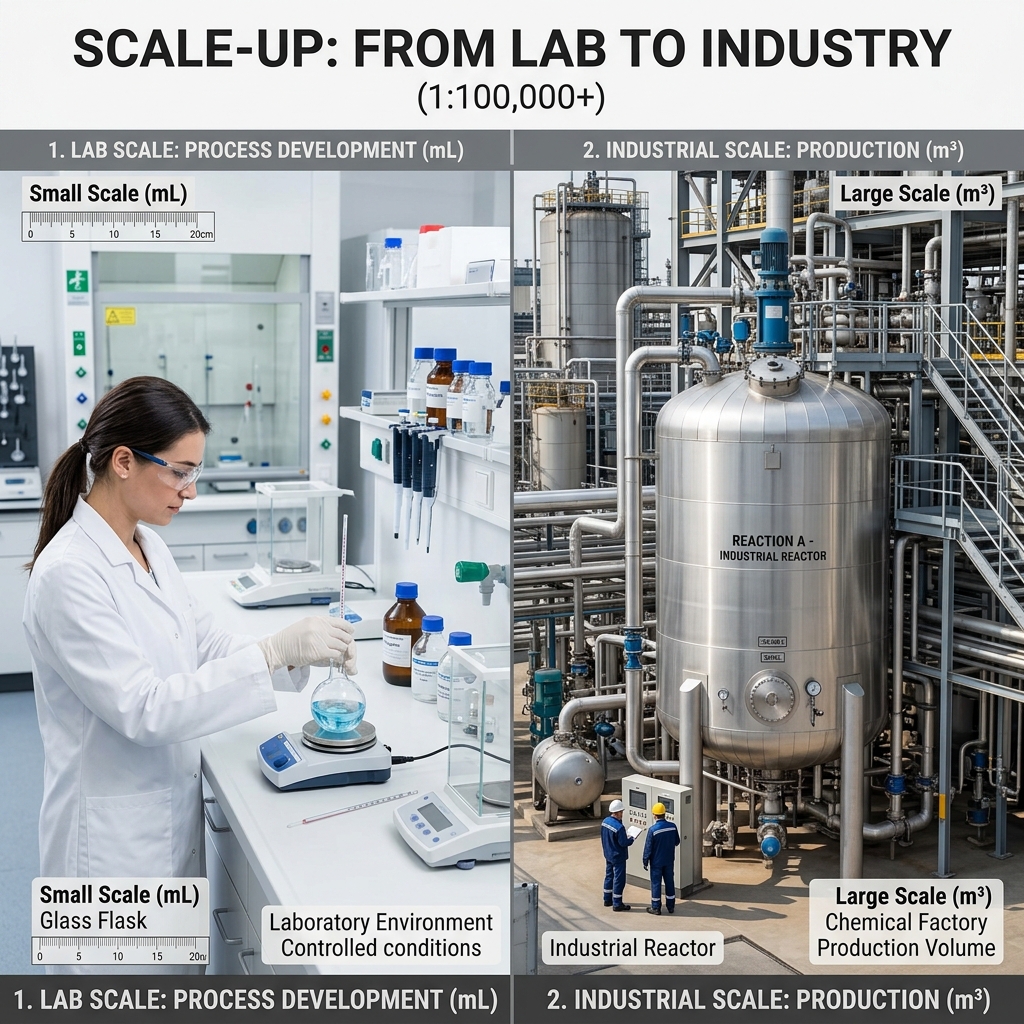
This "Scale-Up Trap" has bankrupted many startups that attempted to move too fast from lab success to mass production. Without a proper thermal analysis and a cooling system rated for the reaction's peak exotherm, the factory risks complete mechanical failure. Accounting for the specific heat capacity of your formulations is not an option; it is a fundamental requirement for industrial safety and process control.
- Controlled Addition Rates — Never dump bulk reactive ingredients all at once; use metered dosing based on real-time temperature feedback.
- Jacketed Reactor Validation — Ensure your cooling water flow rate is sufficient to maintain the reaction temperature within the specified "Safe Operating Window."
- Viscosity Monitoring — High-viscosity formulations reduce mixing efficiency, leading to "hot spots" within the tank that can trigger localized reactions.
3. Raw Material Variability and Sourcing Errors
In a global marketplace, raw material consistency is never guaranteed, and assuming that every batch of "Grade A" surfactant is identical is a dangerous mistake. Slight variations in impurity profiles, active matter concentrations, or even the trace presence of heavy metals can completely destabilize a complex formulation. When a manufacturing business relies on cheaper, unverified sources to boost industry profits, they often pay a much higher price in the form of rejected batches and factory downtime.
Establishing a robust quality assurance program for incoming materials is the only way to safeguard your facility. Every supplier must provide a Certificate of Analysis (COA), but more importantly, your internal lab must verify the "critical to quality" parameters before the material is allowed into the production line. This prevents the nightmare scenario of finishing a 10-ton batch only to find it does not meet specifications — a risk that should already have been engineered out during the pilot-scale phase described in our lab-to-market commercialization roadmap.
- Active Matter Verification — Volumetric or gravimetric analysis to ensure you are not adding too much or too little of a functional ingredient.
- Impurity Fingerprinting — Using pH, conductivity, or HPLC to detect unauthorized changes in the raw material's composition.
- Supplier Audits — Periodically visit manufacturing sites to ensure the quality systems they claim to have are actually in place.
4. pH Imbalance and Equipment Corrosion
Industrial chemical equipment like 316L stainless steel is incredibly durable, but it is not invincible. Formulations with extreme pH levels or high chloride content can initiate pitting corrosion or "stress corrosion cracking" if not neutralized or inhibited correctly. Chloride ions attack the passive chromium oxide film that gives stainless steel its corrosion resistance, forming localized acidic pits that self-propagate once initiated. A seemingly minor formulation error that leaves a product slightly too acidic and chloride-rich can eat through a reactor wall in weeks, leading to catastrophic leaks that halt production and require expensive, specialized repairs.
Equipment integrity is directly tied to formulation stability. If your product drifts in pH over time due to a lack of buffering systems, you are essentially storing a corrosive agent in your facility. This is why understanding the ionic interaction between your chemical species and your metallurgy is a core competency for any industrial formulator or process engineer.
- Passivation Protocols — Regularly passivate stainless steel surfaces to maintain the protective chromium oxide layer.
- Buffering Agents — Include technical-grade buffers like TEA or Phosphates to prevent pH drift during long-term storage.
- Metallurgical Compatibility — Consult with chemical engineers to ensure your seal materials (Viton, EPDM) are compatible with your solvents and active ingredients.
5. Neglecting Regulatory Documentation (MSDS/GHS)
A factory can be shut down by a fire, or it can be shut down by a government inspector with a clipboard. Operating a manufacturing business without updated Safety Data Sheets (SDS) and proper GHS labeling is a high-risk gamble. Regulatory bodies such as OSHA and ECHA have the authority to suspend operations immediately if they find that workers or the environment are at risk due to lack of information.
Many startups view documentation as a secondary task, but it is actually a primary safety control. Accurate SDS documentation ensures that emergency responders know exactly how to handle a spill or fire involving your formulations. In the United States, facilities that store hazardous chemicals above threshold quantities also fall under the EPA's Risk Management Program, which requires a formal accident-prevention plan on top of standard SDS and GHS obligations. Furthermore, as the world moves toward sustainability, understanding volatile organic compounds and pollution is critical for maintaining your license to operate in modern industrial zones. If you are unsure whether your documentation and safety systems meet current expectations, working with an experienced product development consultant before scale-up is far cheaper than a post-incident shutdown.
- Emergency Response Information — Section 4 and 5 of your SDS must be verified by a safety professional.
- Waste Characterization — Ensure you have a clear plan for disposing of wash-water and off-spec material based on its chemical hazard profile.
- GHS Pictograms — Every container in your factory must be labeled with the correct hazard symbols to prevent misuse.
6. Technical Comparison: Common Formulation Disasters
To systematically navigate and mitigate high-risk points of failure during the commercialization of chemical formulations, process engineers must map the potential points of mechanical and physical vulnerabilities. The comparative matrix below outlines critical industrial failures—ranging from poor buffering dynamics and uncontrolled exotherms to unverified supply chain sourcing. By understanding the immediate operational impact and long-term mechanical consequences of each mistake, chemical startups can establish proper engineering guardrails and prevent costly production delays or catastrophic equipment damage.
7. Industrial Safety Management FAQs
Managing a chemical manufacturing business requires maintaining a culture of continuous technical education, rigorous facility safety, and active GHS and OSHA regulatory compliance. The following frequently asked questions provide deep technical insights into common operational queries faced by startup entrepreneurs and lab technicians. These answers detail critical guidelines spanning electrostatic discharge hazards, warehouse freeze-thaw stability dynamics, basic QC desks setup, and metallurgical chemistry configurations.
What is the most common cause of industrial chemical fires?
The most common cause is the "Static Spark" or "Improper Grounding" during the transfer of flammable solvents into a mixing vessel. If your formulations include alcohols, hydrocarbons, or acetates, you must ensure all equipment is electrically bonded and grounded to prevent electrostatic discharge.
How can I verify a raw material if I don't have a full analytical lab?
Even a basic "QC Desk" can perform critical checks. Measuring refractive index, specific gravity, and pH can detect over 80% of major raw material errors or dilutions. Investing in these three affordable tools is the first step for any chemical startup.
Can a bad formulation really destroy a stainless steel tank?
Absolutely. High chloride levels in an acidic environment (like a poorly formulated heavy-duty descaler) can cause pitting corrosion in 304 or 316 stainless steel within hours. Always check the metallurgy of your seals and vessels against the chemical compatibility charts.
Why did my formula work in the lab but separate in the warehouse?
This is usually a result of poor "Freeze-Thaw" or "Oven Stability" testing. Lab samples are kept in controlled environments, but warehouse temperatures can fluctuate wildly. Every formulation must undergo accelerated aging tests at 45°C for 90 days before launch.
What is GHS and why is it mandatory for my factory?
GHS stands for the Globally Harmonized System of Classification and Labelling of Chemicals. It is a worldwide standard that ensures all hazardous properties of a chemical are communicated clearly. Failure to follow GHS can result in heavy fines and legal liability during an audit.
What is the 'Safe Operating Window' for a chemical reactor?
It is the range of temperature, pressure, and mixing speed within which a reaction can be safety controlled. Moving outside this window (e.g., mixing too fast and creating cavitation) can lead to equipment fatigue and mechanical failure.
About the Specialist
Absar Khan is a senior industrial consultant with cross-disciplinary expertise spanning pharmaceutical manufacturing, cosmetics and personal care, home and institutional care chemicals, aerosols, lubricants, and advanced process engineering. His work integrates multiple scientific and engineering domains, including formulation chemistry, GMP facility design, validation science, quality systems, regulatory compliance, and large-scale manufacturing optimization.
LinkedIn Portfolio: Connect with Absar Khan on LinkedIn
Protect Your Factory with Expert Formulation Support
Discuss your chemical compatibility matrix, scale-up exotherm mitigation, raw material validation desks, GHS safety audits, and custom stability testing protocols with lead industrial consultant Absar Khan.
Email: consulting@globalformulation.com
Phone: +91 9819548320 +91 8169102990