Manufacturing Without a Factory: MaaS Ecosystem Guide

A practical, technically grounded guide to launching highly scalable physical products without owning a factory. Discover how integrating laboratory-grade R&D, rigorous process capability parameters, and compliant third-party manufacturing facilities allows D2C startups and global brands to thrive without heavy capital investments.
Guide Contents
1. Why Traditional Factory Ownership Is No Longer the Default Choice
For decades, industrial manufacturing was structurally inseparable from direct factory ownership. If a business wanted to market a chemical formulation, aerosol, personal care lotion, or high-performance lubricant, the entrepreneur was forced to purchase industrial land, contract utility installations, source processing machinery, and hire full-time personnel. This capital-intensive model created extremely high startup barriers and locked valuable capital into illiquid, depreciating assets before any customer demand had been validated.
In the modern economic landscape, this capital-heavy model introduces severe structural vulnerabilities for growing brands. Upfront CapEx allocations limit a brand's strategic flexibility, leaving very little budget for critical marketing, brand positioning, and distribution partnerships. Furthermore, fixed operational costs—such as property leases, utility maintenance, plant compliance audits, and operator salaries—continue to drain cash flow even during seasonal demand declines or market downturns.
Additionally, owning a physical facility restricts a startup's operational flexibility. If consumer preferences shift toward new ingredients or alternate packaging formats, modifying an owned production line is slow and prohibitively expensive. Entrepreneurs become overwhelmed by minor equipment failures, labor relations, local pollution control boards, and standard warehouse management, losing focus on branding and customer relationships.
| Dimension | Traditional Factory Ownership | MaaS Model |
|---|---|---|
| Upfront Capital | Large CapEx: land, building, equipment | Near-zero; R&D and registration only |
| Cost Structure | Fixed costs continue even in low-demand periods | Variable OpEx scaling directly with unit sales |
| Formulation Flexibility | Slow, expensive line changes | Rapid reformulation across audited partner plants |
| Quality Governance | In-house, directly controlled | Requires external R&D oversight and plant audits |
2. The Rise of Manufacturing as a Service (MaaS) in India
Manufacturing as a Service (MaaS) has emerged as the logical solution to these traditional manufacturing constraints. It represents a paradigm shift where physical production capacity is accessed as a flexible, on-demand service rather than an owned asset. Brands pay only for the physical units produced, transforming what used to be a massive, risky capital investment into a highly predictable, variable cost directly aligned with sales revenue.
This model is heavily supported by the Indian government's focus on small and medium enterprises. The Ministry of MSME provides extensive cluster support, technology credit upgrades, and digital supply chain facilitation. Entrepreneurs can access these official schemes through msme.gov.in. Similarly, startups seeking incubation support and regulatory compliance facilitation can partner with the national Startup India initiative to access specialized fast-track processing.
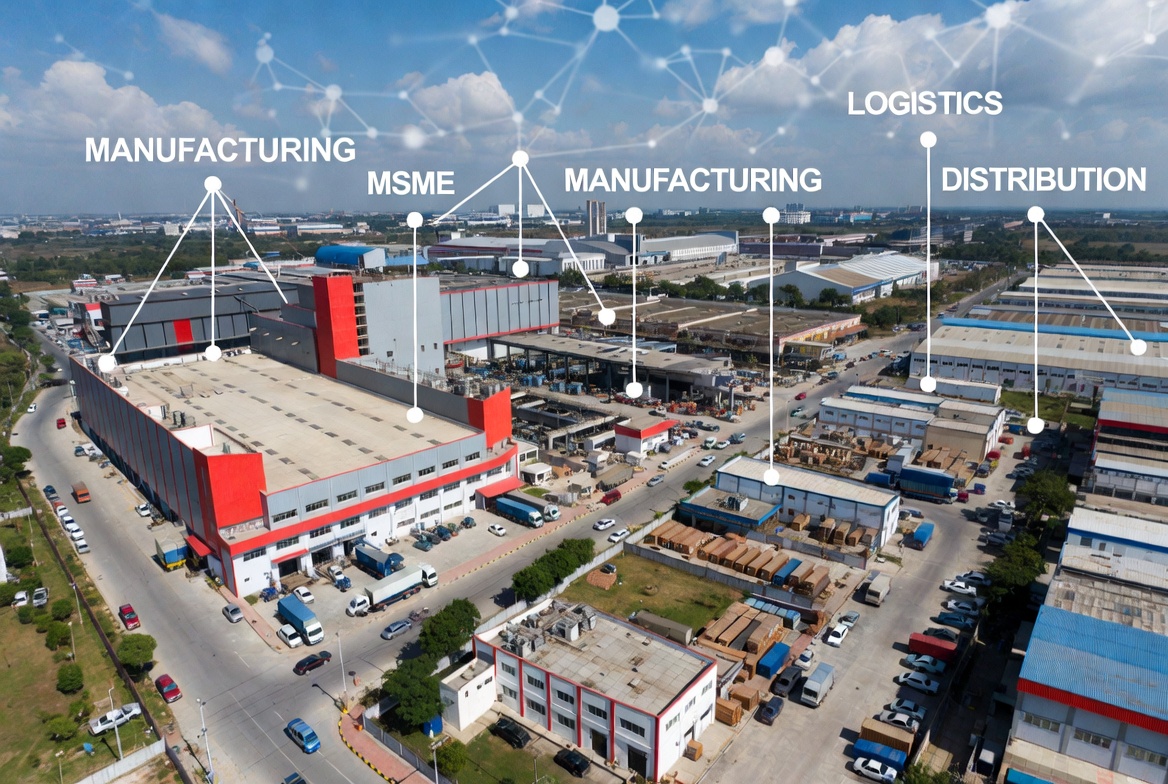
India has rapidly become an international hub for MaaS due to its extremely dense network of specialized MSME processors. Process industries—such as paints, household cleaners, and automotive fluids—benefit from deep domestic chemical synthesis, cheap raw materials, and skilled process engineers. This creates a flexible ecosystem where startups can move from early prototypes to mass production in a fraction of the time required to build a factory.
3. Why MaaS Alone Is Not Enough
Despite its benefits, pure-play contract manufacturing introduces significant technical risks if executed without strong scientific oversight. Most third-party processors are capacity providers, not research laboratories. When an entrepreneur approaches a contract manufacturer with a generic internet recipe, the processor will simply run the formulation in their blenders without validating its chemical stability, phase compatibility, raw material purity, or long-term packaging interactions.
This lack of scientific governance leads to common post-launch product failures. Emulsions separate in cold warehouses, active ingredients hydrolyze under varying pH levels, and metal aerosol cans corrode due to lack of electrolyte buffers. Startups often suffer from batch-to-batch inconsistencies when manufacturers substitute raw materials to optimize their own internal margins, causing reputational damage and expensive product recalls. A wider survey of these dangerous formulation mistakes shows the same root cause repeating across industries: skipping scientific validation to save time early in development.
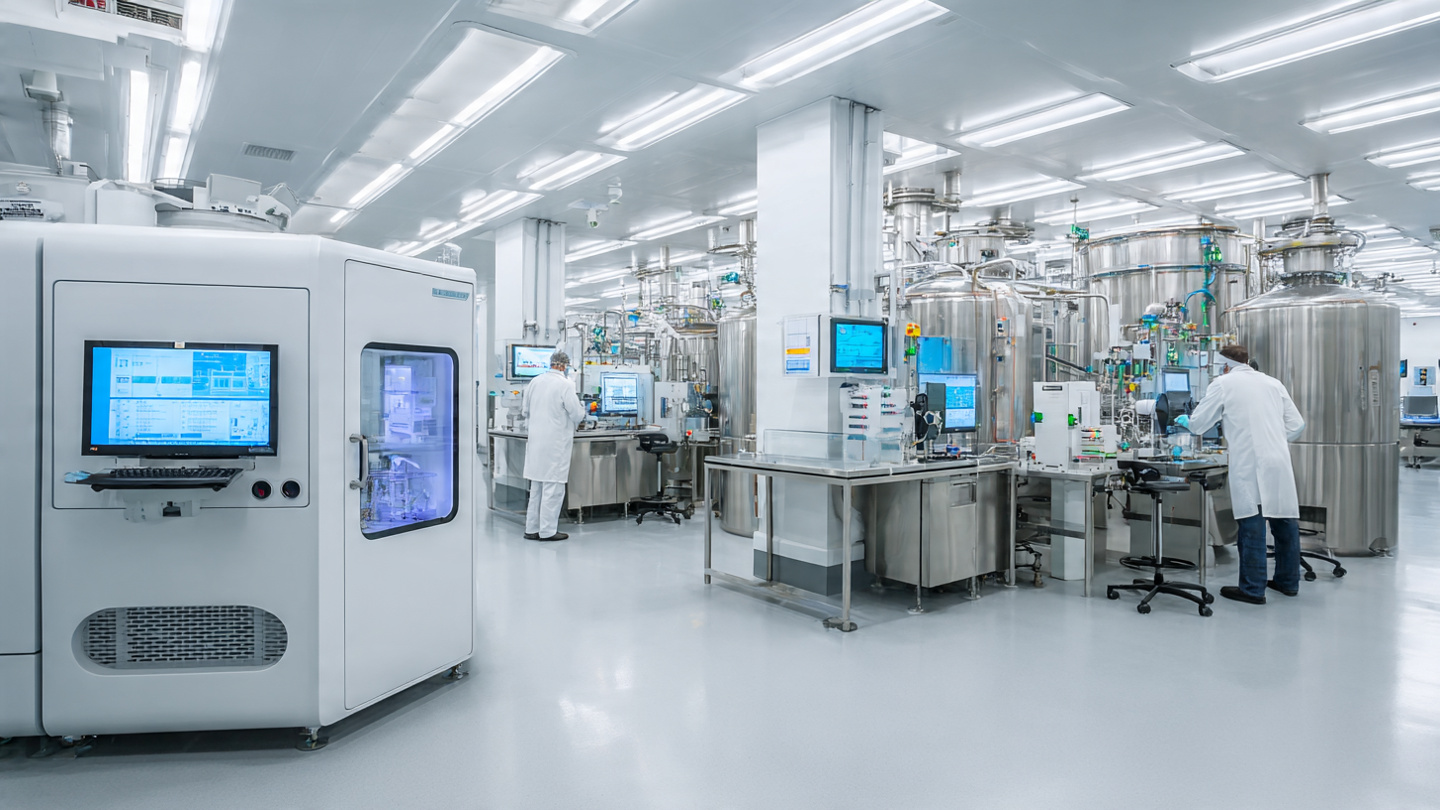
Global Formulation bridges this critical gap by integrating scientific R&D directly into the MaaS journey. We develop stable, high-performance formulations in our laboratory, establish precise process control instructions, run accelerated stability tests, and perform rigorous quality audits on prospective manufacturing sites. This process converts contract manufacturing from a risky capacity arrangement into a highly controlled, reliable, and scientifically robust production ecosystem. For founders still evaluating fit, our guide on choosing the right product development consultant outlines the specific technical checklist to apply before signing an engagement.
4. Financial Optimization: CapEx to OpEx Net Present Value (NPV) Models
Decoupling manufacturing from physical factory ownership is fundamentally an exercise in capital optimization and risk reduction. By converting heavy upfront capital investments into flexible, pay-as-you-scale operating expenses, brands can maximize their financial efficiency. This financial leverage is mathematically expressed through standard capital budgeting and discounted cash flow models.
The Net Present Value (NPV) of a product launch comparing traditional factory ownership against a Manufacturing-as-a-Service (MaaS) approach is defined by the capital investment equation:
Where:
- NPV is the Net Present Value of the physical product line.
- CFt is the net cash flow generated by the product at year t.
- r is the cost of capital or discount rate.
- CapEx0 is the initial cash outlay required to establish the physical plant (land, buildings, equipment).
In the traditional factory ownership model, CapEx0 is a massive negative value, requiring years of profitable cash flow (CFt) just to break even. Under the MaaS model, CapEx0 is reduced to near-zero, representing only formulation R&D and registration fees. The actual manufacturing costs are converted into variable Operational Expenses (OpEx) that scale directly with unit sales, significantly increasing the Net Present Value (NPV) and driving a much higher Internal Rate of Return (IRR) on startup capital. Founders modeling this trade-off in detail should also review our dedicated breakdown of formulation cost vs market price analysis to avoid under-pricing products once contract manufacturing margins are added in.
5. Process Capability Indices (Cpk) Governing Contract Manufacturing
Outsourcing production to third-party plants introduces the risk of batch-to-batch variation, which can compromise product quality and performance. To ensure consistent quality across different production runs, manufacturers must monitor the process capability of contract facilities. This operational consistency is measured using the statistical Process Capability Index (Cpk).
The process capability index (Cpk) evaluates how closely the contract manufacturer's production matches the product's design specifications:
Where:
- USL and LSL are the Upper and Lower Specification Limits of the product (e.g., active ingredient %, viscosity, density).
- μ is the statistical mean value of the manufactured batches.
- σ is the standard deviation (variability) of the manufacturing process.
Without laboratory-grade R&D controls and raw material standards, contract processes often display high standard deviation (σ), leading to a low capability index (Cpk < 1.0), which results in out-of-specification batches and failed product runs. Global Formulation protects quality by standardizing raw materials, establishing tight process controls, and auditing plant equipment to ensure the manufacturing process maintains a capability index of Cpk ≥ 1.33 (4-sigma quality control), ensuring excellent product consistency. Every accepted batch should also carry matching MSDS, TDS, and COA documentation so the brand owner has independent, batch-level proof that the contract plant met the agreed specification.
6. From Concept to Commercial Production: A Practical Workflow
Decoupling manufacturing from factory ownership requires a structured development workflow to transition a product concept safely from the laboratory bench to large-scale commercial production. Without a defined scale-up plan, attempting to manufacture thousands of liters of a complex liquid formulation in a third-party plant can result in manufacturing issues, excessive waste, and costly delays. Our companion guide on the differences between R&D, pilot scale, and commercial manufacturing covers each of these transition points in more technical depth.
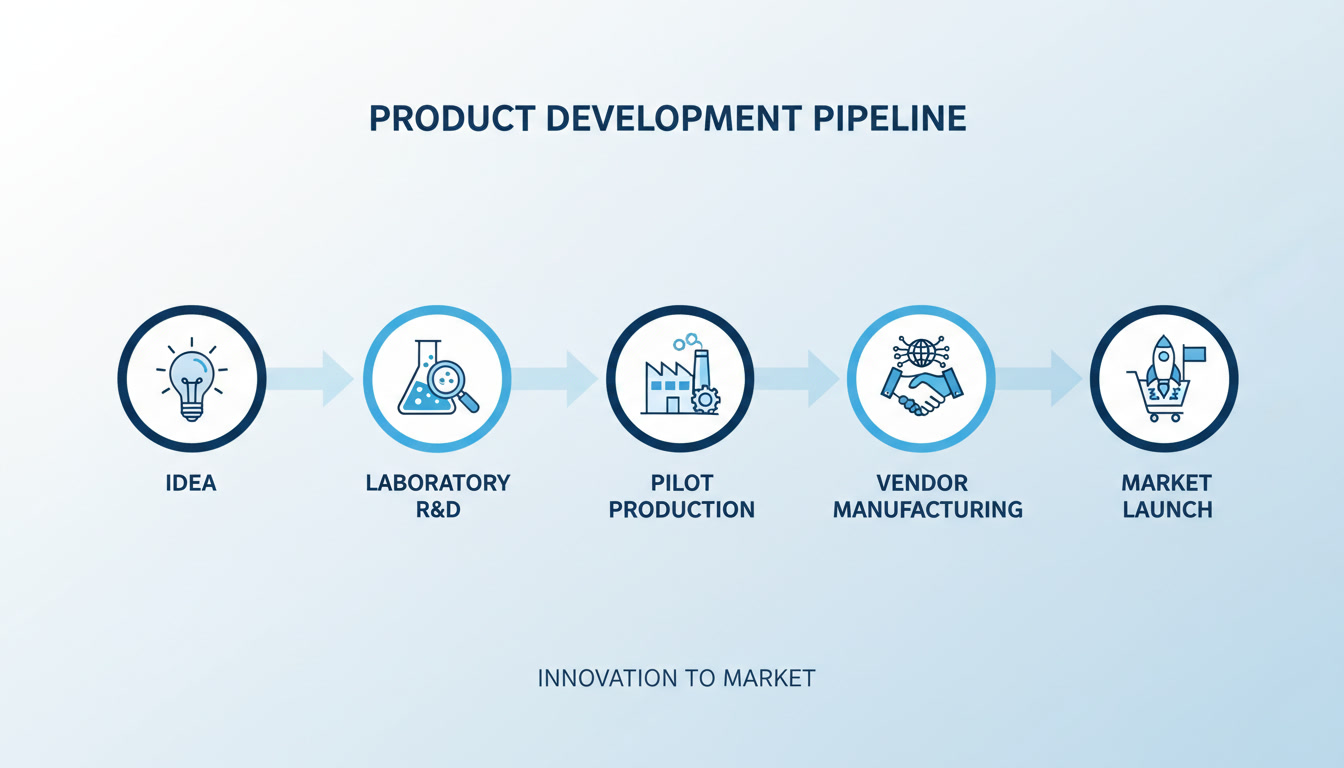
A standardized, risk-minimized scale-up sequence includes the following key phases:
- Product Specification Definition: Defining the application target, performance benchmarks, costing guidelines, packaging requirements, and necessary regulatory compliance standards.
- Laboratory Development and Prototype Testing: Sourcing raw materials from verified suppliers, developing the target formulation, and performing accelerated stability, pH compatibility, and temperature cycling tests.
- Process Mapping and Parameter Control: Translating the lab process into precise manufacturing instructions (including blending speeds, heat addition, shearing durations, and feed rates) tailored to the contract plant's machinery.
- Controlled Pilot-Scale Production: Manufacturing small-scale pilot batches (e.g., 100 to 500 liters) to evaluate real-world product stability, process parameters, and packaging interactions.
- Full Commercial Production and Quality Auditing: Transitioning the validated process to full-scale commercial batches while implementing rigorous quality audits, in-line sampling, and batch release protocols.
7. Who Benefits the Most and Industries Where MaaS Succeeds
Decoupled manufacturing is highly beneficial for growing businesses that prioritize speed-to-market, financial efficiency, and operational agility. Startups can compete effectively with established brands by utilizing high-quality contract manufacturing networks, bypassing the large capital investments traditionally required to establish industrial operations.

The primary groups that benefit from this R&D-led MaaS model include:
- First-Time Chemical and FMCG Entrepreneurs: Who can enter technical product markets with significantly reduced capital risk and professional chemical validation.
- D2C Brand Founders: Who can rapidly launch and expand their product lines, shifting capital from factory operations to brand building, digital marketing, and customer acquisition.
- Established Manufacturers: Who can test new product variations or adjacent lines without disrupting their core plant operations or committing capital to new equipment.
- Specialty Chemical and Process Sectors: Including Paints & Coatings, Lubricants & Fluids, Household & Industrial Cleaners, and Cosmetics & Personal Care Formulations.
Frequently Asked Questions (FAQ)
1. Can a startup really launch without owning any production facility?
Yes. With a robust technical framework, standardized raw materials, and qualified contract manufacturing partners, physical asset ownership is no longer a prerequisite for commercial success in technical chemical or consumer product markets.
2. Is quality compromised in the Manufacturing as a Service (MaaS) model?
Quality is a function of process control, raw material specifications, batch audits, and scientific R&D—not physical plant ownership. Implementing strict process parameters (maintaining Cpk ≥ 1.33) ensures excellent product consistency at contract plants.
3. Is this model suitable for regulated industries like pharmaceuticals or chemicals?
Yes. Regulated products can be successfully contract manufactured, provided that GMP documentation, analytical validation, and regulatory dossiers are established during the laboratory development phase.
4. How scalable is the MaaS approach?
MaaS is highly scalable. Production volumes can be adjusted or transitioned between pre-audited facilities to accommodate changes in sales velocity, without requiring capital expenditure for new physical lines.
5. At what stage does it make sense to invest in a factory?
Investing in a proprietary facility is typically recommended only after achieving a stable baseline demand volume, predictable cash flows, and fully optimized and stabilized formulations.
6. How is formulation intellectual property protected when using a contract manufacturer?
Brands typically retain formulation ownership through a signed non-disclosure and manufacturing agreement, while sharing only the process-ready blending instructions the contract plant needs to run the batch, not the full raw material sourcing or ratio rationale. Critical proprietary components are often pre-mixed as sealed masterbatches supplied to the plant rather than dosed from individual raw materials on-site, limiting the plant's visibility into the complete formulation.
Conclusion
Manufacturing without a factory represents a strategic pathway for capital-efficient, fast-growing brands. By decoupling brand ownership from the operational complexities of physical plant management, entrepreneurs can focus their resources and energy on market validation, brand development, and sales growth.
To succeed in decoupled manufacturing, brands must establish strong technical governance over their product formulations. Partnering with a specialized R&D and engineering enablement firm ensures your products are built with high technical consistency, reliable quality control, and complete regulatory compliance.
Ready to Launch Your Factory-Free Product?
Discuss your physical product roadmap with Global Formulation. Sourced pre-audited MSME contract manufacturers, secure fully optimized lab formulations, and build a scalable, capital-light business.
Email: consulting@globalformulation.com
Phone: +91 9819548320 +91 8169102990
About the Specialist
Absar Khan is the principal consultant and chemical formulation architect at Global Formulation. He possesses cross-disciplinary engineering expertise spanning agrochemical milling lines, aerosol packaging systems, pharmaceutical cleanroom layouts, cosmetics, and green chemical plant setups. Absar leads scientific and engineering advisory teams supporting manufacturers globally in technology selection, GMP layouts, validation frameworks, and regulatory strategies.
LinkedIn Portfolio: Connect with Absar Khan on LinkedIn