Metal Coating Pretreatment: Why Surface Prep Matters
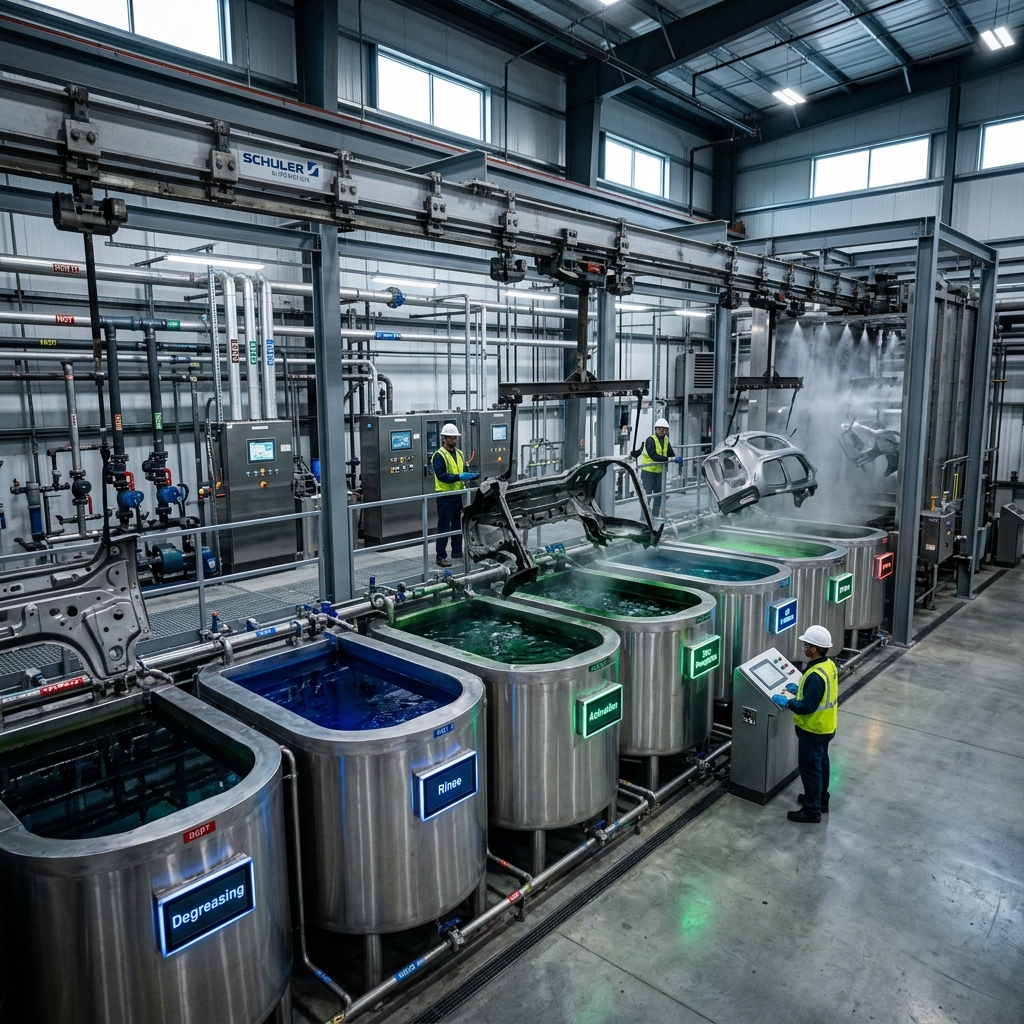
In industrial chemical manufacturing and protective metal finishing, the ultimate performance and lifetime of a protective coating are rarely determined by the paint itself. Instead, they are dictated by the chemical architecture of the interface that lies directly beneath. Pretreatment represents the invisible, safety-critical science that ensures finished products survive decades of extreme environmental exposure without experiencing sudden, catastrophic failures like horizontal paint delamination or under-film rust propagation. Developing a high-performance coating system requires deep technical control over metal surface chemistry, conversion reactions, and physical-chemical passivation, within the broader discipline of industrial paints and coatings formulation.
Beyond the Surface: Why Pretreatment Dictates Coating Success
Metal coating pretreatment is fundamentally different from a simple cleaning or washing step. It is the electro-chemical process of permanently altering the surface energy, topography, and molecular composition of a metallic substrate to make it highly receptive to an organic liquid or powder coating. Without an engineered conversion layer, even the most advanced epoxy, polyurethane, or fluoropolymer resins act as loosely bound membranes over the base metal. This leaves the system vulnerable to moisture permeation, mechanical stress, and electrochemical galvanic corrosion at the coating-substrate boundary.
To prevent failure, pretreatment is designed to achieve two primary engineering objectives: mechanical interlocking and atomic purity. Raw industrial metals (such as cold-rolled steel, hot-rolled steel, galvanized steel, or aluminum) are coated with oily residues, mill scale, rust, and carbon dust during rolling, stamping, and machining. Pretreatment removes these non-visible organic films and physically converts the smooth metal into a micro-etched, highly polar, crystalline mineral layer. This increases the active surface area by up to 500%, providing physical "teeth" that the liquid resins can lock into as they cure.
Preventing Under-Film Corrosion and Osmotic Blistering
The primary failure mechanism in coated structures exposed to outdoor environments is osmotic blistering, which occurs when atmospheric moisture permeates through the organic coating. If soluble salts (such as chlorides or sulfates) are trapped on the metal surface due to poor cleaning, they dissolve in the permeated moisture, creating a highly concentrated saline pocket. This establishes an osmotic pressure gradient, drawing more water through the paint membrane and forming high-pressure blisters that crack the coating and expose the steel underneath to oxygen and water. Our dedicated article on paint blistering causes, diagnosis, and prevention covers this failure mode and its corrective strategies in more depth.
A properly executed chemical pretreatment passivates the metal surface, converting highly reactive metallic iron into an inert, inorganic mineral barrier. This passivated layer dramatically reduces the electrochemical potential of the metal, suppressing both the anodic dissolution of iron and the cathodic reduction of oxygen that drive localized galvanic rust cells. By chemically blocking the path of ions, pretreatment provides high creep resistance, preventing rust from spreading horizontally from a point of mechanical impact or scratch, while eliminating filiform corrosion:
- Anodic Suppression: Inhibits the release of metal ions (Fe → Fe2+ + 2e-) at potential corrosion sites on the steel substrate.
- Filiform Corrosion Mitigation: Prevents the worm-like, thread-like corrosion paths that spread rapidly under thin lacquer or paint films in highly humid maritime conditions.
- Passivated Crystalline Interface: Replaces vulnerable native iron oxides with stable, insoluble phosphates or ceramic nano-films that act as a moisture-impermeable shield.
- Creep Prevention: Restricts localized rust propagation to the immediate point of mechanical damage, preserving the integrity of the surrounding coated area.
The Core Industrial Sequence: A Step-by-Step Breakdown
An industrial pretreatment line operates as a series of chemical reactors where each stage is dependent on the chemical success of the stage prior. In a typical continuous spray or multi-stage immersion line, the failure to control parameters—such as titration values, pH, temperature, or rinse water conductivity—will compromise the entire production run. Achieving a high-performance chemical bond requires understanding the specific role and physical chemistry of each processing step.
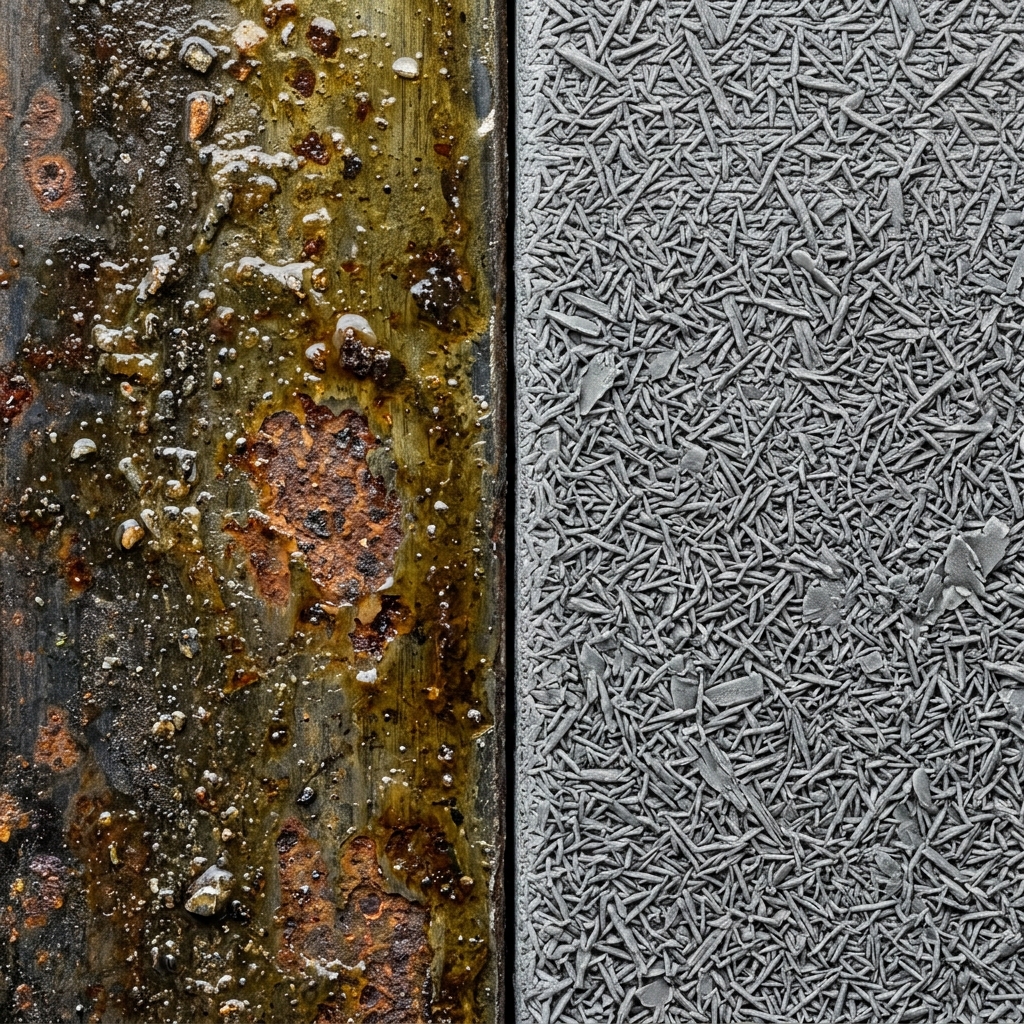
Stage 1: Alkaline Degreasing and Surface Cleaning
The absolute foundation of any pretreatment line is the complete removal of organic contaminants, including paraffinic mineral oils, fatty stamping lubricants, rust-preventative waxes, and general shop soils. This is achieved using alkaline cleaners formulated with builders (such as Sodium Carbonate, Tetrasodium Pyrophosphate, and Sodium Metasilicate) and non-ionic surfactants. The cleaning chemistry relies on two primary physical processes: the saponification of fatty acid ester lubricants into water-soluble soaps, and the micellar emulsification of non-reactive mineral oils.
To maintain cleaning efficiency, chemical bath temperatures are kept above the cloud point of the non-ionic surfactants, typically between 50°C and 65°C. Metasilicate builders are incorporated to provide high buffering capacity and to prevent soil redeposition by imparting a strong negative electrical charge to both the metal surface and the emulsified oil droplets, causing them to repel each other. Surface cleanliness is verified using the Water Break Test: if rinse water sheets off the surface in a continuous, unbroken film, the metal has achieved the required surface cleanliness; if the water beads up, residual hydrophobic oils are still present, and the degreasing bath must be adjusted. The alkaline builder and surfactant chemistry behind these degreasing baths is covered more broadly in our industrial cleaner and degreaser formulation guide.
Stage 2: Pickling and De-Rusting
Following the alkaline cleaner and intermediate fresh-water rinses, acid pickling baths are used to remove heavy inorganic contaminants, such as iron oxides, red rust, and mill scale (magnetite, Fe3O4). This is typically done using hot sulfuric acid (H2SO4) or ambient hydrochloric acid (HCl). The acids chemically dissolve the oxides, leaving a clean, bare metal surface. However, pickling must be tightly monitored with organic corrosion inhibitors.
Without inhibitors, the acid will aggressively attack the underlying bare metal after dissolving the oxides, releasing hydrogen gas. In high-strength steels, this reaction is extremely dangerous; atomic hydrogen is absorbed into the interstitial metal grain boundaries under acidic stress, leading to a catastrophic mechanical failure known as hydrogen embrittlement. Tightly managing pickling times and utilizing amine-based acid inhibitors are critical to prevent this structural hazard.
Stage 3: Conditioning and Activation
After pickling and subsequent rinsing, the metal surface must be conditioned before entering the conversion coating stage. Conditioning baths utilize colloidal suspensions of titanium phosphate salts (known as Jernstedt salts) to prime the metal. These microscopic titanium particles adsorb onto the steel surface, acting as high-density nucleation centers for subsequent phosphate crystal growth.
Without conditioning, the phosphating reaction would proceed slowly from random nucleation sites, producing large, coarse, and highly porous phosphate crystals. These thick, uneven crystals are fragile, increasing paint consumption while providing poor mechanical adhesion. Conditioning ensures that the conversion coating forms rapidly and develops a highly compact, fine-grained, micro-crystalline structure that provides excellent paint adhesion and high flexibility.
4. Zinc Phosphating: The Industrial Gold Standard
For heavy-duty applications demanding maximum corrosion protection—such as automotive bodies, undercarriages, and military vehicles—zinc phosphating remains the industry-standard conversion coating. The chemistry of a zinc phosphating bath is a complex equilibrium of zinc dihydrogen phosphate (Zn(H2PO4)2) dissolved in phosphoric acid (H3PO4). The phosphating reaction is not a simple deposit; it is an electrochemical process driven by the acid's attack on the metal substrate.
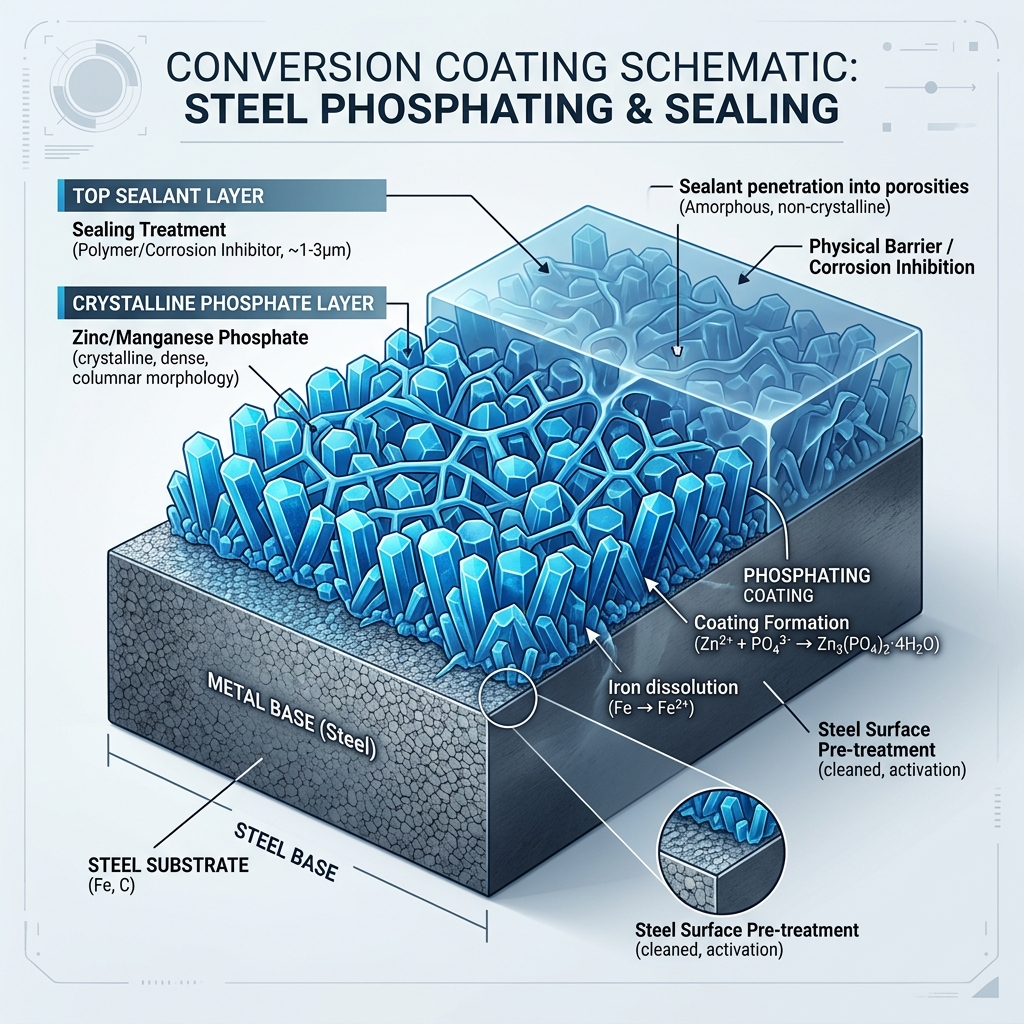
When steel enters the acidic phosphating bath, the phosphoric acid attacks the metallic iron, causing localized iron dissolution and hydrogen gas evolution at the microscopic anodes on the metal surface (Fe + 2H+ → Fe2+ + H2). This reaction depletes hydrogen ions (protons) in the boundary layer immediately adjacent to the metal, causing a rapid local pH increase. This local pH rise shifts the phosphoric acid dissociation equilibrium, converting soluble dihydrogen phosphate ions into insoluble orthophosphate anions (PO43-). These orthophosphate anions react with zinc and dissolved iron in the boundary layer to precipitate highly insoluble, dense crystalline minerals directly onto the metal surface.
The resulting conversion layer consists of two primary crystalline mineral phases: hopeite (Zn3(PO4)2 · 4H2O) and phosphophyllite (Zn2Fe(PO4)2 · 4H2O). The inclusion of iron in the phosphophyllite phase is highly desirable, as it exhibits superior chemical stability in alkaline environments, such as those generated during cathodic electrodeposition (E-coat) priming. To accelerate this reaction and prevent hydrogen gas bubbles from blanketing the metal—which would block the phosphating reaction and cause bare spots—chemical oxidizers (such as sodium nitrite, NaNO2, or nitrates) are added as accelerators. These accelerators depolarize the cathodes by rapidly oxidizing hydrogen to water, ensuring a fast, uniform, and dense crystal layer:
- Hopeite Crystal Phase: Highly insoluble zinc phosphate crystals (Zn3(PO4)2 · 4H2O) providing robust, porous surfaces for mechanical paint locking.
- Phosphophyllite Crystal Phase: Iron-zinc phosphate crystals (Zn2Fe(PO4)2 · 4H2O) formed by reacting with dissolved substrate iron. It offers superior alkaline stability under E-coat primers.
- Depolarizing Accelerators: Nitrites or chlorates that oxidize hydrogen gas to prevent surface insulation, reducing reaction times from minutes to seconds.
- Sludge Management: A natural byproduct of the reaction is the precipitation of insoluble ferric phosphate sludge, which must be continuously filtered out using lamella clarifiers to prevent nozzle clogging.
Zinc phosphate conversion coatings are frequently applied beneath zinc-rich primers for additional galvanic protection; our guide to zinc phosphate primer chemistry and application covers that downstream primer system in detail.
5. Sustainable Shifts: Zirconium and Silane Conversion Coatings
Although traditional zinc phosphating provides exceptional corrosion resistance, it presents significant environmental and operational challenges. The process requires high operating temperatures (45°C to 60°C), generating substantial energy costs, and produces heavy metal effluent and massive volumes of ferric phosphate sludge that must be disposed of as hazardous waste. Furthermore, traditional chromate sealing rinses, which passivate the phosphate crystals, are now globally restricted due to the extreme carcinogenicity of hexavalent chromium (CrVI) — a restriction that also shapes raw-material choices across the wider coatings industry, as covered in our guide to REACH compliance for paint raw materials.
These environmental and regulatory constraints have driven a global shift toward sustainable, chromate-free conversion coatings based on thin-film technology. The leading alternatives are based on hexafluorozirconic acid (H2ZrF6) chemistry. Operating at ambient temperatures, zirconium pretreatments react with the metal substrate, consuming protons and triggering a localized pH rise that hydrolyzes the zirconium complex. This drives the precipitation of a nano-scale, amorphous zirconium oxide ceramic film (ZrO2 · nH2O) on the metal surface, which is extremely thin (10 to 50 nanometers) yet highly resistant to corrosion.
To enhance this nano-ceramic layer, formulators blend zirconium salts with organofunctional silanes (specifically trialkoxysilanes, R-Si(OR')3). These silane molecules hydrolyze in water to form highly active silanol groups (R-Si(OH)3). When applied to the metal, the silanol groups react with hydroxyl groups on the metal surface, forming strong, covalent metal-oxygen-silicon bonds (Me-O-Si). The remaining silane molecules cross-link with each other to build a dense, hydrophobic siloxane network (Si-O-Si) that prevents moisture ingress, while the organic functional groups (R) chemically cross-link with the paint resins during curing. This hybrid organic-inorganic interface provides outstanding adhesion and corrosion protection with zero toxic waste:
- Nano-Ceramic Zirconium Layer: A 20nm amorphous zirconium oxide film providing excellent corrosion resistance and zero toxic sludge.
- Organofunctional Silanes: Trialkoxysilanes that bridge the gap between inorganic metal and organic paints.
- Covalent Me-O-Si Bonding: Strong chemical bonds formed by silanol condensation on the metal oxide surface, far stronger than physical mechanical gripping.
- Siloxane Covalent Networks: Highly cross-linked Si-O-Si polymer structures that act as a barrier against water and oxygen permeation.
6. Physical Quality Control and ASTM Adhesion Testing
In high-stakes manufacturing industries—such as aerospace, defense, and automotive—visual inspections are never sufficient to validate the quality of a chemical pretreatment line. Finished components must undergo rigorous physical testing to ensure that the chemical bond has achieved its mechanical targets. Standardized physical tests simulate extreme thermal and mechanical stresses to verify that the coating will not delaminate or fail under field conditions.
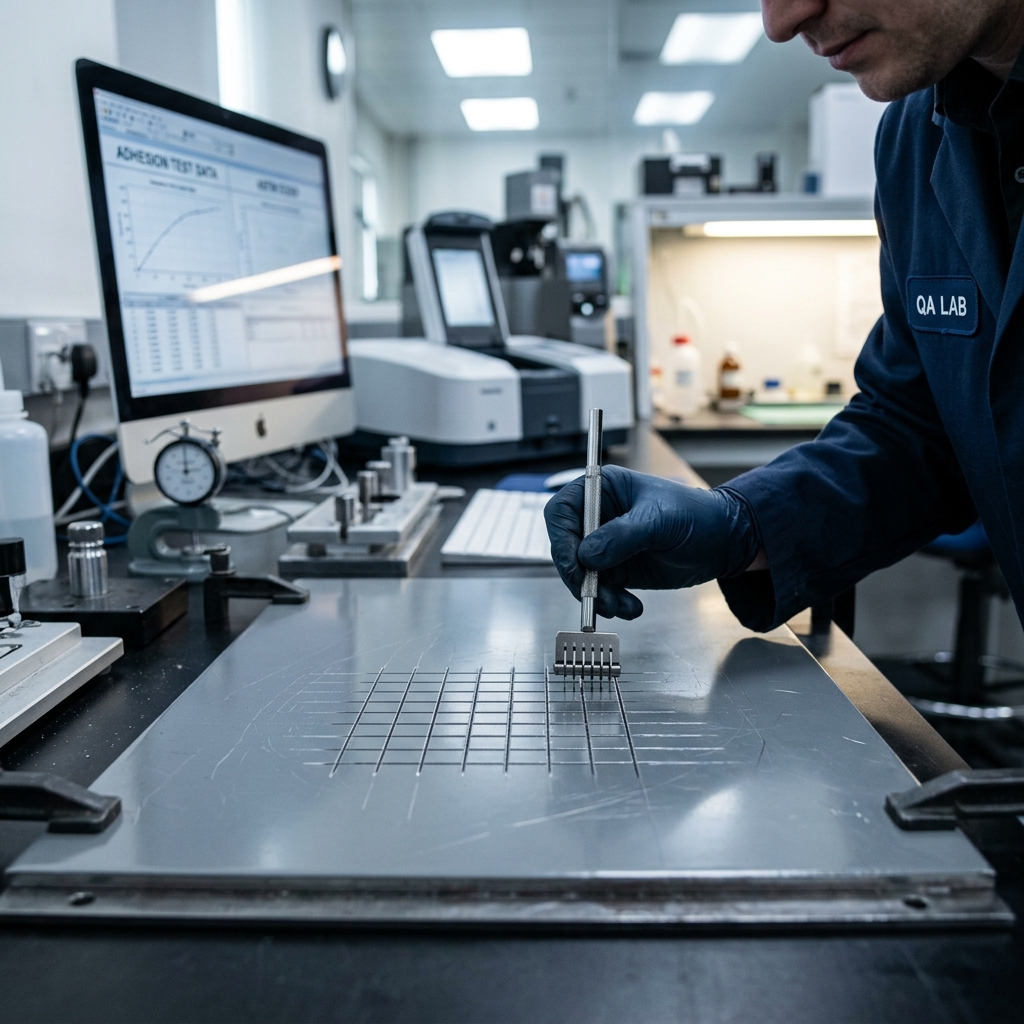
The primary benchmark for mechanical paint adhesion is the Cross-Cut Tape Test, standardized under ASTM D3359. Using a multi-blade cross-hatch cutter, a precise grid of incisions is made through the cured coating down to the metal substrate. A specialized, pressure-sensitive testing tape is applied over the grid, rubbed firmly to ensure contact, and pulled off rapidly at a 180-degree angle. The grid is then inspected under magnification and rated on a scale from 5B to 0B based on the percentage of paint flaking. A 5B rating indicates perfect adhesion with zero chipping at the lattice intersections, while a 0B rating represents complete failure, where more than 65% of the grid squares flake off, indicating a compromised pretreatment bath.
To evaluate long-term environmental durability and passive corrosion protection, treated panels undergo Salt Spray Testing (also referred to as salt fog testing) under ASTM B117. Finished panels are scribed with a deep diagonal scratch down to the metal substrate and placed in a heated environmental chamber. The panels are subjected to a continuous, atomized fog of 5% sodium chloride (NaCl) solution at a constant temperature of 35°C for hundreds or thousands of hours. After exposure, the panels are checked for corrosion "creep"—the distance that rust has propagated horizontally beneath the paint from the scribed scratch. Excellent pretreatments restrict creep to less than 1mm after 1000 hours of salt fog exposure, whereas poorly pretreated systems exhibit extensive paint blistering and massive rust creep, indicating interfacial failure.
7. Strategic Comparison and CAPEX
For industrial manufacturing enterprises, coating consultants, and plant managers designing a new protective finishing line, selecting the correct pretreatment technology is a vital strategic decision. This choice impacts initial capital expenditures (CAPEX), operating energy costs, toxic effluent treatment requirements, and global environmental compliance.
The table below provides a comprehensive industrial comparison of the three primary metal pretreatment technologies:
In summary, while traditional zinc phosphating remains the gold standard for heavy-duty military and structural steel automotive projects with dedicated sludge-filtration plants, modern zirconium and silane thin-film technologies represent the future of industrial pretreatment. They offer comparable, high-durability adhesion with massive energy savings, ambient temperature processing, and complete compliance with global environmental regulations. Selecting the right pretreatment chemistry is the most critical decision a coatings manufacturer will make to ensure long-term brand success and product reliability.
The pretreatment chemistry selected also depends heavily on the downstream coating process: continuous coil coating lines generally favor fast, ambient-temperature zirconium or silane pretreatments to match line speed, while powder coating systems can tolerate the higher cure temperatures of traditional zinc or iron phosphating without affecting the finish.
Frequently Asked Questions (FAQ)
1. Can I skip the pretreatment step if the metal looks clean?
Absolutely not. Visual cleanliness does not equate to chemical cleanliness. Even a fingerprint can contain enough oils and acids to cause local coating failure. Pretreatment also creates the conversion coating necessary for long-term corrosion resistance, which plain clean metal does not possess.
2. What is the difference between Iron Phosphate and Zinc Phosphate?
Iron phosphate is simpler, cheaper, and used primarily for indoor applications (like office furniture). Zinc phosphate is much more complex, expensive, and offers vastly superior corrosion resistance for outdoor or high-stress environments like automotive bodies and heavy machinery.
3. Why is "Water Break Free" important?
The Water Break Test is the simplest way to check for hydrophobic organic grease. If rinse water sheets off the metal perfectly (no breaks), it is water break free—meaning it is chemically clean. If water beads up, there is still residual oil that must be removed before conversion coatings can be applied.
4. Are chromate-free pretreatments as good as traditional ones?
Yes. Advancements in zirconium and silane technologies mean that modern chrome-free systems can now meet or exceed the salt-spray performance of traditional systems while being safer for workers and the environment.
5. How often should I test my chemical baths?
For a continuous production line, titration and pH checks should be performed at least every 4 to 8 hours. Automated dosing systems are highly recommended for maintaining chemical concentration stability, as chemical depletion happens rapidly during high-volume operations.
6. What causes "Flash Rust" after pretreatment?
Flash rust occurs when the metal is left wet for too long before drying, or if the atmospheric humidity in the shop is too high. This is high-speed oxidation that ruins the pretreatment. Ensuring a rapid hot-air dry-off stage is essential to prevent this failure.
Need Metal Pretreatment Formulation & Chemical Process Support?
Discuss your surface chemistry parameters, zinc phosphating bath stability, or chromate-free zirconium-silane setup with industrial specialist Absar Khan.
Email: consulting@globalformulation.com
Phone: +91 9819548320 +91 8169102990
About the Specialist
Absar Khan is a senior industrial consultant with cross-disciplinary expertise spanning pharmaceutical manufacturing, cosmetics and personal care, home and institutional care chemicals, aerosols, lubricants, and advanced process engineering. His work integrates multiple scientific and engineering domains, including formulation chemistry, GMP facility design, validation science, quality systems, regulatory compliance, and large-scale manufacturing optimization.
LinkedIn Portfolio: Connect with Absar Khan on LinkedIn