Pigments vs Dyes: Key Differences & Applications
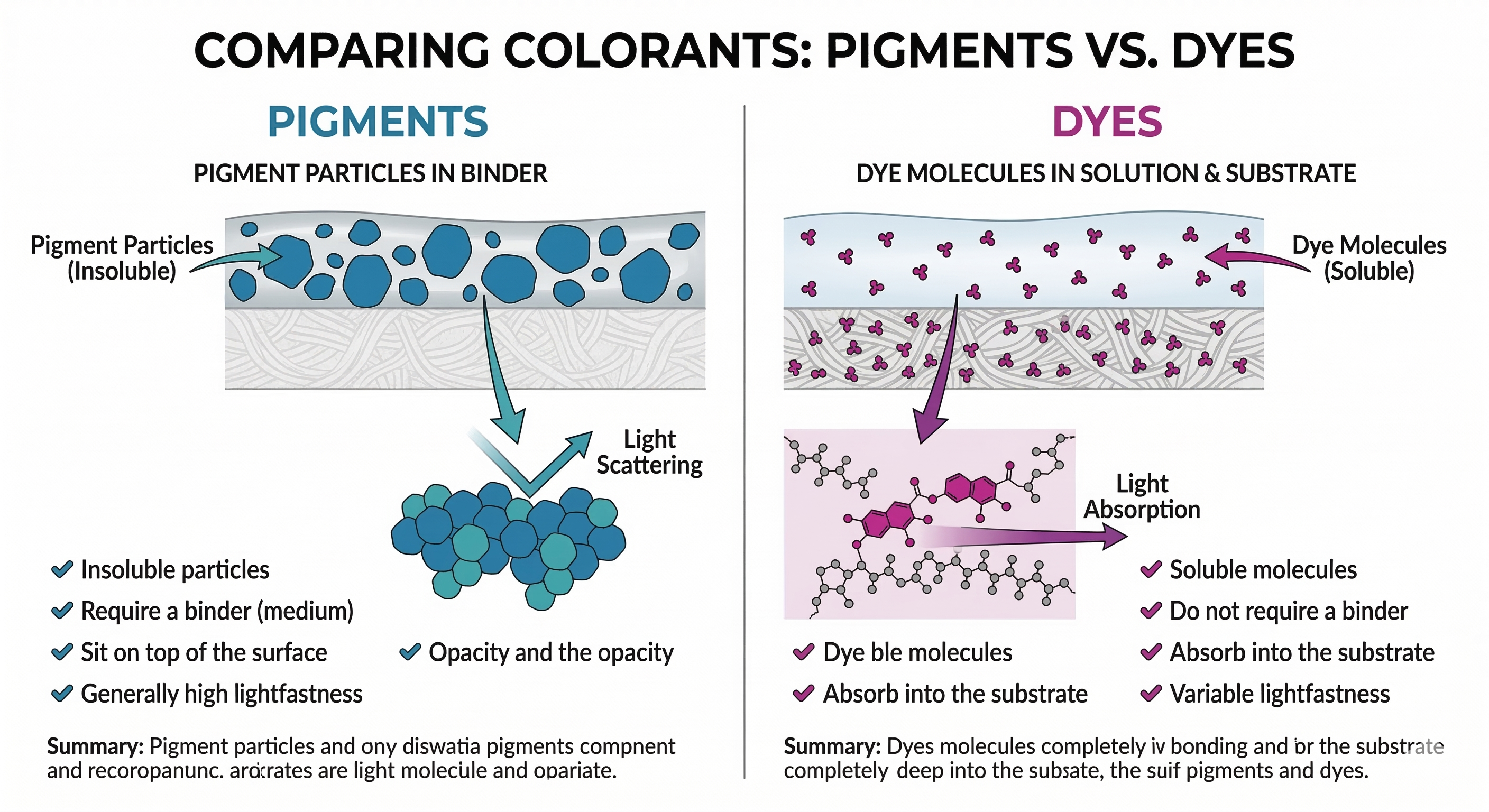
Selecting the appropriate colorant is a fundamental material science decision in coatings development, plastics compounding, textile engineering, and advanced ink formulations, directly dictating chemical compatibility, stability, and product longevity. Far beyond a simple choice of hue, industrial formulators must master the underlying physical chemistry, interfacial thermodynamics, and optical behavior of pigments and dyes. Failing to correctly match the molecular properties of a colorant to its host binder matrix can lead to catastrophic system failures, including pigment flocculation, color migration, rapid photolytic degradation, and phase separation on the production line.
Table of Contents
- 1. The Core Scientific Difference: Solubility & Thermodynamics
- 2. What Are Pigments? Crystalline and Colloidal Systems
- 3. What Are Dyes? Molecular Solutes & Bonding Mechanisms
- 4. Optical Physics: Light Scattering vs. Molecular Absorption
- 5. Degradation Kinetics & Photochemical Lightfastness
- 6. Industrial Processing & Rheology Parameters
- 7. Advantages, Limitations, and Industry Selection Matrix
- 8. Frequently Asked Questions & Technical FAQ
1. The Core Scientific Difference: Solubility & Thermodynamics
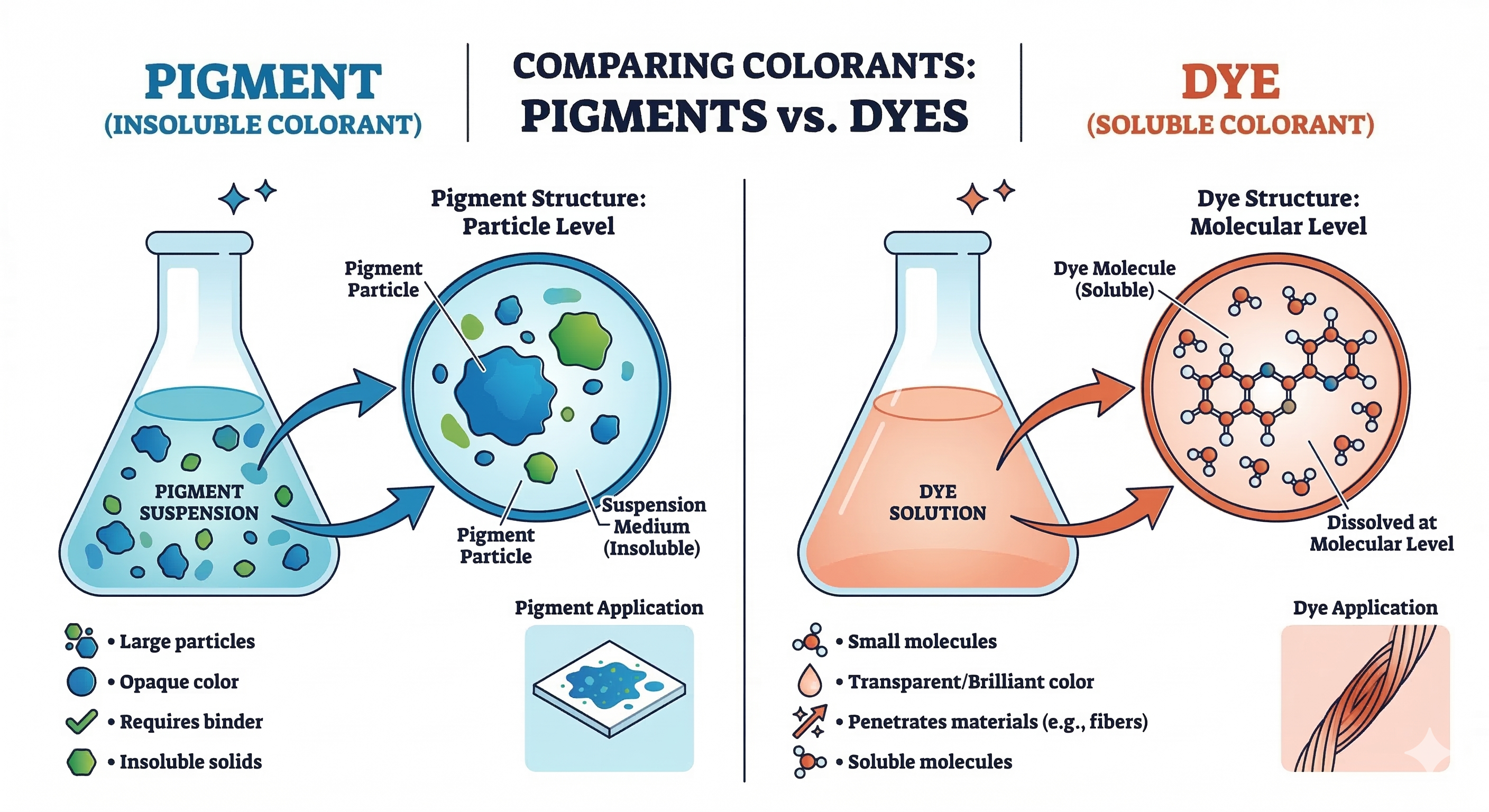
At the atomic scale, the defining division between pigments and dyes lies in their thermodynamic solubility parameters and molecular states. Dyes are soluble chemical entities that dissolve completely in their application vehicle, forming an isotropic, single-phase molecular solution where individual solute molecules are thoroughly solvated. Pigments, conversely, are entirely insoluble solid particulates that remain as multi-molecular crystalline aggregates dispersed physically as a heterogeneous, two-phase colloidal suspension within a binder, polymer matrix, or carrier fluid.
The thermodynamics of dissolution for a dye are governed by the free energy of mixing, represented by the relationship where the change in free energy ($\Delta G_{mix}$) must be negative for spontaneous dissolution to occur. The large, positive increase in conformational entropy ($\Delta S_{mix}$) when rigid dye molecules disperse into a liquid solvent readily overcomes the enthalpy of mixing ($\Delta H_{mix}$), driving complete molecular dissolution. For pigment systems, the solid-state lattice energy—the cohesive molecular and electrostatic forces binding the organic or inorganic crystals together—is exceptionally high, preventing dissolution and requiring heavy mechanical energy inputs to physically break down particle aggregates.
2. What Are Pigments? Crystalline and Colloidal Systems
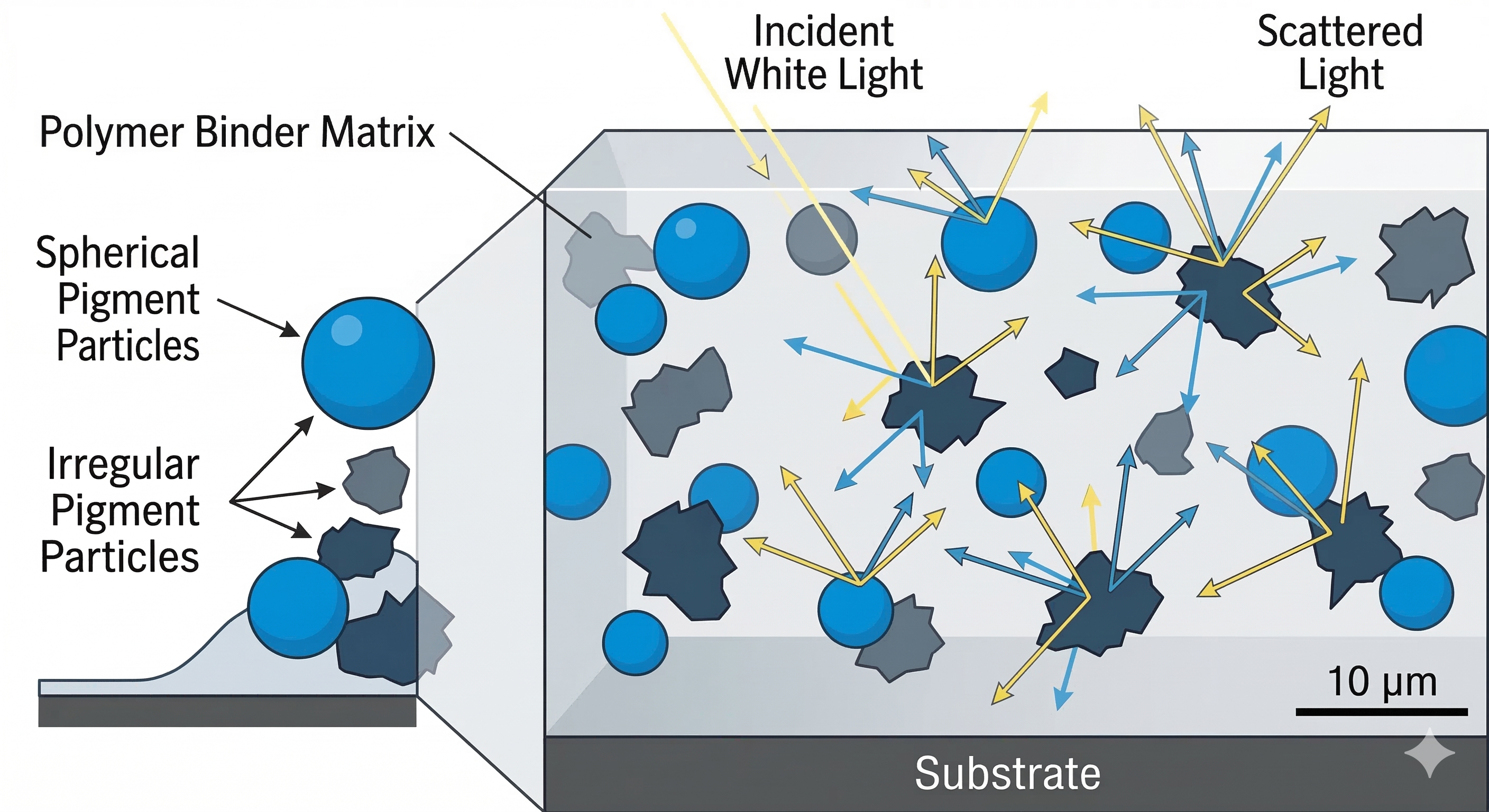
Pigments are characterized as highly ordered solid crystalline networks that interact with light via particulate optical dynamics and surface chemistry rather than dissolved molecular transitions. Because they remain as insoluble solid particles, their particle size distribution, crystal polymorphism, and surface area directly dictate color strength, opacity, and rheological influence in a liquid formulation. Formulators must treat pigment systems as complex colloidal suspensions where surface chemistry dominates particle-particle interactions.
Crystalline polymorphism represents a vital concept in pigment science; for instance, copper phthalocyanine (a standard organic blue pigment) exists in distinct alpha (reddish-blue) and beta (greenish-blue) crystalline forms, each possessing unique thermal and solvent stability parameters. Inorganic pigments like titanium dioxide ($TiO_2$) exhibit critical structural variations between the rutile and anatase polymorphs, with rutile showing higher stability and density, while anatase possesses higher photocatalytic activity that can accelerate polymer degradation. Because dry pigment powders consist of clustered aggregates and agglomerates, industrial manufacturing requires robust physical dispersion to reduce the particle size and expose the active surface area of the primary crystals.
Examples of High-Performance Industrial Pigments
Inorganic and organic pigments are engineered to deliver precise chemical resistance, high opacity, and thermodynamic stability in harsh industrial environments. These materials are heavily utilized across coatings, plastics, construction, and high-performance packaging applications where color durability is non-negotiable.
- Rutile Titanium Dioxide ($TiO_2$) — The industry-standard white pigment, possessing a highly refractive crystalline structure optimized to scatter visible light and shield polymers from UV-induced degradation.
- Synthetic Iron Oxides ($Fe_2O_3$, $Fe_3O_4$) — Robust inorganic colorants providing exceptional heat resistance, chemical inertness, and weatherability in architectural concrete, plastics, and primers.
- Phthalocyanine Compounds — Premium organic pigments (such as Phthalo Blue and Phthalo Green) featuring highly conjugated planar ring systems that deliver intense color value and outstanding solvent resistance.
- Carbon Black — An elemental carbon pigment engineered via furnace or gas processes to provide deep black opacity, high electrical conductivity, and structural reinforcement in rubbers and plastics.
These pigment classes reach end products across dramatically different industries, from architectural coatings to color cosmetics. In paints and coatings formulation, titanium dioxide and iron oxides dominate opacity and weatherability performance, and carbon black dispersion follows the same particle-stabilization logic covered in our guide to high-gloss black paint formulation. The identical crystalline dispersion challenge shows up outside industrial coatings too — pigment suspension in nail polish film-former systems follows the same physics, just carried in a nitrocellulose lacquer matrix instead of an alkyd or acrylic binder.
3. What Are Dyes? Molecular Solutes & Bonding Mechanisms
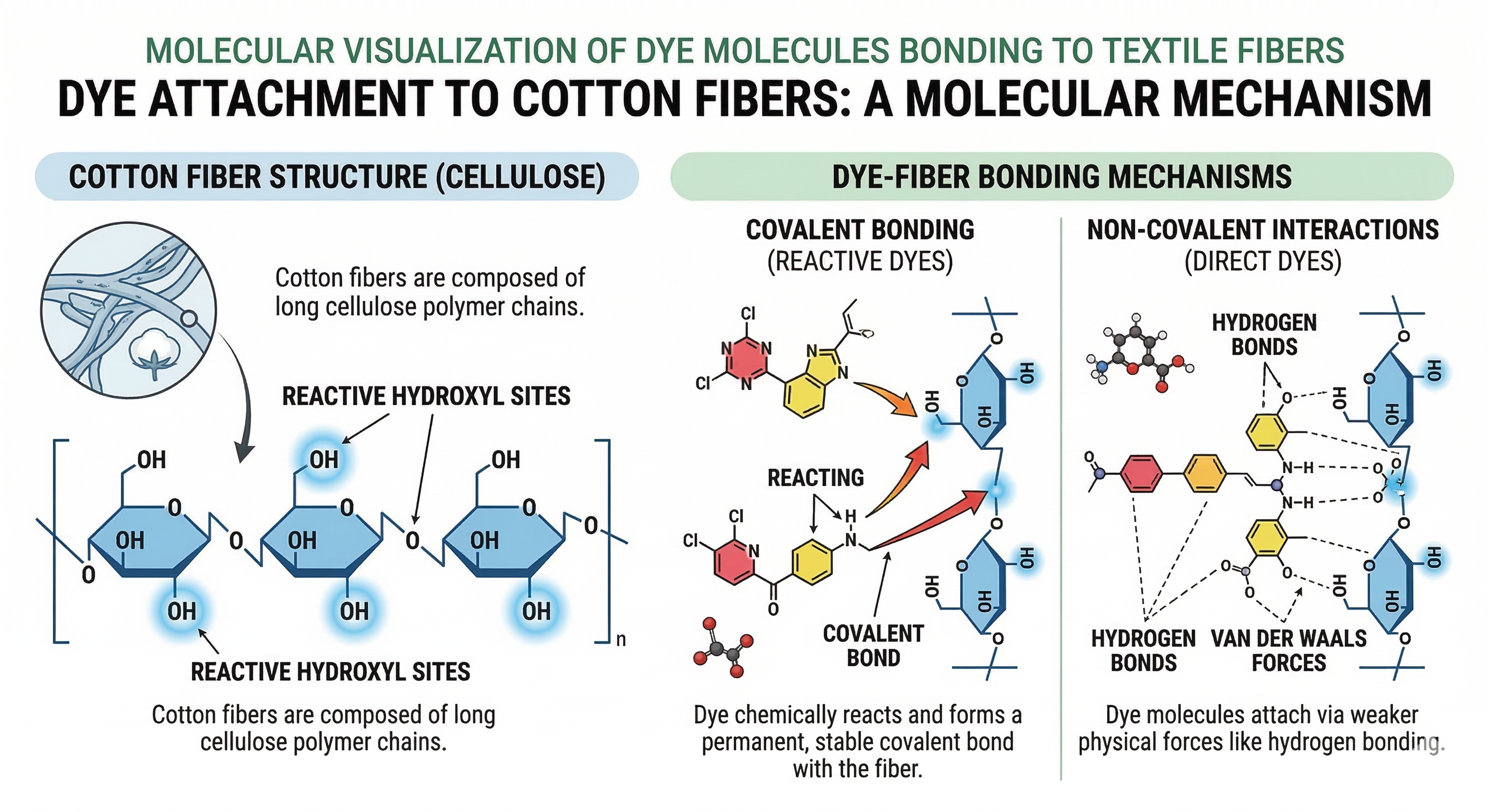
Unlike particulate pigments, dyes are molecularly dissolved chromophores that interact with substrates on an individual molecular level, forming chemical or physical bonds directly with the material. This molecular dispersion yields outstanding color brightness and maximum transparency because the solute molecules do not scatter light. However, achieving high washfastness and rubfastness in consumer products requires the dye molecules to undergo specific, irreversible chemical reactions or physical entrapment within the target fibers or polymer substrate.
The mechanisms by which dyes adhere to substrates depend heavily on the chemical structure of both the colorant and the material, categorized into distinct functional classes. For instance, acid dyes carry anionic sulfonic acid groups that form strong electrostatic ionic bonds with protonated amine sites on wool, silk, or nylon under acidic conditions. In contrast, reactive dyes represent a pinnacle of textile chemistry, containing highly reactive functional groups (such as monochlorotriazine or vinyl sulfone) that undergo nucleophilic substitution or addition reactions to form permanent, covalent ether or ester bonds with the hydroxyl groups of cellulosic fibers like cotton.
Key Dye Classes and Chemical Frameworks
Dye formulations are classified based on their application methods, molecular charge, and specific bonding affinities for distinct synthetic or natural polymers. Selecting the correct dye framework is critical to prevent color bleeding, uneven shading, or chemical damage to the colored material.
- Reactive Dyes — Designed with triazine or vinyl sulfone groups that react with cellulose under alkaline conditions, producing highly washable and chemically stable textile products.
- Acid and Basic Dyes — Ionic colorants that bond electrostatically to oppositely charged polymeric groups; acid dyes target cationic proteins, while basic (cationic) dyes target anionic acrylics or modified polyesters.
- Disperse Dyes — Non-ionic, highly hydrophobic molecules applied as fine aqueous dispersions that physically dissolve into polyester fibers under high temperature ($130^\circ C$) and pressure.
- Solvent Dyes — Organic-soluble colorants that dissolve completely in polar or non-polar solvents, heavily utilized in plastics coloring, fuels, and solvent-based transparent lacquers.
4. Optical Physics: Light Scattering vs. Molecular Absorption
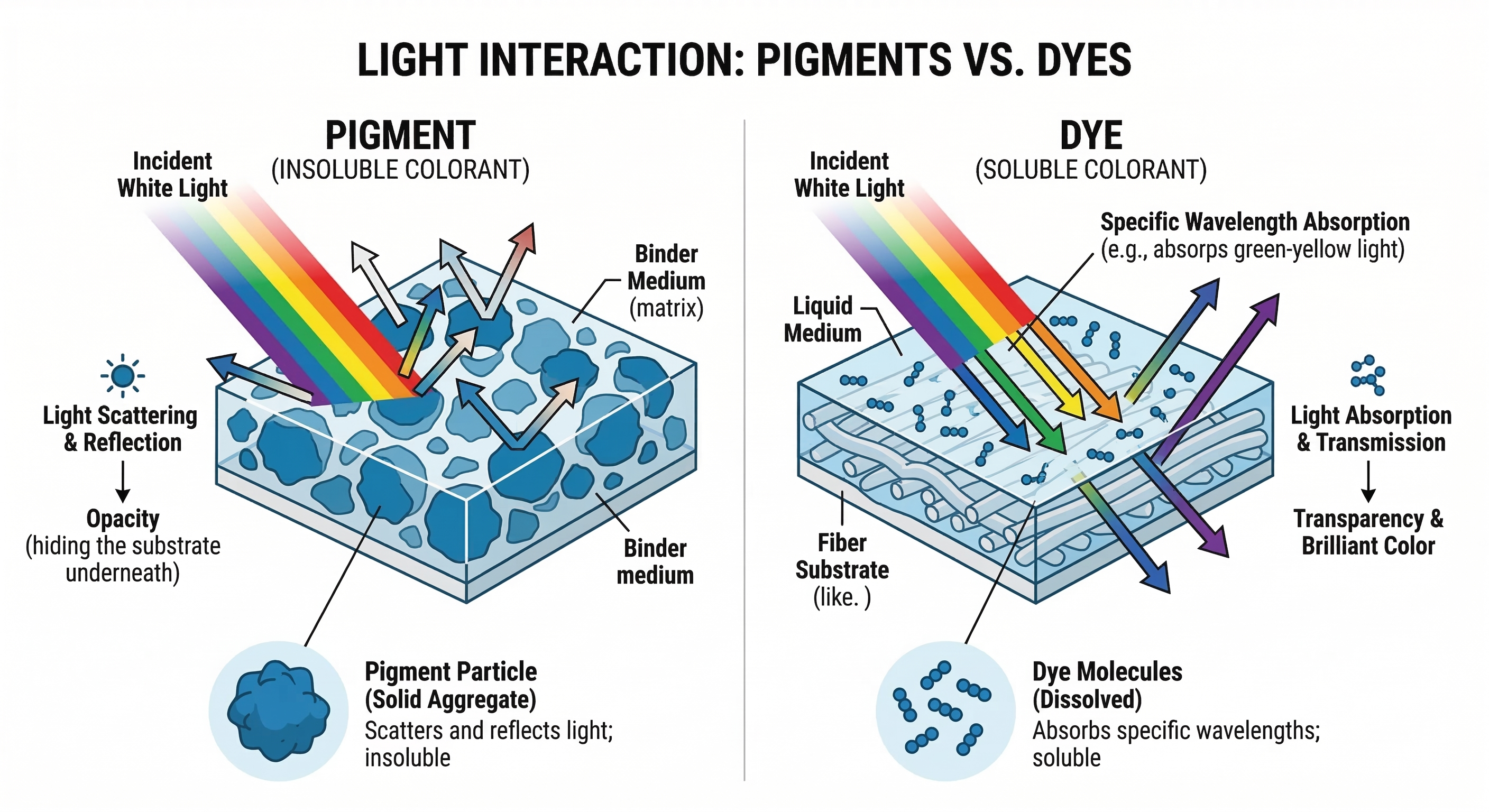
The stark visual contrast in opacity and brightness between pigments and dyes is rooted in the distinct physical mechanisms of light interaction at the boundary interfaces. Dyes operate purely through molecular electronic absorption, where incoming photons promote electrons from the Highest Occupied Molecular Orbital (HOMO) to the Lowest Unoccupied Molecular Orbital (LUMO) across a specific bandgap. Pigments, however, present a complex combination of light absorption and intense light scattering driven by their solid particulate boundaries, heavily governed by particle size and refractive index differentials.
According to Mie scattering theory, the intensity of light scattered by a spherical particle suspended in a continuous medium is proportional to the difference in refractive index between the particle ($n_p$) and the host matrix ($n_m$). Rutile titanium dioxide possesses an exceptionally high refractive index ($n \approx 2.73$), creating a massive refractive gap when dispersed in standard acrylic or epoxy binders ($n \approx 1.50$), which results in highly efficient backscattering and high hiding power. Dyes, existing as individual solvated molecules, have no particulate phase boundary ($n_p \approx n_m$), allowing light to transmit freely through the solution without scattering, which yields high optical clarity and deep transparency in varnishes or inks.
5. Degradation Kinetics & Photochemical Lightfastness
The durability of a colored product under solar exposure is dictated by the chemical stability and photochemistry of the colorant when exposed to high-energy ultraviolet radiation. Photochemical degradation occurs when UV photons induce electronic excitation, leading to free radical generation, singlet oxygen attacks, and the eventual photolytic cleavage of the chromophoric conjugated bonds. Pigments and dyes exhibit vastly different degradation kinetics due to their physical states, determining their suitability for severe outdoor weathering.
In dye solutions, every individual molecule is fully exposed to UV radiation, oxygen, and solvent molecules, making them highly vulnerable to photo-oxidation and rapid fading (photobleaching); this degradation is quantified using standardized colour fastness testing, expressed as the Blue Wool Scale (ratings 1 to 8) and the Grey Scale for color change. In contrast, pigment particles exist as dense crystalline lattices containing billions of molecules. When exposed to solar radiation, the outer crystalline layer undergoes sacrificial photo-oxidation, but it forms a physical barrier that shields the vast bulk of the inner pigment molecules from UV penetration, resulting in vastly superior lightfastness and weatherability.
6. Industrial Processing & Rheology Parameters
Integrating pigments or dyes into commercial formulations demands careful analysis of the mechanical, thermal, and chemical processing parameters of the manufacturing line. Because pigments are insoluble solids, they cannot be simply stirred into a liquid; they require intensive mechanical dispersion and colloidal stabilization to prevent flocculation. Dyes, conversely, dissolve spontaneously under mild agitation, but their molecular presence can alter the chemical properties and stability of the carrier fluid.
To achieve a stable pigment dispersion, formulators rely on DLVO theory (Derjaguin-Landau-Verwey-Overbeek) to balance attractive van der Waals forces against repulsive electrostatic double-layer forces, striving for a high absolute zeta potential ($> |30|\text{ mV}$) to ensure repulsion. Polymeric dispersants are incorporated to provide steric stabilization, featuring anchor blocks (amines, carboxylic acids) that adsorb to the pigment surface, and solvated tail blocks that extend into the binder to physically prevent agglomeration. In contrast, dye processing is thermally limited; organic dyes often decompose or undergo thermal sublimation at temperatures exceeding $220^\circ C$, whereas inorganic pigments easily tolerate the high shear and temperatures ($> 280^\circ C$) of industrial polymer extrusion and masterbatch compounding.
This wetting-grinding-stabilization sequence is the same process examined in depth in our guides to pigment dispersion in paints and the role of dispersants in paint formulation, both of which walk through how anchor-block chemistry prevents flocculation across industrial coating systems.
7. Advantages, Limitations, and Industry Selection Matrix
Formulating high-performance products requires a careful balance between the aesthetic color properties and the physical limitations of pigments and dyes. Industrial chemists must carefully match the substrate chemistry, environmental exposure, and economic constraints of the project to the correct colorant class. The selection process requires analyzing key performance parameters, including heat stability, migration resistance, opacity, processing complexity, and chemical compatibility.
In paints and coatings, pigments are almost exclusively selected due to their high opacity, UV lightfastness, and chemical resistance in outdoor architectural and automotive environments — pigment volume concentration becomes the governing design variable in that context. In the textile industry, dyes remain the primary choice because their molecular solubility allows them to penetrate fiber cores and establish permanent chemical bonds that withstand washing. For high-tech applications like inkjet printing or transparent packaging, formulators often blend both colorant classes or utilize nano-dispersed pigments ($< 150\text{ nm}$) to achieve both high transparency and acceptable lightfastness without clogging narrow printhead nozzles. Color cosmetics present a related but distinct challenge: in lip colour formulations, pigments must stay suspended and stable across a wax-oil matrix while still meeting skin-feel and payoff requirements that packaging coatings never have to satisfy.
| Property / Parameter | Pigments (Insoluble Particles) | Dyes (Soluble Molecules) |
|---|---|---|
| Solubility Profile | Completely insoluble; exists as suspended crystal aggregates. | Fully soluble; forms isotropic molecular solutions. |
| Optical Effect | High opacity, light scattering, and hiding power. | High transparency, brilliant depth, and zero scattering. |
| Lightfastness (UV Stability) | Excellent (Blue Wool Scale 7–8); crystalline bulk shielding. | Moderate to poor (Blue Wool Scale 1–5); highly prone to photofading. |
| Thermal Stability | Exceptional ($> 280^\circ C$ to $800^\circ C$ for inorganic types). | Limited ($< 180^\circ C$ to $220^\circ C$ for most organic dyes). |
| Migration & Bleeding | Highly resistant; particulate confinement prevents bleeding. | Prone to migration, bleeding, and solvent extraction. |
| Processing Cost & Method | High; requires HSD, bead milling, and dispersing agents. | Low; dissolves easily under simple mechanical stirring. |
8. Frequently Asked Questions (FAQ)
Navigating the practical application of colorants requires a clear understanding of troubleshooting, compatibility testing, and formulation selection. Below are answers to critical technical questions commonly encountered by chemical manufacturers, startup entrepreneurs, and research chemists when selecting pigments or dyes.
Q1: What is the primary thermodynamic difference between pigments and dyes?
A1: Dyes dissolve completely at the molecular level, driven by a highly favorable entropy of mixing, whereas pigments are insoluble crystals that must be mechanically dispersed and colloidally stabilized within a medium.
Q2: Why do pigments have superior lightfastness and weatherability compared to dyes?
A2: Pigments exist as robust solid crystalline lattices. Under UV exposure, the outer surface layer may undergo photodegradation, but it acts as a sacrificial shield protecting the inner crystalline bulk. Dyes exist as isolated individual molecules, leaving their conjugated chromophoric bonds directly exposed to photolytic cleavage and singlet oxygen attacks.
Q3: How does titanium dioxide provide high opacity in paint formulations?
A3: Rutile titanium dioxide has an exceptionally high refractive index (approximately 2.73). When dispersed in a polymer matrix (refractive index of ~1.50), the large refractive index difference triggers intense backscattering of light according to Mie scattering theory, preventing light from penetrating the film and resulting in high hiding power.
Q4: What is DLVO theory and how does it relate to pigment formulations?
A4: DLVO theory describes the colloidal stability of pigment particles by balancing electrostatic repulsion (from the electrical double layer and zeta potential) against attractive van der Waals forces. Achieving a high positive or negative zeta potential prevents pigment flocculation and maintains a stable dispersion.
Q5: Can dyes be used in high-temperature plastics compounding?
A5: Only specialized solvent dyes with high thermal stability can be used, and even then, they are limited. Most organic dyes thermally decompose or bleed at extrusion temperatures above 280°C. Inorganic and stable organic pigments (like phthalocyanines) are preferred because their crystalline structures tolerate severe thermal shear.
Q6: What is the role of polymeric dispersants in stabilizing pigments?
A6: Polymeric dispersants prevent pigment flocculation via steric stabilization. They consist of block copolymers: anchor blocks (containing amine or acid groups) adsorb strongly to the pigment surface, while highly solvated tail blocks extend into the vehicle medium, forming a physical barrier that prevents particles from coalescing.
About the Specialist
Absar Khan is a senior industrial consultant with cross-disciplinary expertise spanning pharmaceutical manufacturing, cosmetics and personal care, home and institutional care chemicals, aerosols, lubricants, and advanced process engineering. His work integrates multiple scientific and engineering domains, including formulation chemistry, GMP facility design, validation science, quality systems, regulatory compliance, and large-scale manufacturing optimization.
LinkedIn Portfolio: Connect with Absar Khan on LinkedIn
Scale Your Colorant and Formulation Business with Expert Support
Discuss your physical colorant dispersion calculations, DLVO stabilization assessments, polymer masterbatch extrusion parameters, or GHS regulatory compliance with senior consultant Absar Khan.