Mastering High-Gloss Black Paint: A Technical Guide to Industrial Formulation
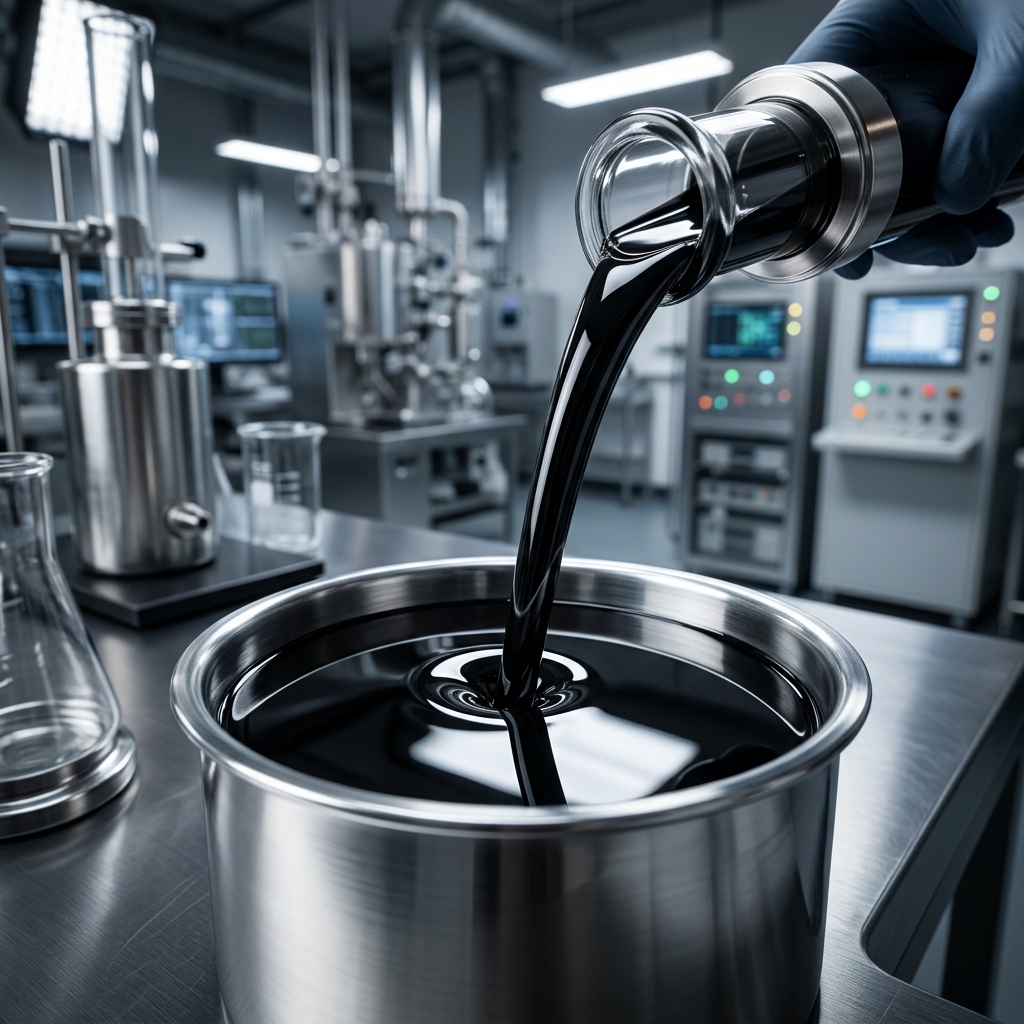
Achieving a mirror-like, premium "piano-black" finish in specialty coatings represents one of the most challenging engineering milestones in modern industrial chemistry. This aesthetic is characterized by its high distinctness of image (DOI) and total light absorption, requiring paint manufacturers to balance advanced resin cross-linking with mechanical pigment stabilization. Mastering this specific formulation provides chemical manufacturers with a robust technical moat and access to high-margin automotive OEM, luxury cabinet, and consumer electronics markets.
Table of Contents
- 1. Introduction: The Industrial Standard for Premium Black Coatings
- 2. The Chemistry of Reflection: Key Components in Glossy Formulations
- 3. The Core Manufacturing Process: Achieving Precision Dispersion
- 4. Advanced Additives for Enhancing Surface Aesthetics
- 5. Technical Comparison: Common Resin Systems for Glossy Black
- 6. Technical Challenges in Black Paint Production
- 7. Business Strategy: Industrial Profits in Specialty Paint Coatings
- 8. Frequently Asked Questions (FAQs)
1. Introduction: The Industrial Standard for Premium Black Coatings
In the world of industrial coatings, few challenges are as demanding as achieving a consistent, "piano-finish" jet-black gloss. This aesthetic is defined not just by its deep color, but by its distinctness of image (DOI) and reflection quality. For paint manufacturers and startups, mastering this specific formulation is often the difference between a mid-market product and a high-authority industrial standard.
The manufacturing business of specialty coatings is built on technical reliability. When we help chemical startups formulate products, our primary goal is to highlight that we are experts in this topic. Achieving a professional mirror finish requires more than just pouring ingredients; it requires facts, technically accurate formulations, and strict adherence to process engineering principles.
By developing a deep understanding of formulation variables, manufacturers can achieve superior product outcomes and secure high-value contracts:
- Market Demand — High-gloss black is a staple in the automotive OEM, luxury consumer electronics, and high-end cabinetry industries.
- Industry Profits — Entering the specialty coatings sector offers significantly higher industrial profits compared to standard architectural paints due to the technical barrier to entry.
- Expertise — Success requires a deep understanding of formulation chemistry, from resin compatibility to stabilization of fine carbon pigments.
2. The Chemistry of Reflection: Key Components in Glossy Formulations
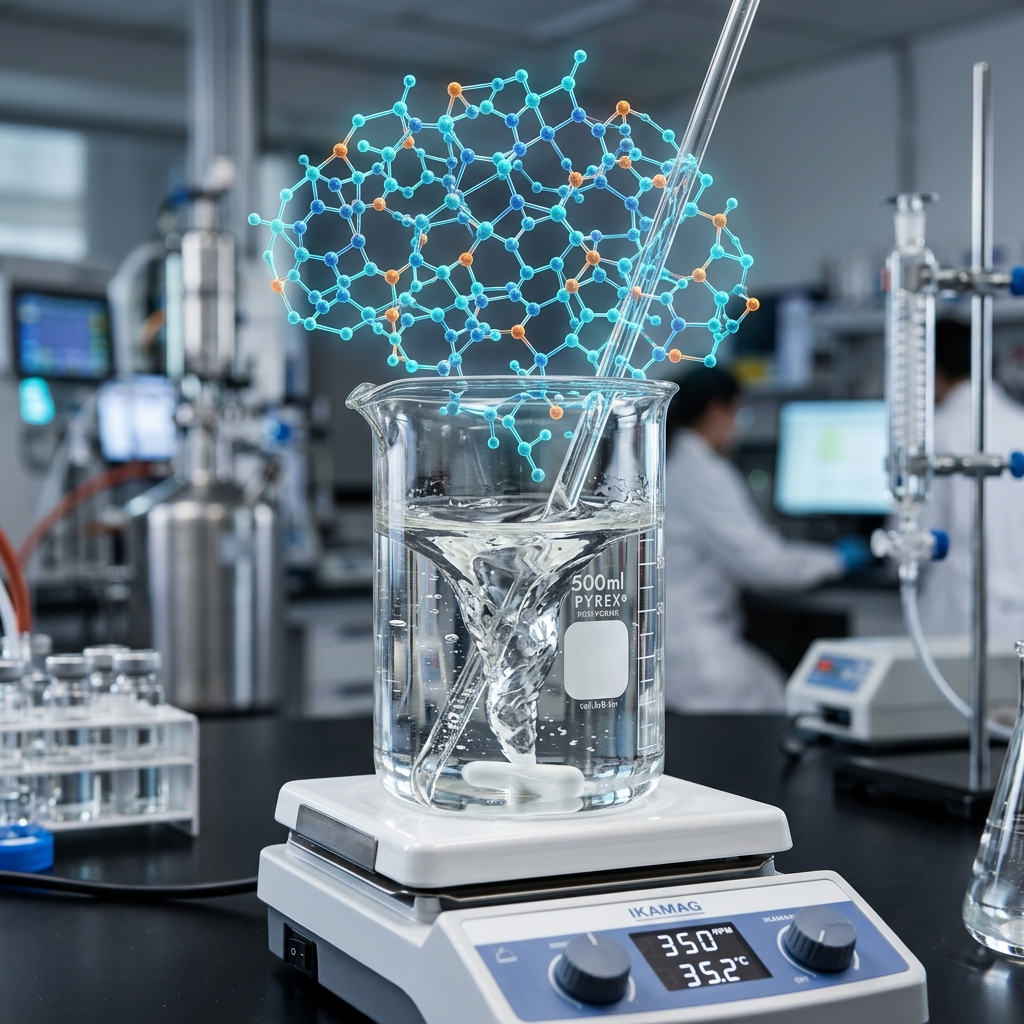
The path to high gloss begins with the selection of raw materials that minimize light scattering at the surface. Every ingredient, from the primary binder to the refractive index of the carrier, plays a role in how light interacts with the coating. A premium formulation optimizes the synergy between the resin matrix and the pigment particles to ensure a smooth, undisturbed surface film that feels premium and state-of-the-art.
Selecting the Right Resin System (Binders)
The resin, or binder, is the backbone of the paint, responsible for film formation, gloss retention, and durability. In high-gloss formulations, the resin must have excellent flow and leveling properties to eliminate brush marks or "orange peel" textures. Selecting the right polymer structure is critical for industrial applications where mechanical resistance is required alongside aesthetic brilliance.
In modern manufacturing, cross-linking density is a key metric. Higher density generally leads to better scratch resistance and gloss retention over time. However, this must be balanced with flexibility to prevent the coating from cracking during thermal expansion, especially in automotive or outdoor industrial environments.
- Alkyd Resins — Traditional choice for high-gloss enamels, offering superior "wet look" and penetration, though longer drying times.
- Acrylic Emulsions — Modern water-based technology providing excellent UV resistance and color stability, often modified for gloss optimization.
- Polyurethanes — The gold standard for hardness and chemical resistance, typically used in high-end automotive and industrial finishes.
The Role of Pigment: Why Carbon Black Complexity Matters
Carbon black is the primary pigment for black coatings, but not all carbon blacks are created equal. The classification depends on the primary particle size, surface area, and structure (oil absorption number). For high-gloss applications, pigments with high structure and high surface area are generally preferred to achieve deeper "denseness" of black, though they are notoriously difficult to disperse without expert formulation techniques.
Technical names such as furnace black, channel black, and lamp black are common in the industry. Carbon black particle sizes span roughly 20 to 350 nanometers depending on the manufacturing process, and each grade has a specific particle size distribution that affects the final shade—some leaning blue (perceived as "deeper" black) and others leaning red or brown. Carbon black's near-zero albedo across the visible spectrum is what gives it exceptional tinting strength; achieving the "blackest black" involves minimizing light reflection within the paint film itself.
- Hegman Gauge — Manufacturers must achieve a high Hegman reading (7.5+) to ensure no visible pigment clusters disrupt the surface gloss.
- Light Absorption — Premium carbon black absorbs over 99.5% of visible light, reducing scattering and enhancing the perception of depth.
- Particle Size — Sub-micron particles are essential; any agglomeration will immediately dull the finish into a semi-gloss or satin look.
Solvent and Water-Based Carriers: Impact on Final Gloss
The carrier medium regulates the evaporation rate and film formation process. If the solvent evaporates too quickly, the surface "locks" before it can level out, leading to a dull finish. Conversely, in water-based systems, the surface tension of water must be carefully managed with additives to ensure it wets the substrate as effectively as solvent-based alternatives.
Technological advancements have led to high-solid solvent systems that reduce environmental impact while maintaining the classic mirror finish of traditional alkyds. Understanding the "evaporation profile" of your carrier system is a hallmark of expert manufacturing business planning.
3. The Core Manufacturing Process: Achieving Precision Dispersion
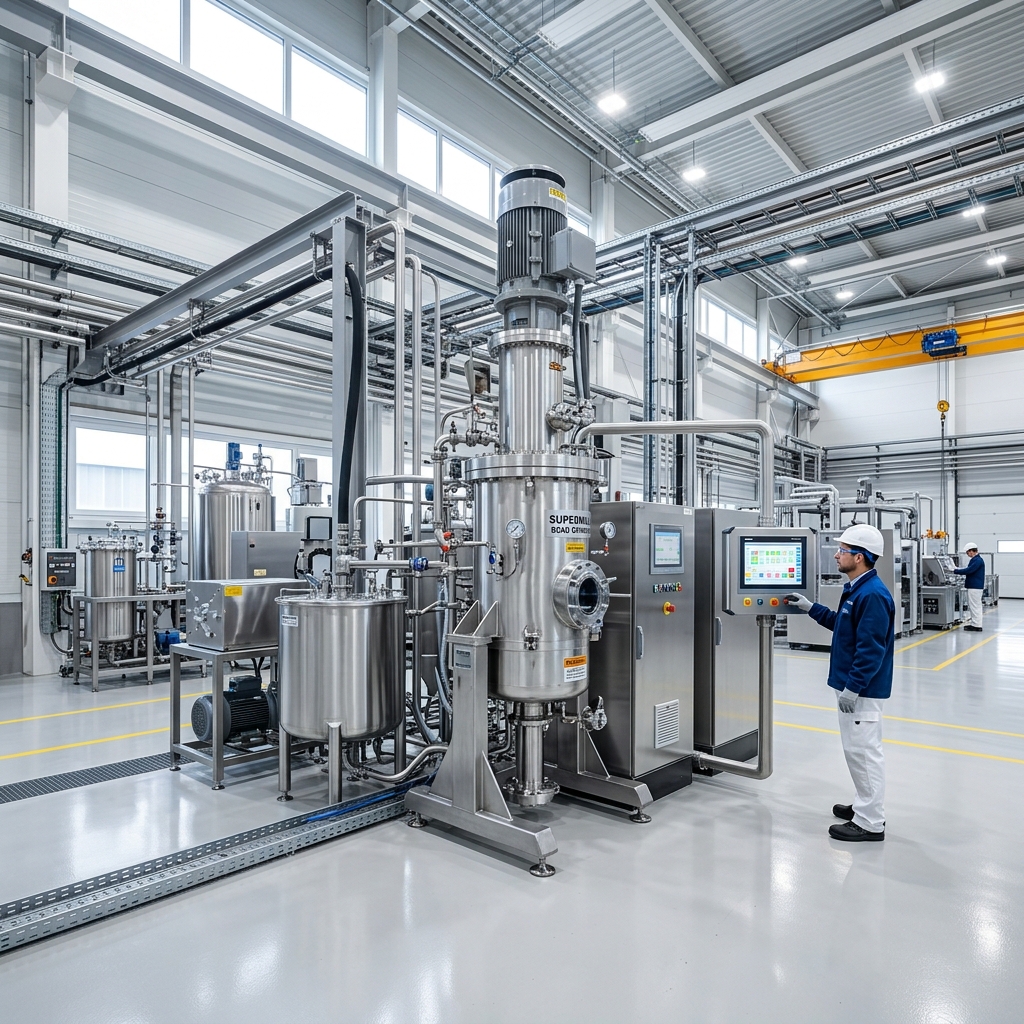
Manufacturing high-gloss black paint is more of a mechanical engineering feat than a simple mixing task. The pigment particles must be reduced to their primary size and then stabilized to prevent flocculation (clumping). This section outlines the critical industrial stages where the quality of the final product is truly determined, focusing on facts and technical accuracy.
Pre-Mixing and Wetting of Fine Pigments
High-speed dispersers (HSD) are used to incorporate the dry carbon black into the liquid resin. The goal here is "wetting"—replacing the air trapped in the pigment clusters with the resin solution. This requires high shear forces and the use of technical wetting agents that reduce the surface tension of the liquid phase, allowing for deeper penetration into the pigment structure.
During pre-mixing, the "vortex" of the disperser must be carefully monitored. Improper mixing leads to "dry pockets" that can cause stability issues later in the manufacturing process. Expert formulators use specific additive sequences to ensure every pigment particle is isolated and coated in binder.
- Shear Force — Proper blade design and tip speed (typically 18-22 m/s) are essential to break down bulk pigment agglomerates.
- Initial Stabilization — Wetting agents ensure that once particles are separated, they do not immediately re-attach through Van der Waals forces.
- Sequence of Addition — Adding pigments slowly into the "dough" of the resin prevents clumping and ensures uniform dispersion.
Mechanical Grinding: Achieving Sub-Micron Particle Size
For high-gloss finishes, pre-mixing is never enough. The "mill base" must pass through a bead mill or basket mill. These machines use grinding media (typically ceramic or glass beads) to physically crush pigment particles down to sub-micron levels. This process increases the total surface area of the pigment, which in turn increases the intensity of the black and the overall reflectance of the film.
Industrial beads vary in size from 0.5mm to 2mm. Smaller beads are generally more efficient for high-gloss carbon black dispersion as they provide more contact points per unit of volume. However, the energy input must be managed to prevent "over-grinding," which can actually lead to pigment re-agglomeration.
- Residence Time — The duration the paint spends in the mill determines the final particle size distribution and DOI.
- Temperature Control — Overheating during grinding can damage the resin or cause the dispersant to de-sorb, leading to stability issues.
- Flow Rate — Managing the pump speed through the mill is critical for maintaining consistency across batches.
The Let-Down Phase: Ensuring Stability and Consistency
The let-down phase is where the concentrated mill base is diluted with the remaining resin, solvents, and final additives. This step must be performed slowly to prevent "shock," where the abrupt change in environment causes the dispersed pigment to flocculate. Consistency during this stage ensures the industrial scale-up remains technically accurate to the lab-scale pilot.
Underestimating this step often results in batch shock, characterized by rapid agglomeration and permanent loss of gloss. The let-down vehicle must be added under low-shear agitation to maintain the temperature profile and ensure the polymer chains associate smoothly with the stabilized pigment particles without stripping the adsorbed dispersant layer.
4. Advanced Additives for Enhancing Surface Aesthetics
Even the best resin and pigment combination can fail without the right additive package. Additives are the "fine-tuning" components of the formulation, addressing surface defects that are invisible to the naked eye but destructive to the final gloss and durability of the coating. They are the secret to maintaining industry profits through superior product performance.
Flow and Leveling Agents for a Mirror-Like Finish
These chemicals migrate to the surface of the wet paint film to equalize surface tension across the entire area. This prevents "orange peel" and ensures that the paint flows into a perfectly flat plane before it cures. For manufacturing businesses, these additives are essential for ensuring a professional result even under variable application conditions.
Without these agents, the paint surface would naturally follow the profile of the substrate or the application tool (like brush or spray marks). Flow agents create a "self-leveling" effect that is a hallmark of high-authority paint brands.
- Silicone Additives — High efficiency in reducing surface tension, but must be used carefully to avoid "fisheyes" (circular depressions).
- Polyacrylates — Excellent for improving leveling without affecting the re-coatability of the paint surface.
- Leveling Testing — Professionals use a "sag and level" test to ensure the additive dosage is optimized for the intended application method.
Defoamers and Air Release Agents to Prevent Micro-Bubbles
Entrapped air is the enemy of gloss. During the high-shear mixing and grinding phases, air is inevitably introduced into the formulation. Air release agents allow these micro-bubbles to rise to the surface and burst before the film dries, preventing pinholes and craters that would otherwise scatter light and dull the finish.
Micro-foam is particularly difficult to detect in the wet phase but becomes glaringly obvious once the paint cures. Specialized defoamers act by creating local surface tension imbalances that cause bubble walls to rupture. Expertise is required here to select a defoamer that is effective but doesn't cause cratering.
5. Technical Comparison: Common Resin Systems for Glossy Black
Choosing the right resin is a balance between performance and cost. The table below summarizes the key technical attributes of common systems used in the industry today, providing a clear comparison for startup entrepreneurs and students.
In specialty chemical manufacturing, selecting the polymer binder dictates the formulation's physical limit regarding distinctness of image (DOI). The cross-linking chemistry must be chosen based on the final substrate's mechanical flexural stress and exposure conditions, striking a balance between hardness and chemical resistance. Gloss itself is quantified with a gloss meter under ASTM D523 or the equivalent ISO 2813 method, which specifies a 60-degree measurement angle for most coatings and switches to 20 degrees for surfaces above 70 gloss units — the range where premium piano-black finishes are expected to sit.
6. Technical Challenges in Black Paint Production
Manufacturing black paint presents unique problems that other colors do not. Because black absorbs so much energy, it is sensitive to heat and UV radiation. Furthermore, the small particle size of carbon black makes it highly active on a molecular level, leading to potential shelf-life and application issues. Our experts address these facts to ensure product longevity.
Managing "Bronzing" and Undesirable Undertones
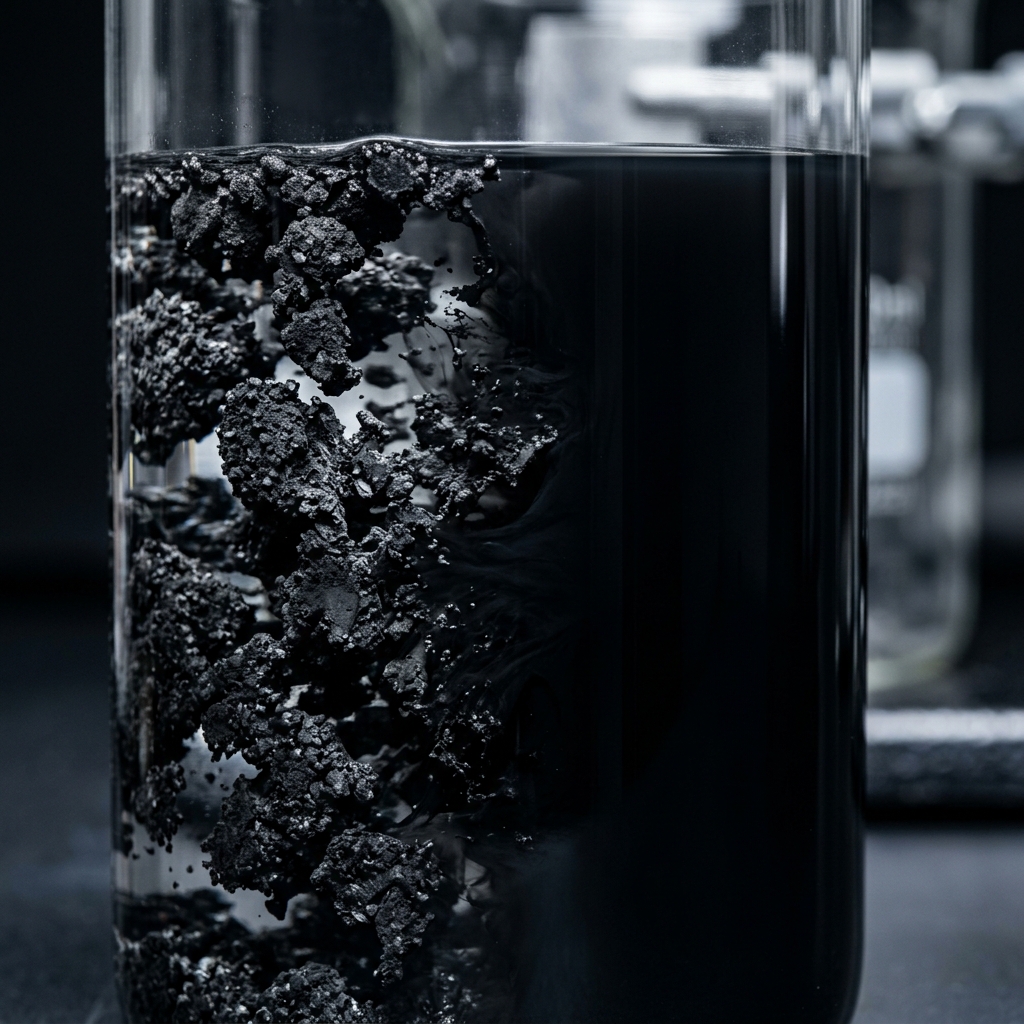
Bronzing refers to an unwanted metallic or brownish sheen that appears on the surface of black paint. This usually happens when the pigment is not fully encapsulated by the resin or when the pigment loading is too high. Proper use of dispersants and careful selection of carbon black grades can mitigate these undertones, ensuring a true, "neutral" black.
The undertone—whether it's blue, red, or brown—is a critical quality metric. Automotive manufacturers almost exclusively demand "blue undertones" because they appear deeper and more premium to the human eye. Achieving this requires precise control over the dispersion process and the choice of technical additives.
Ensuring Long-Term Gloss Retention and Scratch Resistance
A beautiful finish that dulls after six months is a failure in industrial formulation. High-gloss black shows every scratch and swirl mark. Incorporating surface-hardened resins and specialized wax additives can improve the "mar resistance" of the finish, preserving the professional appearance and the brand's reputation for quality.
To address these issues, formulating chemists incorporate specialized Hindered Amine Light Stabilizers (HALS) and nano-silica additives to create a scratch-resistant top layer. HALS work through a regenerative radical-scavenging cycle rather than direct UV absorption, which is why they remain effective over long weathering periods without being consumed. This prevents micro-abrasions from light scattering and preserves the deep 'wet look' of the jet-black coating even under aggressive environmental weathering.
7. Business Strategy: Industrial Profits in Specialty Paint Coatings
For entrepreneurs, the specialty paint market is where the most significant industry profits reside. While commodity wall paints suffer from low margins and intense price competition, specialized high-gloss coatings for the electronics, marine, and automotive sectors command premium pricing. Success in this field relies on establishing yourself as a technical expert who can solve complex coating problems.
The technical barrier to entry acts as a moat for your manufacturing business. By mastering complex formulations like high-gloss black, you position your brand as an industrial authority. We help startups bridge this gap with technical expertise and manufacturing guidance.
- Scale-Up Efficiency — Implementing manufacturing without a factory strategies allows startups to leverage third-party expertise while maintaining proprietary control over their high-gloss formulations.
- Sustainability — The shift toward eco-friendly chemical products is creating new niches for high-gloss water-based and low-VOC coatings.
- Regulatory Compliance — Navigating VOC regulations is no longer optional; it is a competitive advantage for authoritative brands. The EPA's VOC guidance documents indoor concentrations during solvent-based application that can run far above outdoor background levels, reinforcing why low-VOC reformulation is now a market expectation rather than a niche request.
8. Frequently Asked Questions (FAQs)
Why does my glossy black paint look "milky"?
This is often due to poor pigment dispersion or an incompatible resin system causing micro-flocculation. It can also occur in high humidity if "blushing" occurs during drying. Proper stabilization with technical dispersants is the primary fix.
What is the best carbon black for high gloss?
Generally, high-color furnace blacks (HCF) with fine primary particle sizes are preferred for gloss, though they require sophisticated grinding equipment and expert wetting agents to handle their high surface area.
Can I achieve high gloss without using a grinding mill?
For professional industrial standards, no. Simple mixing cannot achieve the sub-micron particle size required for a mirror-like jet-black finish. A bead mill or basket mill is essential for industrial-quality dispersion.
How do VOC regulations affect gloss?
Lowering VOCs often means reducing solvent content, which can impair flow and leveling. This must be counteracted with high-performance water-based resins and advanced surface tension additives. Learn more about VOC challenges here.
What is "orange peel" and how do I fix it?
Orange peel is a bumpy surface texture resembling the skin of an orange. It is usually fixed by adjusting the evaporation rate of the solvent or increasing the dosage of flow and leveling agents to ensure the film reaches equilibrium before drying.
Is it profitable to start a specialty paint business?
Yes, specialty coatings have much higher margins than architectural paints due to their technical requirements. We provide a comprehensive guide on starting your paint business within our paints and coatings technology overview to help you navigate this profitable sector.
Formulate Premium Coatings with Industrial Stability
Discuss your pigment dispersion ratios, Sag & Level targets, bead mill residence times, and high-gloss additives packages with lead industrial consultant Absar Khan.
Email: consulting@globalformulation.com
Phone: +91 9819548320 +91 8169102990
About the Specialist
Absar Khan is a senior industrial consultant with cross-disciplinary expertise spanning pharmaceutical manufacturing, cosmetics and personal care, home and institutional care chemicals, aerosols, lubricants, and advanced process engineering. His work integrates multiple scientific and engineering domains, including formulation chemistry, GMP facility design, validation science, quality systems, regulatory compliance, and large-scale manufacturing optimization.
LinkedIn Portfolio: Connect with Absar Khan on LinkedIn