Powder vs. Liquid Detergent Formulation: A Technical Guide
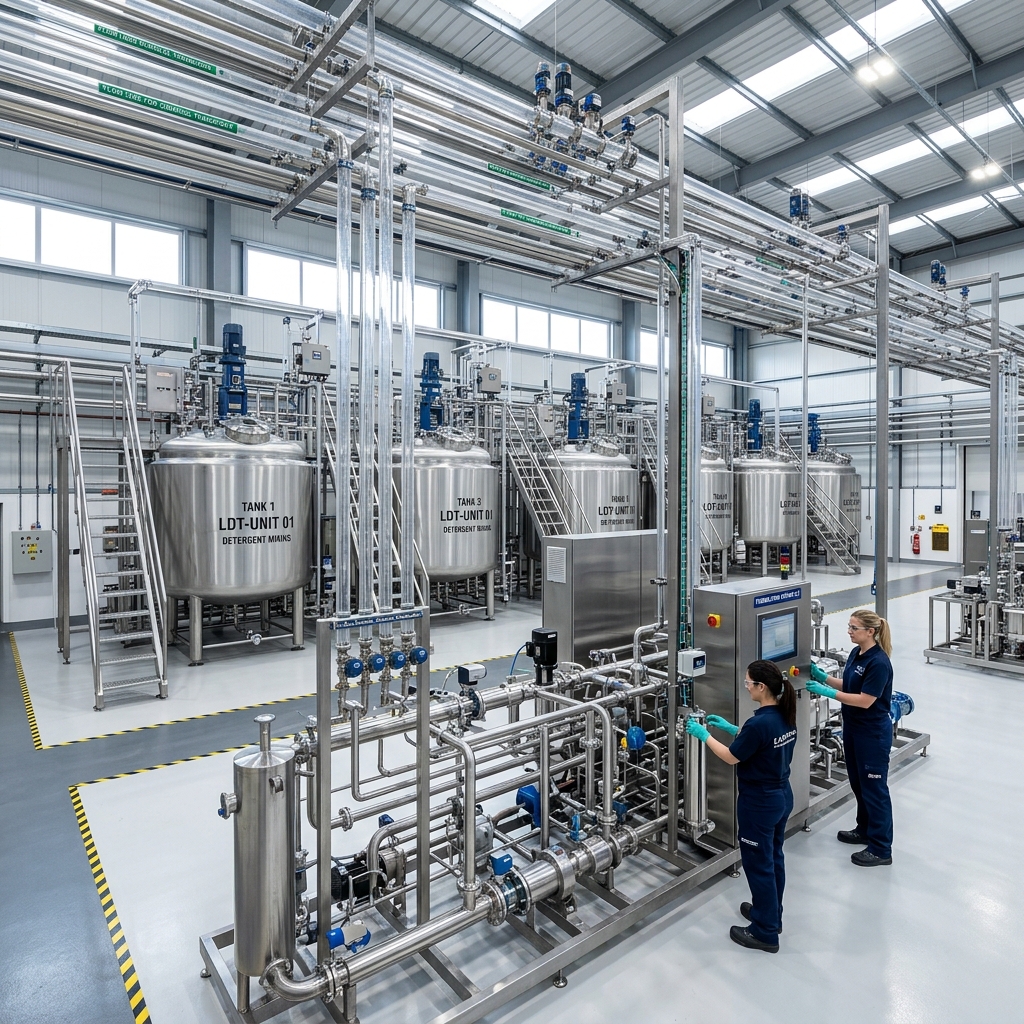
The global laundry detergent manufacturing sector represents a multi-billion dollar segment of the chemical process industry, demanding rigorous physical chemistry, precise rheological control, and strategic process engineering. As industrial laundry setups transition between high-efficiency powders and concentrated liquid systems, chemical entrepreneurs, formulations chemists, and plant managers must align raw material chemistry with mechanical limits. Developing a successful product requires understanding the structural balance of surfactants, builder sequestration rates, enzyme kinetics, and physical phase behavior that separate these two formats. These same fundamentals are covered across our broader household and industrial cleaners resource hub.
1. Introduction: The Market Shift and Fundamentals
The worldwide laundry detergent market is undergoing a structural transformation as demographic shifts, changing washing machine designs, and environmental priorities affect chemical choices. Historically, dry powder detergents represented the global baseline due to their straightforward dry-blending production steps, low-cost packing in cardboard, and long-term chemical stability. However, over the past two decades, developed consumer markets have strongly favored liquid detergents, concentrated gel pods, and multi-chamber pacs.
This ongoing market migration is driven by several operational and consumer preferences. Modern high-efficiency (HE) front-load washing machines utilize significantly lower water volumes and colder washing temperatures to conserve electrical power. Under these cold-water conditions, standard dry powders often struggle to achieve complete dissolution, sometimes leaving visible white mineral residues on dark clothing. Liquid detergents disperse immediately upon contact with water, making them ideal for rapid, cold, low-energy wash cycles while simplifying the spot-treatment of localized oil stains prior to the main wash cycle.
From a manufacturing startup perspective, this consumer preference dictates completely distinct capital expenditures (CAPEX), chemical sourcing, and supply-chain logistics. Standard powder blending can be set up at a low initial cost using dry ribbon mixers, but high-volume premium powder manufacturing requires massive, energy-intensive spray-drying towers. Conversely, liquid formulation processes rely on stainless steel high-shear mixers and advanced phase-stabilizing chemistry. This results in highly premium products that command excellent shelf prices and higher gross margins:
- Powders represent the volume baseline: Highly preferred in regions with high water hardness, traditional top-load washing machines, and price-sensitive demographics due to low-cost raw materials.
- Liquids represent the high-growth margin leader: Dominant in urban areas, targeting high-efficiency front-load washing machines, cold-water cleaning cycles, and premium single-dose packages.
- Process footprint differences: Powders require massive solids-handling equipment, powder silos, and humidity-controlled warehouses, whereas liquids require fluid-metering pumps, storage tanks, and high-precision filling lines.
- Specialty niches: The fastest-growing market segments are ultra-concentrated liquid detergents, eco-friendly plant-derived surfactant systems, and single-dose PVA gel pods.
2. Chemical Architecture: Surfactants and Builders
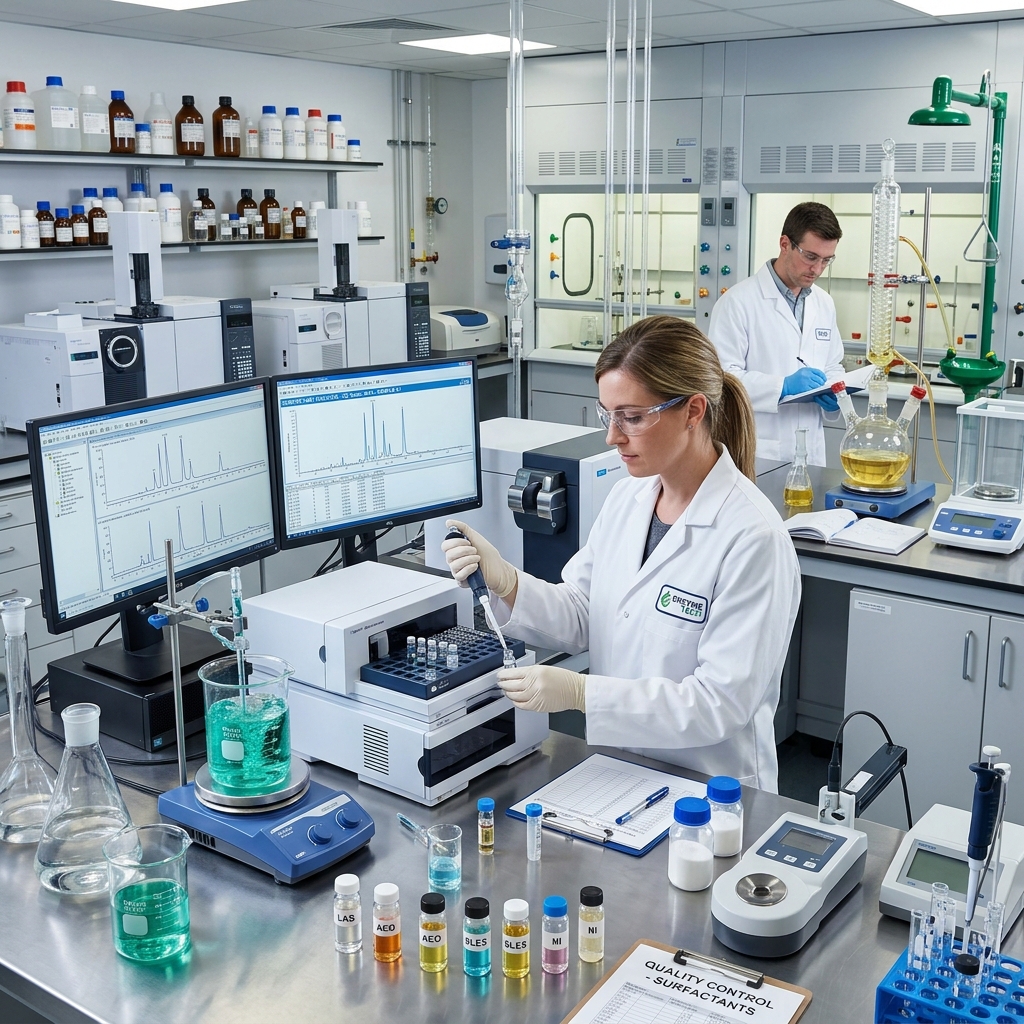
At the molecular level, the primary functional performance of any detergent is dictated by its surfactant system, which lowers the surface tension of water to allow wetting, soil detachment, and stable emulsification. The chemical architecture of powder and liquid formulations is engineered around different physical chemistry parameters. Powders are solid-state matrix structures that favor dry, crystalline, or highly concentrated active ingredients, whereas liquids are aqueous or solvent-based isotropic phases that must remain completely clear, homogeneous, and stable across a wide temperature range. The anionic, non-ionic, cationic, and amphoteric surfactant classes referenced throughout this comparison are covered systematically in our surfactant selection guide for cleaning formulations.
Surfactant Systems: NaLAS vs. MEA-LAS and SLES
In dry powder detergents, the primary surfactant is traditionally Sodium Linear Alkylbenzene Sulfonate (NaLAS). NaLAS is a highly active, cost-effective anionic surfactant that provides excellent performance against particulate clay, dust, and organic soils. Because it is synthesized as a dry flake or high-concentration paste, it can be easily dried and integrated into dry solid granules. However, NaLAS has limited solubility in cold water and is highly sensitive to precipitation in the presence of calcium and magnesium ions.
For liquid detergents, maintaining a stable isotropic phase prevents the use of simple NaLAS in high concentrations because sodium salts easily precipitate or form cloudy liquid-crystal gel phases. Instead, liquid formulators often neutralize Linear Alkylbenzene Sulfonic Acid (LAS Acid) with organic bases like Monoethanolamine (MEA) or Triethanolamine (TEA) to yield MEA-LAS or TEA-LAS. These organic counter-ion salts exhibit dramatically higher solubility and lower critical micelle concentration (CMC) thresholds, keeping the liquid isotropic.
To enhance grease emulsification and cold-water cleaning, liquid formulations blend MEA-LAS with highly soluble anionic surfactants like Sodium Lauryl Ether Sulfate (SLES) and non-ionic surfactants like Linear Alcohol Ethoxylates (LAE). Non-ionic alcohol ethoxylates (typically C12-C15 fatty alcohols ethoxylated with 7 to 9 moles of ethylene oxide) do not possess a net electrical charge. This makes them completely insensitive to water hardness ions, enabling them to lower surface tension and remove oily soils effectively in cold water without needing high concentrations of inorganic chelators.
Builder Kinetics: STPP vs. Zeolites and Polycarboxylate Co-Builders
Builders are critical formulation ingredients designed to soften wash water by binding calcium (Ca2+) and magnesium (Mg2+) ions, which would otherwise react with anionic surfactants and cause them to precipitate as insoluble scum. In powder detergents, builders represent the bulk of the weight. Historically, Sodium Tripolyphosphate (STPP) was the ultimate builder due to its rapid calcium sequestration kinetics, alkaline buffering capacity, and soil dispersing properties. However, global environmental regulations have banned or heavily restricted STPP due to phosphorus-induced freshwater eutrophication.
As a replacement, powder formulators utilize Zeolite A (crystalline sodium aluminosilicate) paired with Sodium Carbonate (Soda Ash) and Sodium Silicates. Unlike STPP, Zeolite A is completely insoluble in water and functions through a solid-state ion-exchange process, replacing calcium ions with sodium ions. Because this ion-exchange rate is relatively slow in cold water, Zeolite A must be supported by water-soluble polycarboxylate co-builders (specifically copolymers of acrylic and maleic acids). These polymeric co-builders act as crystal growth inhibitors and dispersants, accelerating calcium sequestration and preventing the precipitation of calcium carbonate (from the Soda Ash) onto fabric fibers—a defect known as fabric encrustation. This same hardness-driven builder chemistry is explored in more depth in our hard water detergent formulation guide.
Liquid detergents are severely limited in their builder loading. Soluble inorganic salts like Soda Ash or silicates cannot be incorporated into concentrated liquids in high amounts, as they instantly cause "salting-out"—a phase separation where the surfactants separate into a thick, soapy upper layer. Liquid formulators must rely on highly soluble organic chelating agents, such as Tetrasodium Glutamate Diacetate (GLDA), Trisodium Citrate, or specialized phosphonates (like DETMP). These organic chelators bind hardness ions while remaining fully compatible with the aqueous surfactant micelles, preventing cloudiness and precipitation:
3. Enzyme Integration and Stabilization Kinetics
Modern high-performance detergents rely heavily on biological enzymes—such as Proteases (to digest peptide bonds in protein stains), Amylases (to hydrolyze starch chains), Lipases (to degrade lipids and fats), and Cellulases (to remove micro-fibrils and restore cotton color). These enzymes are highly sensitive, folded protein structures that require precise chemical conditions to maintain their tertiary catalytic shape. Integrating enzymes into detergent formulations introduces entirely different physical stability problems depending on the physical state of the product, a topic covered in dedicated depth in our enzyme-based cleaner formulation guide.
In dry powder detergents, enzyme integration is highly stable and straightforward. Enzymes are manufactured as dry, protective wax-coated prills or granules. These enzyme prills are physically dry-blended into the powder matrix, where they remain in a desiccated, completely non-reactive state. Protected from moisture and catalytic activity, powder-blended enzymes achieve an exceptionally long shelf life, often remaining fully active for several years in storage without requiring chemical stabilizers.
Liquid detergents, however, present a major challenge in physical biochemistry. In an aqueous liquid detergent, enzymes are fully hydrated and surrounded by highly concentrated anionic surfactants, which can slowly denature the enzyme's protein structure. Furthermore, if the formulation contains both Proteases and other functional enzymes (like Amylases or Lipases), the active Protease will identify the other enzymes as protein substrates and enzymatically digest them—a self-destructive process known as autolysis.
To prevent autolysis and preserve catalytic activity in liquid detergents, formulators must construct a reversible enzyme inhibition system. This is achieved by incorporating boron-polyol complexes, typically synthesized by reacting Borax (Sodium Tetraborate) or Boric Acid with polyols like monopropylene glycol (MPG), sorbitol, or glycerol. The boron and polyol molecules form a temporary, coordinate covalent complex with the active site of the Protease enzyme, physically blocking its catalytic activity while in the concentrated bottle. Upon dilution in the wash water, the concentration of the complex drops dramatically, causing it to dissociate. This releases the fully active, undamaged Protease and other co-enzymes to perform heavy-duty stain removal in the washing machine:
- Autolysis Prevention: Reversible chemical inhibition prevents Proteases from destroying Amylases, Lipases, and itself during storage in the liquid phase.
- Boron-Polyol Complex Mechanism: A synergistic combination of Boric Acid/Borax and Propylene Glycol binds to the enzyme's active serine residue, temporarily halting catalytic activity.
- Dilution Activation Kinetics: Once the liquid detergent is diluted approximately 1:500 or 1:1000 in the wash water, the complex instantly dissociates due to chemical equilibrium shifts, restoring 100% enzyme activity.
- Auxiliary Stabilizers: Calcium ions (typically added as trace Calcium Chloride) are incorporated to structurally stabilize the enzyme's active conformation, protecting it from thermal denaturation.
4. Industrial Manufacturing Processes and Engineering
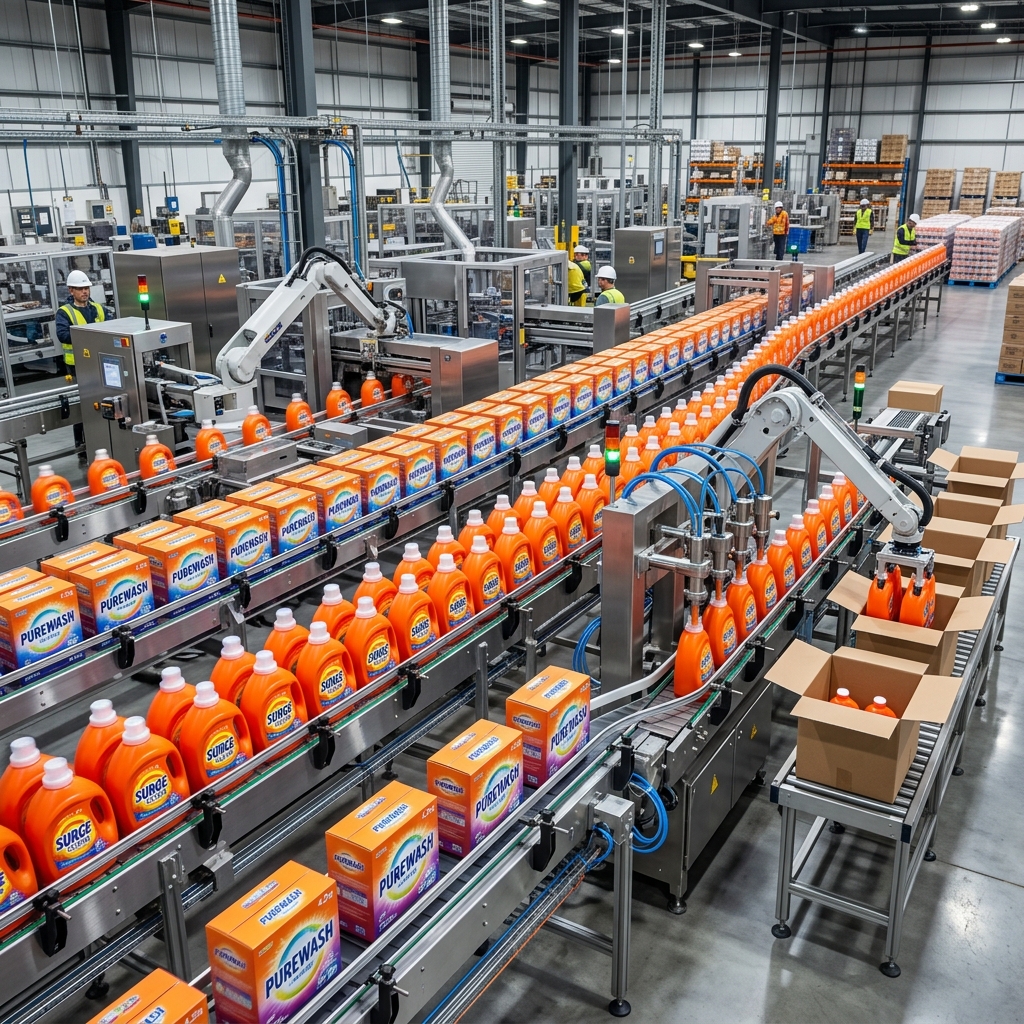
The industrial process engineering, plant layout, and equipment configurations for powder and liquid detergent factories are entirely different. Powder detergent manufacturing is dominated by solids handling, particulate fluidization, and massive thermal operations, requiring specialized civil engineering and environmental air-filtration setups. Liquid detergent manufacturing is a fluid-dynamics process centered on high-shear batch mixing, emulsion stability, accurate liquid dosing, and high-speed packaging lines.
Powder Manufacturing: Spray Drying vs. Dry Agglomeration
High-volume, premium powder detergents are manufactured using the classic spray-drying process. First, surfactants, builders, sodium sulfate (filler), sodium silicate (anticaking agent), and water are blended in a massive, heated mixing vessel called a crutcher to form a homogeneous, high-solids slurry (containing 60-70% solids). This slurry is pumped under high pressure (typically 40 to 80 bar) to the top of a multi-story spray-drying tower, where it is atomized through specialized high-pressure nozzles into a fine mist.
As the atomized droplets fall through the tower, they encounter a rising counter-current stream of hot air (at temperatures of 250°C to 350°C) generated by a furnace. The hot air rapidly evaporates the water, forming highly porous, spherical, free-flowing granules. These spray-dried granules collect at the bottom of the tower, where they are cooled, sifted to remove oversized lumps, and transferred to a post-addition drum. In the post-addition drum, temperature-sensitive components such as granulated enzymes, bleach catalysts (like Tetraacetylethylenediamine or TAED), Sodium Percarbonate (oxygen bleach), and volatile fragrances are blended into the spray-dried base.
For startups and medium-sized manufacturers, the massive CAPEX and energy costs of a spray-drying tower can be prohibitive. These enterprises utilize the dry agglomeration or dry neutralization process. In this method, dry solid carriers (such as Soda Ash, Zeolite A, and Sodium Sulfate) are loaded into a high-shear powder mixer-agglomerator (such as a Lodige or ribbon blender). The liquid active ingredients, including LAS Acid, are sprayed directly onto the agitated dry powder bed. The LAS Acid reacts in-situ with the alkaline Soda Ash to form Sodium LAS, while the high mechanical shear shapes the wet mass into dense granules. While dry agglomeration is highly energy-efficient and has low CAPEX, the resulting powder exhibits a much higher bulk density and slower cold-water dissolution rates compared to light, porous spray-dried granules.
Liquid Blending: High-Shear Mixing and Order of Addition
Liquid detergent manufacturing is an art of physical chemistry and fluid mechanics, carried out in stainless steel batch reactors equipped with dual-impeller agitators (a low-speed anchor agitator for bulk movement and a high-speed high-shear disperser for emulsification). The primary engineering constraint in liquid blending is preventing the formation of highly viscous, gelled liquid-crystal phases during mixing, while ensuring the perfect dissolution of all active components.
To achieve a stable, clear, isotropic liquid phase, plant operators must strictly adhere to a chemically optimized order of addition. Mixing must be carried out at controlled batch temperatures, typically maintained between 35°C and 45°C to facilitate dissolution without degrading sensitive components. Below is the standard industrial processing sequence for a premium liquid detergent batch:
- Water and Chelant Addition: Deionized water is charged into the reactor, followed by the addition of organic chelants (like GLDA or Sodium Citrate). This binds any trace calcium or magnesium ions present in the process water, preventing premature surfactant precipitation.
- Alkaline Neutralizer Charging: Alkaline neutralizers, such as Monoethanolamine (MEA) or Sodium Hydroxide (NaOH), are metered into the water phase.
- In-Situ Surfactant Neutralization: Linear Alkylbenzene Sulfonic Acid (LAS Acid) is slowly pumped directly into the alkaline solution under high-shear mixing. The acid-base reaction neutralizes the LAS in-situ, forming highly soluble MEA-LAS or Sodium LAS while generating moderate exothermic heat.
- Co-Surfactant Integration: Highly active Sodium Lauryl Ether Sulfate (SLES) paste and non-ionic fatty alcohol ethoxylates are added and thoroughly emulsified into the neutralizing mixture.
- Isotropic Phase Stabilization (Hydrotropes): Co-solvents (such as Monopropylene Glycol or Ethanol) and hydrotropes (like Sodium Xylene Sulfonate or SXS) are incorporated. Hydrotropes act as molecular disruptors, preventing the packing of surfactants into highly viscous hexagonal or lamellar liquid-crystal gel phases, maintaining a clear, low-viscosity, isotropic liquid.
- Cooling and pH Adjustment: The batch is actively cooled via the reactor jacket to below 35°C, and the pH is verified and adjusted to a target of 8.0 to 8.5.
- Sensitive Additive Post-Blending: Viscosity modifiers (such as sodium chloride or polymeric thickeners), optical brighteners, GHS-compliant preservatives, dye solutions, and fragrances are added — the same cationic esterquat and lamellar-vesicle chemistry used in the fabric softener formulations often run on adjacent lines in the same plant.
- Enzyme Complex Introduction: The pre-blended, stabilized enzyme complex (Boron-polyol + Protease/Amylase) is added as the final step to ensure zero thermal degradation.
5. Performance Metrics and Water Chemistry
The performance of a detergent in the wash cycle is highly dependent on water chemistry, wash temperature, and soil type. Powder and liquid formulations exhibit distinct chemical behaviors when dissolved in the wash liquor. Powder detergents are naturally highly alkaline, typically generating a wash water pH of 10.5 to 11.5 due to the high loading of Sodium Carbonate (Soda Ash) and Sodium Silicates.
This high alkalinity is a massive chemical advantage for heavy-duty cleaning. High pH levels hydrolyze fatty acids and oils, converting them into soluble soaps (saponification) and imparting a strong negative charge to cotton fibers and particulate soil. Since both the fiber and the soil become negatively charged, they mutually repel each other, preventing soil redeposition and ensuring superior cleaning of mud, clay, and heavily soiled workwear. However, this high pH and high water hardness sensitivity make powders less suitable for delicate fabrics like wool or silk, which can undergo fiber damage under harsh alkaline conditions.
Liquid detergents are formulated closer to a neutral or mildly alkaline pH of 7.5 to 8.5. This mild pH is highly compatible with delicate fabrics, dyes, and skin, while preventing chemical degradation of the enzymes. Because liquids utilize non-ionic surfactants that are insensitive to calcium and magnesium ions, they maintain excellent soil removal in hard water and cold wash cycles. The lack of insoluble builders means liquids never leave white powder residues on dark clothing. However, their lower alkalinity makes them less effective at saponifying heavy industrial grease compared to high-alkalinity powders, requiring the addition of specialized solvent degreasers or higher enzyme levels to match heavy-duty powder performance. Maintaining this mild pH window over shelf life is itself a formulation challenge, covered in our pH drift in liquid detergents guide.
6. Stability, Packaging, and Shelf-Life Considerations
For an industrial chemical manufacturer, ensuring that the finished product maintains its physical and chemical integrity throughout its transport, warehousing, and retail shelf life is a primary engineering requirement. Powder and liquid formulations suffer from completely different degradation pathways, which must be addressed through packaging engineering and physical-chemical stabilization.
Dry powder detergents are chemically stable but highly vulnerable to physical caking. Sodium carbonate, sodium sulfate, and other powder ingredients are hygroscopic and absorb moisture from the surrounding air. If the powder is stored in a high-humidity environment, water molecules form liquid bridges between the dry granules. As the temperature fluctuates, these bridges evaporate and recrystallize, binding the free granules into a solid, unmanageable block. To prevent caking, formulators incorporate anticaking agents like Sodium Silicate or Sodium Metasilicate, which form a protective, moisture-absorbing silica barrier around the granules. Additionally, powder packaging must utilize high-quality moisture-barrier films or laminated cardboard cartons:
Liquid detergents are immune to caking but are highly sensitive to phase separation, flocculation, and microbial contamination. Because they are aqueous mixtures containing organic surfactants and active proteins, liquid detergents are susceptible to bacterial and fungal growth. Manufacturers must incorporate robust, broad-spectrum preservatives (such as Benzisothiazolinone or Methylisothiazolinone) to prevent spoilage and maintain microbiological compliance.
Furthermore, liquids must survive extreme temperature fluctuations during transport. In freezing climates, the water phase can freeze, causing the surfactants to crystallize and precipitate. In hot warehouses, the thermal motion of the molecules can disrupt the surfactant micelles, leading to phase separation or clouding. To prevent these phase transitions, formulators carefully balance the HLB (Hydrophilic-Lipophilic Balance) of the surfactant system and utilize hydrotropes like Sodium Xylene Sulfonate (SXS) along with co-solvents like Monopropylene Glycol. These additives act as phase stabilizers, keeping the surfactant micelles dispersed and the liquid isotropic from 5°C to 45°C.
7. Strategic Comparison and CAPEX
For chemical entrepreneurs, startups, and established manufacturing businesses planning to expand their household product line, choosing between powder and liquid detergent production is a critical strategic decision. This choice involves balancing capital investment constraints, local raw material availability, regional water chemistry, and targeted consumer demographics. Formulators targeting eco-label claims should also budget time against a program such as the US EPA's Safer Choice certification, which screens every surfactant and builder in the formula against its ingredient safety criteria.
The table below highlights the key industrial, chemical, and operational differences between powder and liquid detergent manufacturing:
In conclusion, dry powder detergents remain a massive, highly stable volume business in developing regions where water hardness is high and top-load or hand-washing styles dominate. However, for emerging startups looking to maximize gross margins and target premium consumer segments, liquid detergents represent the most accessible and commercially lucrative path. The low initial CAPEX for liquid blending equipment enables rapid market entry, while the physical chemistry of concentrated liquids allows for high-value branding, specialty scent additions, and concentrated formulas.
Frequently Asked Questions
1. What are the primary surfactant differences between liquid and powder detergents?
Powder detergents primarily utilize anionic surfactants like Sodium Linear Alkylbenzene Sulfonate (NaLAS) which are highly effective in particulate soil removal. Liquid formulations employ a blend of anionic and non-ionic surfactants (like Alcohol Ethoxylates and Sodium Lauryl Ether Sulfate) to ensure solubility and better performance in cold water while maintaining a stable phase. This is why a liquid detergent formula cannot simply be dried into powder form, or vice versa, without reworking the surfactant blend for the target physical state.
2. Why do powder detergents usually have a higher pH than liquids?
Powders contain heavy-duty alkalizing builders like Sodium Carbonate (Soda Ash) and Sodium Silicates, which enhance grease cutting and maintain high pH (10-11) for superior stain removal. Liquids are typically formulated closer to neutral or slightly alkaline (pH 8-9) to ensure surfactant stability and prevent ingredient precipitation in an aqueous phase. A liquid pushed to powder-like alkalinity would also start degrading the enzyme package and irritating skin on contact, so the lower pH is a deliberate formulation trade-off, not a performance shortfall.
3. Are enzymes more stable in powder or liquid detergents?
Enzymes are inherently more stable in powder form because they remain in a desiccated, non-reactive state until dissolved. In liquid detergents, enzymes are in a constant aqueous environment where they can undergo autolysis (degrading themselves or other enzymes) unless stabilizers like Borax and specialized polyols are added to form a reversible complex. This is why liquid detergents typically carry a shorter recommended shelf life than powders, since even a well-stabilized enzyme complex slowly loses activity in the aqueous phase over many months.
4. Which manufacturing process is more cost-effective for a startup?
Liquid detergent manufacturing generally has a lower CAPEX for startups, as it requires simple high-shear mixing tanks and filling lines. Powder manufacturing, especially if using a spray-drying tower, requires significantly higher investment, though dry-mixing/post-addition methods can be more accessible. A startup with limited capital will typically enter the market through liquid blending or dry agglomeration first, and only consider a spray-drying tower once volume justifies the equipment cost.
5. How does water hardness affect formulation choices?
Powder detergents excel in hard water because they can easily incorporate high levels of builders like Zeolites and Sodium Tripolyphosphate (STPP) which sequester calcium and magnesium ions. Liquid formulations are limited by how much builder they can hold in solution without clouding, often requiring specialized chelating agents. In regions with very hard water, this can make a liquid detergent underperform against an equivalent powder unless the formulator increases the dose of organic chelators like GLDA to compensate.
6. What is the industry profit margin outlook for detergent manufacturing?
The industry profits depend heavily on raw material sourcing and scale. While liquid detergents offer higher growth rates and premium branding opportunities, powders remain a high-volume staple in many regions, offering stable long-term manufacturing business returns. Many established manufacturers run both product lines side by side, using the stable powder segment to fund expansion into the higher-margin liquid and unit-dose categories.
Need Laundry Detergent Formulation & Chemical Scale-Up Support?
Discuss your physical chemistry formulation parameters, enzyme stabilization systems, and batch blending facility setup with industrial specialist Absar Khan.
Email: consulting@globalformulation.com
Phone: +91 9819548320 +91 8169102990
About the Specialist
Absar Khan is a senior industrial consultant with cross-disciplinary expertise spanning pharmaceutical manufacturing, cosmetics and personal care, home and institutional care chemicals, aerosols, lubricants, and advanced process engineering. His work integrates multiple scientific and engineering domains, including formulation chemistry, GMP facility design, validation science, quality systems, regulatory compliance, and large-scale manufacturing optimization.
LinkedIn Portfolio: Connect with Absar Khan on LinkedIn