Acrylic Emulsion Business: Innovation, Formulation & Plants
The global chemical manufacturing sector is undergoing an unprecedented structural transition driven by green chemistry mandates, consumer preferences, and stringent environmental guidelines. As regulatory pressures around volatile organic compounds (VOCs) intensify, industrial coatings, adhesives, and textile applications are rapidly abandoning old solvent-based technologies. At the heart of this eco-friendly chemical revolution is the acrylic emulsion sector—a highly dynamic, profitable market that offers immense potential for startup entrepreneurs and established chemical manufacturers alike.
Table of Emulsion Technology Topics
1. The Boom in Water-Based Polymers: Why Now?
The global shift towards sustainable manufacturing has created an unprecedented demand for water-based polymer emulsions, particularly in developing economies like India. As stringent environmental regulations tighten around Volatile Organic Compounds (VOCs), industries are rapidly pivoting from solvent-based systems to eco-friendly acrylic emulsions. This transition is not merely a regulatory compliance measure but a strategic business move, driven by the superior durability, safety, and versatility that modern water-based polymers offer to end-users in construction, textiles, and adhesives.
Analyzing the Shift from Solvent-Based to Water-Based Systems
For decades, solvent-based alkyds dominated the coating industry due to their gloss and flow properties, but their environmental toll has rendered them obsolete in many modern applications — a comparison covered in detail in our waterborne vs solvent-borne paints guide. Water-based acrylic emulsions have now matched, and often surpassed, these legacy benchmarks through advanced cross-linking technologies that offer exceptional water resistance and adhesion without the hazardous emissions. This technological evolution effectively bridges the gap between performance and sustainability, creating a lucrative entry point for new manufacturers entering the broader paints and coatings industry.
| Factor | Benefit |
|---|---|
| Environmental Safety | Significant reduction in ground-level ozone formation and hazardous air pollutants. |
| Worker Health | Elimination of toxic solvent fumes reduces occupational health risks in manufacturing plants. |
| Consumer Preference | Growing demand for odorless, quick-drying paints in the residential sector. |
| Regulatory Mandates | Compliance with stricter global standards like REACH and Green Seal. |
The "Make in India" Impact and Global Export Opportunities
India's polymer emulsion market is witnessing a robust growth trajectory, projected to expand at a CAGR of approximately 8% over the next decade. Government initiatives like "Make in India" and the Production Linked Incentive (PLI) schemes are incentivizing domestic chemical manufacturing to reduce reliance on imports from China and Europe to meet local demand. This localized production boom is creating a self-sufficient ecosystem where raw materials are increasingly sourced domestically, improving margins for local startups.
| Opportunity | Impact |
|---|---|
| Import Substitution | Reducing dependence on imported styrene and acrylic monomers improves supply chain resilience. |
| Infrastructure Growth | Massive government spending on housing and infrastructure fuels direct demand. |
| Export Hub | Strategic location allows for cost-effective exports to the Middle East and Africa. |
2. Technical Deep Dive: Understanding the Product
Understanding the physical chemistry of polymer emulsions is essential for designing robust, commercial-grade coatings and adhesives. Acrylic emulsions are colloidal dispersions of polymer microparticles suspended in an aqueous continuous phase, synthesized via emulsion polymerization. Operating at this macromolecular scale requires controlling the glass transition temperature (Tg), minimum film forming temperature (MFFT), and particle size distribution. By manipulating these core parameters, chemical engineers can tune finished products to achieve optimal hardness, flexibility, UV stability, and barrier performance.
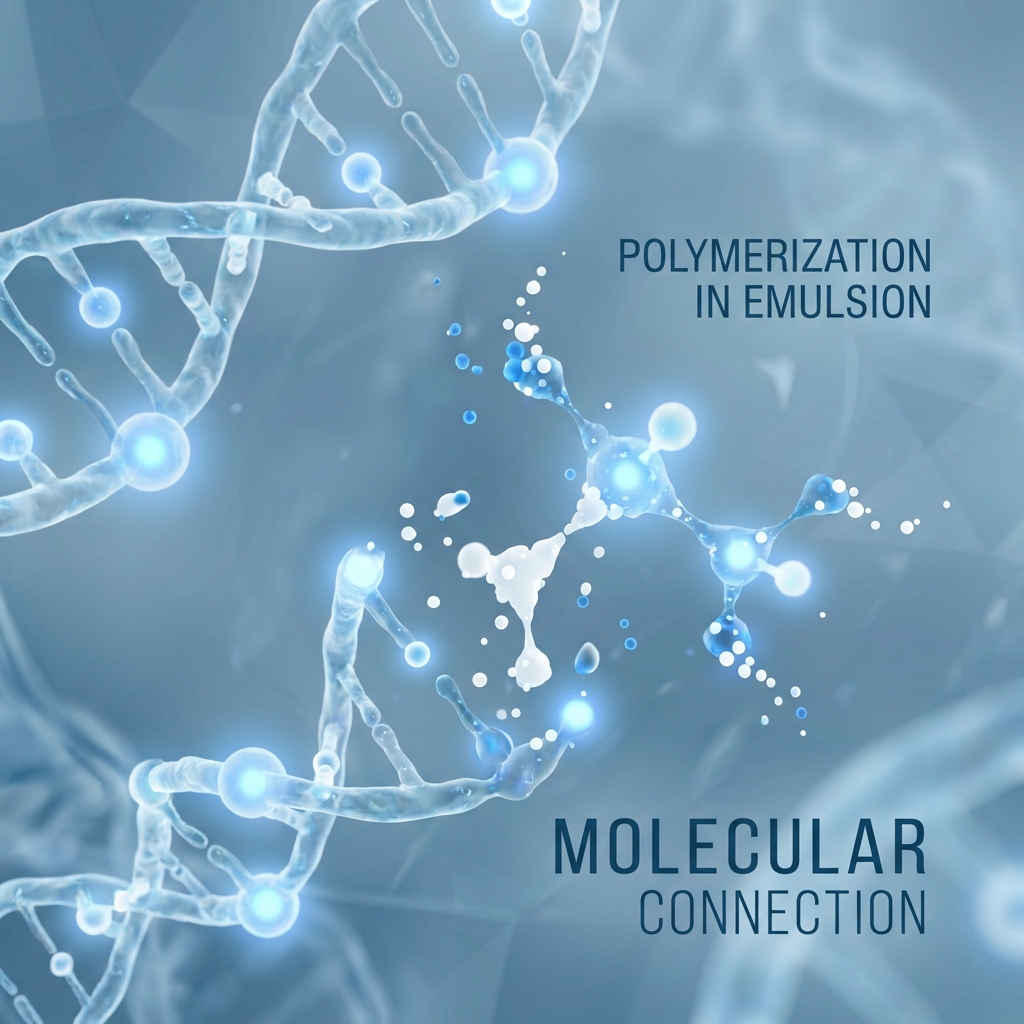
Figure 1: Molecular visualization of polymer chains forming within the emulsion micelles.
The Chemistry of Emulsion Polymerization
Emulsion polymerization is a complex heterophase process where monomers are dispersed in water using surfactants and initiated by water-soluble free radicals to form polymer particles. Unlike simple solution polymerization, this process occurs within distinct micelles, allowing for the production of high-molecular-weight polymers at relatively low viscosities. Mastering the kinetics of this reaction—specifically the nucleation, particle growth, and termination stages—is fundamental to controlling the final properties of the emulsion.
| Stage | Description |
|---|---|
| Monomer Dispersion | The breakdown of monomer droplets into microscopic micelles using surfactants. |
| Initiation Phase | Free radicals enter the micelles to start the polymerization chain reaction. |
| Particle Growth | Continuous supply of monomer from droplets to the growing polymer particles. |
| Termination | Completion of the reaction where polymer chains stabilize and reaction rates plateau. |
Pure Acrylics vs. Styrene Acrylics: Performance & Cost Analysis
Choosing between pure acrylics and styrene acrylics is the first critical decision for any manufacturer, directly impacting both the cost structure and the target market. Pure acrylics, composed entirely of acrylate and methacrylate monomers, offer superior UV resistance and long-term durability, making them the gold standard for premium exterior paints. In contrast, styrene acrylics incorporate styrene as a "hard" monomer, which significantly reduces cost and improves water resistance but sacrifices some UV stability, making them ideal for interior paints, primers, and industrial coatings.
| Type | Core Characteristics |
|---|---|
| Pure Acrylics | Excellent UV stability, non-yellowing, high cost, ideal for premium exterior finishes. |
| Styrene Acrylics | Cost-effective, high hardness, good water resistance, prone to yellowing (UV degradation). |
| Vinyl Acrylics | Lowest cost (EVA based), used primarily for economy interior wall paints. |
Critical Quality Parameters: Solid Content, MFFT, and Viscosity
The commercial value of an acrylic emulsion is defined by a strict set of technical specifications that determine its application performance. Solid content dictates the yield and coverage, while Minimum Film Forming Temperature (MFFT) ensures the polymer coalesces into a continuous film under ambient conditions without cracking. MFFT is governed directly by the polymer's glass transition temperature (Tg), since a film cannot coalesce below the point where the polymer is still in its hard, glassy state. Precise control of these parameters during the reactor stage is non-negotiable, as even minor deviations can lead to batch failure or poor end-product performance such as peeling or blistering, one of several formulation-stage failure modes covered in our rheology modifiers guide.
| Parameter | Function & Specification |
|---|---|
| Solid Content | Typically 45-55%; higher solids mean less water transport and faster drying but higher viscosity. |
| MFFT (Minimum Film Forming Temp) | The lowest temperature at which the emulsion forms a crack-free film; controlled by glass transition temperature (Tg). |
| Viscosity | Determines storage stability and ease of pumping/handling during paint formulation. |
| pH Stability | Critical for maintaining the effectiveness of surfactants and preventing coagulation. |
3. How Acrylic Emulsion Paints are Formulated
Formulating a commercial paint is an engineering challenge that requires dispersing solid particulates into a stable liquid binder system, following the same general framework covered in our paint formulation fundamentals guide. Acrylic emulsions function as the primary binder, forming a continuous polymer matrix that anchors pigments and fillers to the substrate. Successful paint design depends on balancing binder chemistry with functional additives to optimize viscosity, pigment dispersion, wet adhesion, and long-term shelf stability. The compounding process is split into distinct thermodynamic phases to protect the delicate colloidal structure of the emulsion from high-shear degradation.
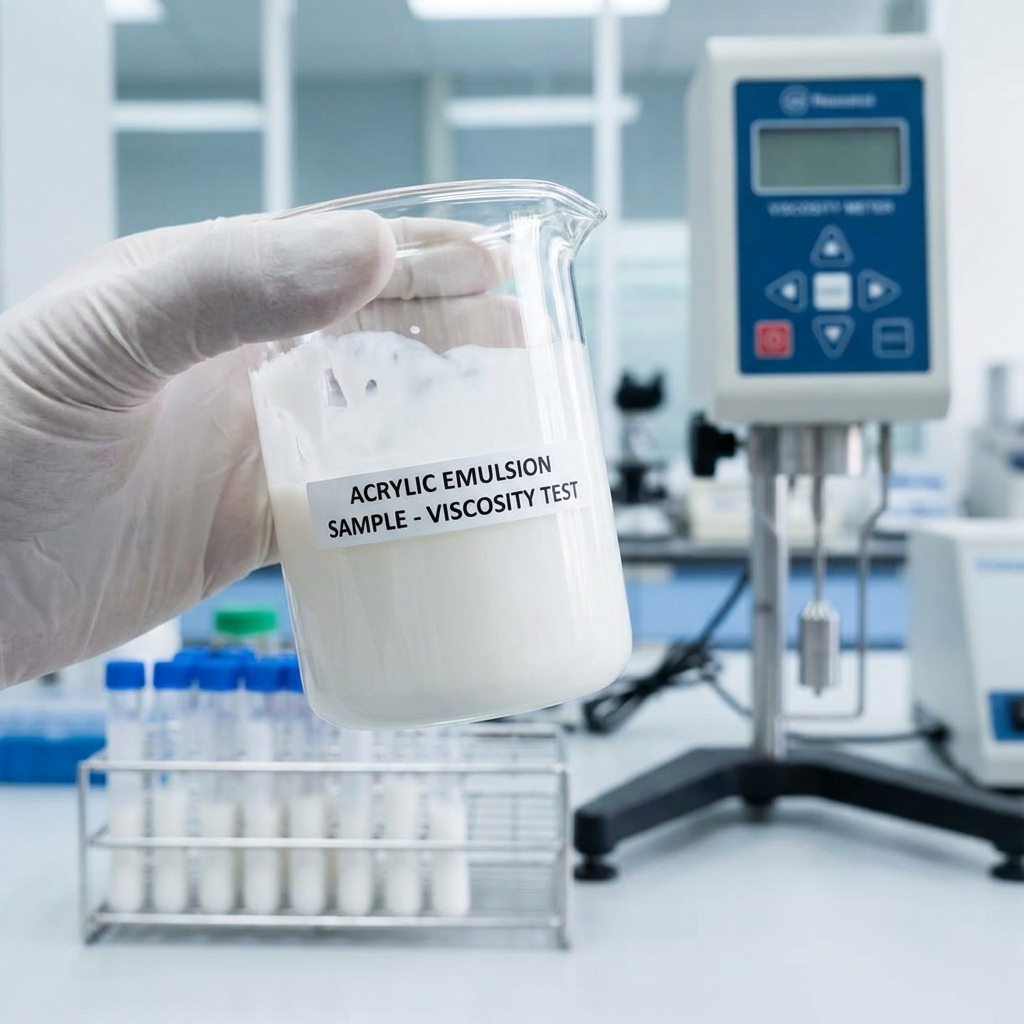
Figure 2: Critical quality control: Measuring the viscosity and stability of the final acrylic emulsion.
The Formulation Framework: From Binder to Paint
Formulating a high-quality paint involves far more than just diluting an emulsion; it requires a delicate balance of four key components: the binder (emulsion), pigments, solvents (water/co-solvents), and additives. The formulation process is generally divided into two distinct stages: the "Grind" phase, where pigments are dispersed, and the "Let-down" phase, where the emulsion is added. This separation is vital because the high shear forces required to disperse pigments would destroy the delicate emulsion stability if mixed together prematurely.
| Phase/Component | Function |
|---|---|
| The Grind (Mill Base) | Water, dispersants, wetting agents, biocides, and pigments (TiO2, extenders) are mixed at high speed. |
| The Let-down | The acrylic emulsion is added to the mill base under low shear agitation. |
| Thickeners & Rheology | Rheology modifiers are added last to adjust viscosity and flow. |
| pH Adjustment | Ammonia or amines are used to stabilize the final pH (usually 8.0-9.5). |
Solving Common Formulation Challenges
New manufacturers often face specific defects that can ruin the perceived quality of their paint, such as poor scrub resistance or settling in the can. Wet adhesion promoters can be introduced to the monomer mix during polymerization to prevent peeling in humid conditions, while careful selection of dispersants prevents pigment flocculation — the mechanism explained in depth in our role of dispersants in paint and pigment dispersion guides. Understanding the interaction between the specific surfactant system in the emulsion and the associative thickeners in the paint formulation is the "secret sauce" to achieving a premium, creamy in-can feel and spatter-free application.
| Defect | Solution |
|---|---|
| Scrub Resistance Issues | Improved by optimising the Pigment Volume Concentration (PVC) and using high-quality binders. |
| Syneresis (Separation) | Prevented by choosing the right combination of HASE or HEUR thickeners. |
| Foaming | Frequent issue resolved by using appropriate mineral oil or silicone-based defoamers during the grind. |
| Color Float | Caused by incompatible surfactants; resolved by testing dispersant compatibility. |
4. Setting Up Your Manufacturing Unit
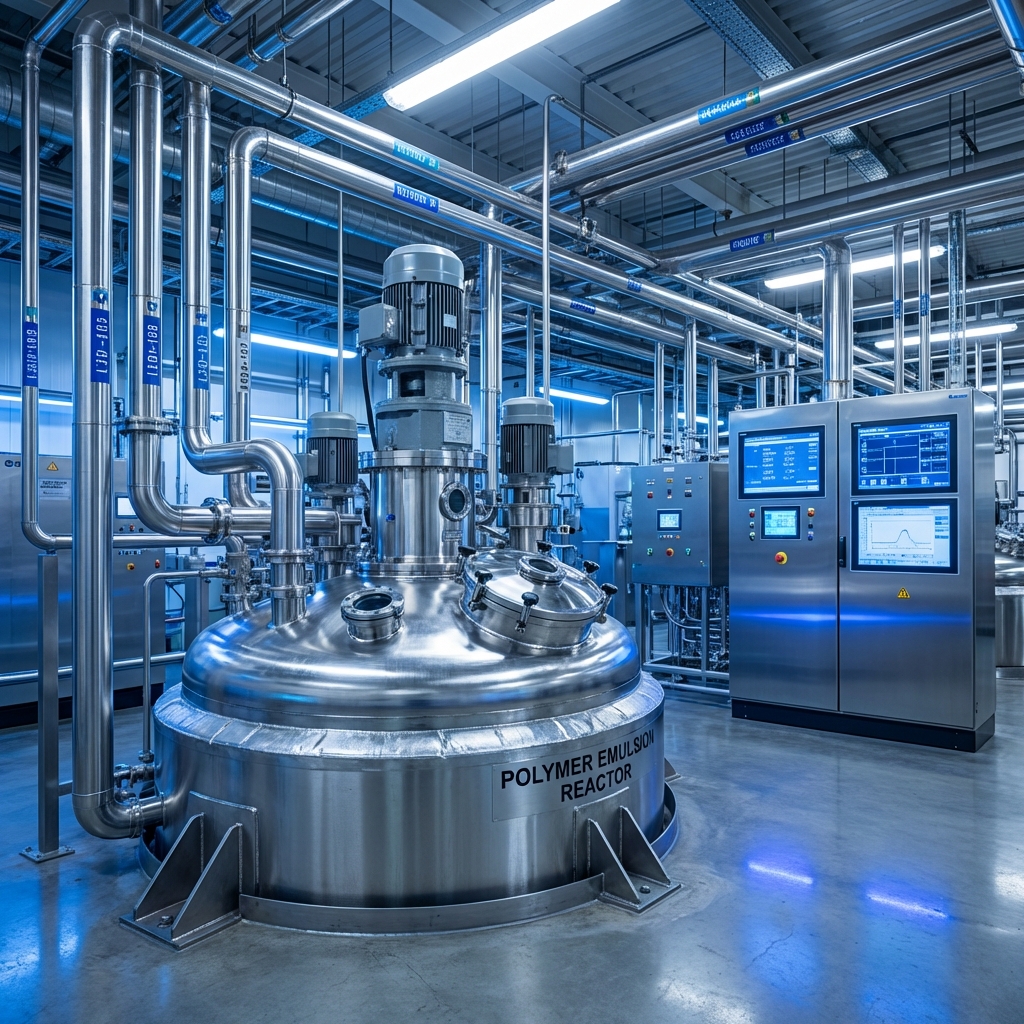
Designing and scaling an industrial acrylic emulsion plant requires rigorous chemical process engineering and structural planning. The core of the facility revolves around reactor design, thermodynamics of exothermic polymerization, high-shear agitation, and precise feed-rate control systems. Because polymerization releases significant heat, efficient cooling and safety containment protocols are absolute priorities to prevent thermal runaway. Furthermore, plants must incorporate waste treatment (ETP) systems, absolute filtration units, and automated packaging lines to ensure GHS and local environmental compliance.
Essential Machinery: Reactors, High-Speed Dispersers, and Storage
A standard acrylic emulsion plant centers around a stainless steel jacketed reactor equipped with a reflux condenser and precise temperature controls. The exothermic nature of polymerization requires efficient cooling systems to prevent thermal runaway, a major safety hazard in which heat generation outpaces heat dissipation as vessel size increases. For the paint formulation side, the requirements differ; you specifically need High-Speed Dispersers (HSD) with cowles blades to break down pigment agglomerates effectively, alongside separate storage tanks for the finished emulsion and the final paint products, a setup comparable to the equipment covered in our interior emulsion paint manufacturing guide.
| Machine | Purpose |
|---|---|
| Jacketed Reactor | SS316 material, typically 2KL to 20KL capacity, for the polymerization process. |
| Pre-emulsion Tanks | Used to mix monomers and water before feeding into the reactor. |
| High-Speed Disperser (HSD) | Essential for the "grind" phase of paint making. |
| Fill & Seal Machines | Automated lines for packaging into buckets or drums. |
5. Future Trends & Conclusion
The future of the acrylic emulsion sector is defined by high-performance nanotechnology, smart responsive coatings, and strict environmental regulations. Modern research is driving a shift toward core-shell nanoparticle designs, self-crosslinking polymers, and bio-based renewable monomers. By transitioning away from petroleum derivatives, the next generation of emulsions will deliver exceptional durability while maintaining a near-zero carbon footprint. Startups and established manufacturers who adopt these advanced hybrid systems early will capture high-margin niches in the global green chemical market, provided their reactor scale-up follows the same disciplined progression outlined in our lab-to-market scale-up guide.
The Rise of Nanotech and Hybrid Emulsions
The frontier of emulsion technology lies in the development of core-shell morphologies and hybrid polymers that combine the best properties of different chemistries. Nanotechnology is enabling the creation of "smart coatings" that are self-cleaning or anti-microbial, opening new high-margin niches for innovative startups. By adopting these advanced technologies early, new entrants can differentiate themselves in a crowded market that is otherwise competing solely on price.
| Trend | Description |
|---|---|
| Core-Shell Technology | Hard core for durability, soft shell for film formation (no coalescent needed). |
| Self-Crosslinking | Cures upon exposure to air for epoxy-like hardness in a water-based system. |
| Bio-based Monomers | Moving away from petroleum derivatives to renewable plant-based sources. |
Don't just sell "white paint." Focus on solving specific problems like dampness (waterproofing coatings) or heat (cool roof coatings) to build immediate authority and higher margins.
Frequently Asked Questions (FAQ)
Entering the acrylic emulsion and paint manufacturing business involves addressing complex questions across polymer chemistry, factory licensing, financial capital, and process engineering. Below are comprehensive, professionally validated answers to the most common questions encountered by chemical entrepreneurs, procurement officers, and plant managers.
1. What is the minimum investment required to start a small-scale acrylic emulsion plant?
Setting up a basic 2-5 ton/day emulsion plant typically requires an investment between ₹85 Lakhs to ₹2.1 Crores, depending on land costs and automation levels. A simple paint formulation unit (buying emulsion, mixing paint) can be started for as low as ₹12 Lakhs - ₹25 Lakhs.
2. Can I manufacture both pure acrylics and styrene acrylics in the same reactor?
Yes, the reactor hardware is versatile. However, you must have rigorous cleaning protocols (CIP) to prevent cross-contamination, especially when switching between styrene-based and pure acrylic batches.
3. What are the main regulatory licenses needed in India?
You will typically need a Pollution Control Board (PCB) "Consent to Operate," Factory License, GST registration, and compliance with local fire safety and waste disposal (ETP) regulations.
4. How do I reduce the VOC content of my emulsion?
You can use advanced stripping techniques (vacuum stripping) at the end of the polymerization process to remove unreacted monomers, or use high-conversion redox initiators to ensure >99.9% monomer conversion.
5. Why does MFFT matter more than solid content alone when judging emulsion quality?
Solid content only indicates yield and coverage, while MFFT determines whether the emulsion will actually form a continuous, crack-free film at the temperatures the product will be applied and cured at. An emulsion with high solids but an MFFT above the expected application temperature will fail to coalesce properly, producing a chalky or cracked film even though the raw specification sheet looks acceptable.
6. What causes an acrylic emulsion to coagulate during the polymerization reaction?
Coagulation typically results from insufficient surfactant coverage on growing polymer particles, uncontrolled temperature spikes from the exothermic reaction, or mechanical shear that disrupts the electrostatic or steric stabilization holding particles apart. Because heat removal becomes harder as batch size increases, coagulation risk is highest during scale-up from lab to pilot to commercial reactors.
7. Why is the Grind phase kept separate from the Let-down phase in paint manufacturing?
The Grind phase uses high shear to break down pigment agglomerates into a stable dispersion, while the acrylic emulsion binder is a shear-sensitive colloidal system that can destabilize or coagulate under the same high-shear conditions. Adding the emulsion only during the low-shear Let-down phase protects the binder's particle structure while still achieving complete pigment dispersion.
Ready to Build Your Formulation Empire?
Starting a chemical manufacturing business requires more than just a recipe; it requires a blueprint for engineering, compliance, and market strategy. Work with Specialist Absar Khan to optimize your formulations or design a turnkey industrial emulsion and paint compounding plant.
About the Specialist
Absar Khan is the principal consultant and chemical formulation architect at Global Formulation. He specializes in the design, optimization, and scaling of industrial lubricants, polyurethane sealants, aerosol gas-dosing systems, and green, low-VOC polymers. Absar provides turnkey chemical engineering services, hands-on factory plant setups, raw material cost audits, and quality control designs for leading brands globally.
LinkedIn Portfolio: Connect with Absar Khan on LinkedIn