Acrylic, Alkyd, Epoxy & Polyurethane Resins Explained
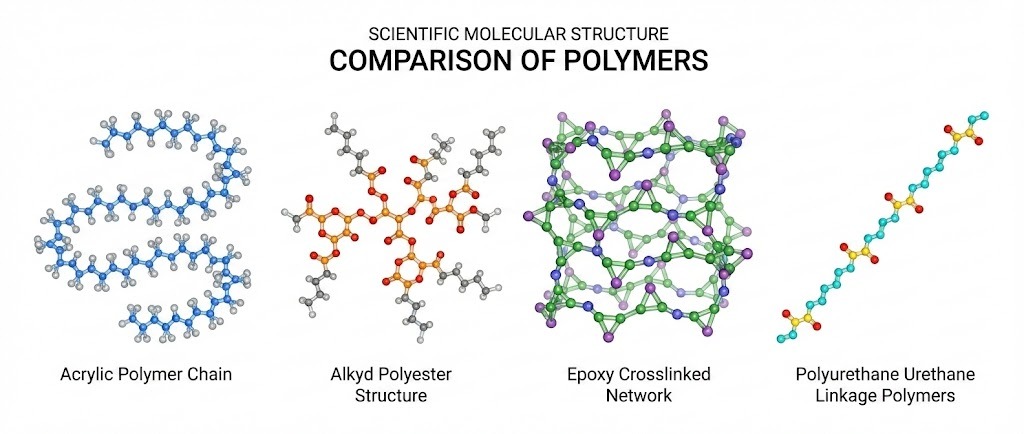
Selecting the optimal polymeric binder is the single most critical decision in coating science, polymer engineering, and industrial manufacturing, directly determining the mechanical, chemical, and environmental performance of the finished product. Acrylic, alkyd, epoxy, and polyurethane resins represent distinct chemical families, each utilizing unique polymerization mechanisms, cross-linking configurations, and curing pathways. For coating formulators, startup entrepreneurs, and product developers, mastering these underlying polymer chemistries is essential to avoid catastrophic field failures, achieve global regulatory compliance, and optimize raw material costs.
Table of Contents
- 1. Introduction: Why the Resinous Binder Dictates Coating Durability
- 2. Overview of the Four Major Resin Families
- 3. Acrylic Resins: Polymerization Dynamics and Tg Engineering
- 4. Alkyd Resins: Polycondensation and Oxidative Autoxidation Chemistry
- 5. Epoxy Resins: Stoichiometry and Nucleophilic Hardener Cross-Linking
- 6. Polyurethane Resins: Isocyanate Polyaddition and Network Customization
- 7. Interfacial Performance and Application-Based Selection Matrix
- 8. Operational and Economic Considerations for Chemical Startups
- 9. Common Engineering Pitfalls in Commercial Resin Selection
- 10. Why Professional Resin Selection and Formulation Support Matters
- 11. Frequently Asked Questions (FAQ)
1. Introduction: Why the Resinous Binder Dictates Coating Durability
A resin serves as the non-volatile, film-forming polymeric binder that acts as the backbone of any paint, coating, adhesive, or composite system. Thermodynamically, its primary function is to wet and encapsulate pigment particles, mineral extenders, and structural fillers, binding them into a continuous solid matrix that anchors securely to a substrate. As the carrier solvent evaporates or chemical cross-linking proceeds, the resin forms an interfacial boundary layer that prevents atmospheric oxygen, moisture, salt ions, and corrosive chemicals from reaching the underlying material.
In practical industrial application, the molecular weight, glass transition temperature, cross-linking density, and functional backbone groups of the selected resin dictate every single performance variable of the cured film. This includes crucial parameters such as mechanical elongation, surface hardness, direct and reverse impact resistance, chemical and solvent barrier properties, gloss retention, and weathering profiles under aggressive solar UV radiation. Without matching the chemical characteristics of the resin to the physical demands and service environment of the substrate, the formulated system will inevitably fail — a foundational principle across the entire paints and coatings industry, not just this one comparison.
2. Overview of the Four Major Resin Families
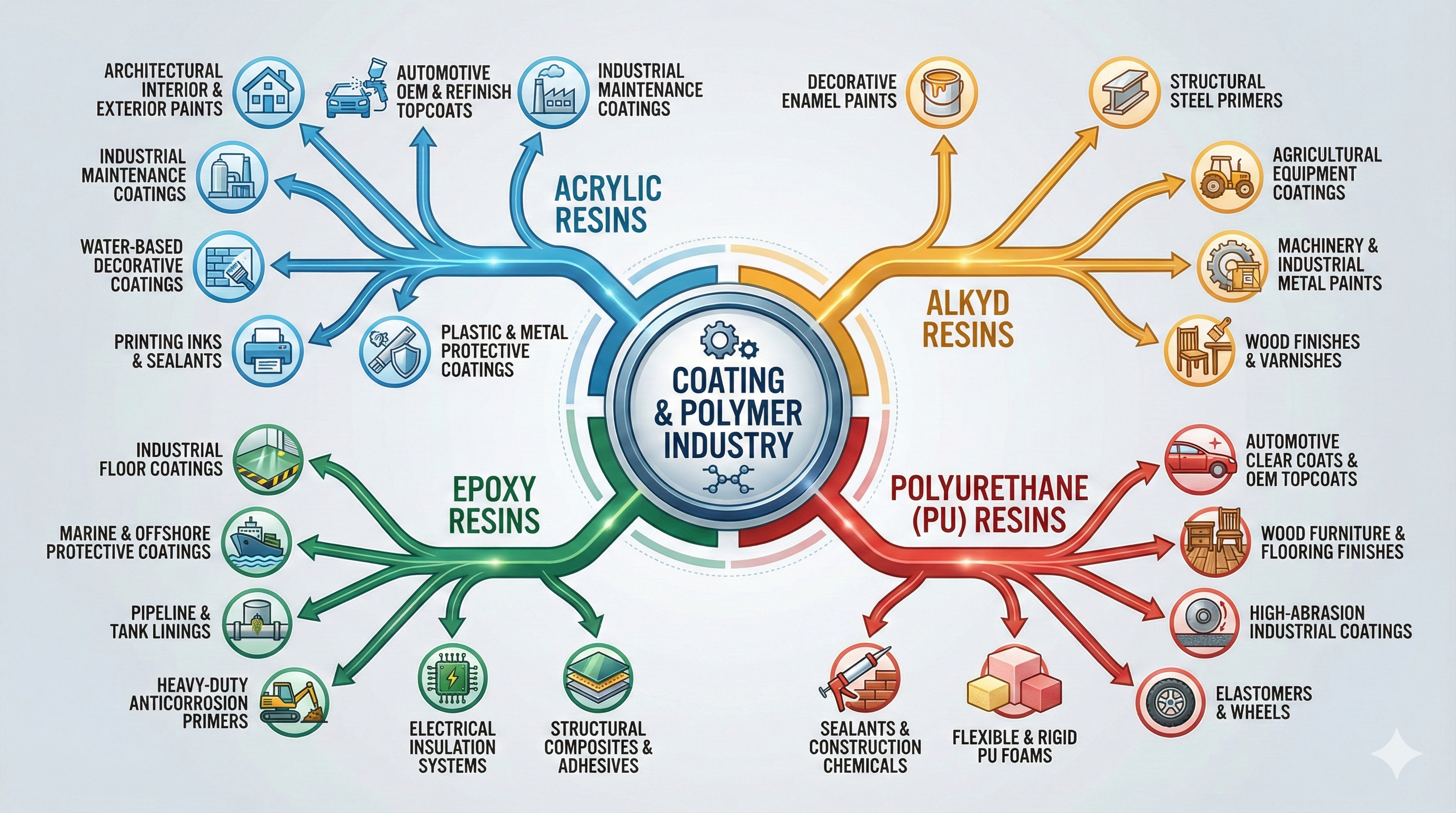
The commercial coating and adhesive industries are structurally centered around four primary polymer families: acrylics, alkyds, epoxies, and polyurethanes. Each family is characterized by a specific synthetic origin and curing chemistry, establishing distinct performance brackets and regulatory profiles that align with specific end-user applications. While one resin may excel at exterior atmospheric exposure, another might be specified exclusively for high-stress chemical immersion or heavy-duty subsea protective primers.
Startups and chemical entrepreneurs must recognize that there is no universal "best" resin system; there is only the scientifically correct resin for a defined technical service life and commercial budget. Developing a product portfolio requires balancing the low-VOC compliance of modern water-borne acrylic emulsions, the smooth leveling of economical oil-modified alkyd polyesters, the unmatched chemical shielding of thermoset epoxies, and the tunable high-abrasion durability of polyurethanes.
3. Acrylic Resins: Polymerization Dynamics and Tg Engineering
Acrylic resins are synthetic polymers and copolymers synthesized from acrylic acid, methacrylic acid, and their various alkyl ester monomers. These systems represent the absolute standard in modern architectural, exterior decorative, and high-performance automotive refinish markets due to their outstanding optical clarity, chemical stability, and long-term resistance to ultraviolet light. The ability to copolymerize multiple acrylic monomers allows chemical engineers to customize the physical hardness and film-forming characteristics of the resin with extreme precision.
How Acrylic Resins Are Manufactured
Acrylic resins are synthesized primarily through free-radical addition polymerization of selected monomers in solution, emulsion, or suspension reactor systems. During the process, organic initiators (such as ammonium persulfate or benzoyl peroxide) undergo thermal homolysis to generate active free radicals that attack the carbon-carbon double bonds of the acrylic monomers, initiating rapid chain propagation. The average molecular weight and molecular weight distribution (polydispersity) are strictly regulated by controlling temperature profiles, feed rates, and utilizing chain-transfer agents like dodecyl mercaptan to prevent gelation and limit polymer chain length.
Glass Transition Temperature (Tg) Customization
The physical properties of the dry acrylic film are engineered by balancing the ratios of "hard" and "soft" monomers to target a specific glass transition temperature (Tg) and Minimum Film Forming Temperature (MFFT). Hard monomers, such as Methyl Methacrylate (MMA), possess a high Tg of approximately 105°C and impart structural stiffness, scratch resistance, and gloss retention to the copolymer. Soft monomers, like Butyl Acrylate (BA), have a low Tg of around -54°C and introduce mechanical flexibility, impact strength, and water resistance; the final copolymer Tg is precisely calculated using the Fox Equation to ensure proper film formation at ambient temperatures without excessive tackiness.
Thermoplastic Acrylics (TPA) vs. Thermoset Acrylics (TSA)
Acrylic binders are chemically classified into Thermoplastic Acrylics (TPA) and Thermoset Acrylics (TSA), defining their drying mechanisms and final physical properties. TPAs are high-molecular-weight polymers that dry strictly via the physical evaporation of solvent or water, leaving behind a linear polymer structure that remains soluble and can be redissolved by solvent contact. TSAs are lower-molecular-weight polymers containing functional cross-linkable groups (such as hydroxyl, carboxyl, or amide groups) that undergo chemical reaction with external curing agents (such as melamine-formaldehyde or polyisocyanates) to form permanent, highly solvent-resistant three-dimensional networks.
Key Technical Properties
The chemical backbone of acrylic resins, composed entirely of saturated carbon-carbon bonds, is highly resistant to photo-oxidative degradation under outdoor solar exposure.
- Outstanding UV Stability — Does not absorb sunlight in the solar UV region, preventing film yellowing, cracking, and chalking over years of outdoor service.
- Exceptional Color and Gloss Retention — Maintains optical clarity and high reflective gloss in architectural and automotive clear coats.
- High Breathability (Water Vapor Permeability) — Allows internal moisture trapped in masonry substrates to escape as vapor, preventing blister formation.
- Good Elasticity and Flexibility — Accommodates thermal expansion and contraction of outdoor plaster, wood, and concrete walls.
- Fast Drying Profiles — Thermoplastic latexes dry rapidly by water evaporation, allowing fast recoat windows in domestic paints.
Typical Applications
Due to their high durability, low toxicity, and environmental compliance, acrylic resins dominate water-borne paint and clear varnish sectors.
- Exterior and interior premium architectural wall coatings
- High-gloss automotive clear coats, finishes, and plastic refinishes
- Industrial maintenance topcoats applied over corrosion-resistant primers
- Water-based wood sealants, varnishes, and concrete floor sealers
- Advanced graphic arts printing inks, pressure-sensitive adhesives, and joint sealants
Formulators specifying acrylic emulsions for any of these markets still work within the same hard/soft monomer balancing act described above; our dedicated guide to acrylic emulsion formulation covers the surfactant and rheology-modifier side of that process in more depth.
4. Alkyd Resins: Polycondensation and Oxidative Autoxidation Chemistry
Alkyd resins are oil-modified polyesters synthesized through polycondensation reactions, representing a highly successful integration of synthetic polymers and renewable natural oils. These binders are widely celebrated in decorative, architectural, and light industrial protective coatings for their exceptional wood and metal wetting characteristics, outstanding gloss development, and cost-effective performance. Alkyds cure via a unique ambient-temperature oxidative cross-linking process that utilizes atmospheric oxygen to transform the liquid paint into a durable solid film.
How Alkyd Resins Are Manufactured
Alkyd synthesis is carried out in high-temperature batch reactors (typically 220°C to 250°C) with continuous water removal to drive the equilibrium esterification reaction forward. The formulation is composed of three primary ingredients: polyols (such as glycerol, pentaerythritol, or neopentyl glycol), dibasic acids or anhydrides (such as phthalic anhydride or isophthalic acid), and natural drying monobasic fatty acids (derived from soya oil, linseed oil, tall oil, or dehydrated castor oil). The reaction must be carefully monitored via acid value and viscosity testing to prevent premature gelation in the reactor.
Understanding Oil Length Classifications
The performance profile of an alkyd resin is chemically defined by its "oil length," which is the weight percentage of natural drying fatty acids incorporated into the polyester backbone.
- Short Oil Alkyds (Less than 45% oil content) — High in polyester content, highly rigid, and soluble only in aromatic solvents. They do not dry effectively at room temperature and must be baked (baked enamels) or chemically cross-linked with amino resins for industrial finishes.
- Medium Oil Alkyds (45% to 55% oil content) — Offer a balanced compromise between hardness, drying speed, and flexibility, finding wide application in spray-applied industrial machinery primers and enamels.
- Long Oil Alkyds (Greater than 55% oil content) — Highly soluble in aliphatic mineral spirits, highly flexible, and dry at room temperature via oxidative autoxidation, making them the absolute standard for brush-applied architectural gloss enamels.
The Oxidative Autoxidation Curing Mechanism
Long and medium oil alkyds dry initially by solvent evaporation, followed by a chemical curing phase where unsaturated double bonds in the fatty acid chains react with atmospheric oxygen. Oxygen molecules diffuse into the wet film and react at allylic methylene groups to generate organic hydroperoxides; this autoxidation cascade is catalyzed by metallic driers (primary driers like cobalt octoate that accelerate peroxide decomposition at the film surface, and secondary through-driers like zirconium and calcium octoates that promote uniform radical cross-linking throughout the entire depth of the film). This cross-linking process continues slowly over weeks, increasing hardness but eventually leading to film yellowing and embrittlement over years as the aliphatic chains continue to oxidize.
Key Technical Properties
Alkyd resins deliver a highly desirable combination of aesthetic gloss and exceptional surface leveling at an economical price point.
- Superior Wetting and Penetration — Low surface tension allows the resin to penetrate porous wood fibers and micro-rough metal surfaces, establishing outstanding adhesion.
- Exceptional Flow and Leveling — Slow initial drying window allows brush marks to disappear completely, leaving a smooth glass-like finish.
- Very High Brilliant Gloss — Polyester structure enables ultra-high refractive index finishes with brilliant, deep reflections.
- Good Single-Coat Film Build — High solids content at application viscosity allows high dry film thickness per coat.
- Tendency to Yellow and Embrittle — Aromatic phthalic structure and continued oxidation cause white paints to yellow in dark interiors and crack outdoors.
Typical Applications
Due to their ease of application, high gloss, and excellent substrate adhesion, alkyds are widely specified for decorative wood and steel protection.
- Decorative high-gloss enamel paints for doors, trim, and architectural metalwork
- Economical industrial primers and topcoats for structural steel and agricultural machinery
- Premium wood stains, varnishes, deck sealers, and marine wood finishes
- Fast-drying modification binders blended into acrylic and chlorinated rubber formulations
These same oil-length trade-offs explain why alkyds remain the default choice for brush-applied gloss finishes even as the industry shifts toward lower-VOC binder systems.
5. Epoxy Resins: Stoichiometry and Nucleophilic Hardener Cross-Linking
Epoxy resins are thermosetting polymers characterized by the presence of highly reactive ring-strained epoxide (oxirane) groups, representing the absolute gold standard in heavy-duty industrial protective coatings, flooring, and composites — a chemistry covered in full in our dedicated guide to epoxy coatings. These systems do not dry by physical evaporation or simple oxidation; instead, they undergo a rapid, highly exothermic chemical reaction with amine hardeners to form a dense, three-dimensional thermoset polymer network. The resulting cured film possesses extraordinary mechanical rigidity, exceptional adhesion to structural concrete and metals, and outstanding chemical resistance.
How Epoxy Resins Are Manufactured
Industrial epoxy resins are synthesized through the reaction of a dihydric phenol—typically Bisphenol A (BPA)—with an excess of Epichlorohydrin in the presence of a basic catalyst (such as sodium hydroxide), followed by a dehydrohalogenation step. By adjusting the stoichiometric ratio of epichlorohydrin to Bisphenol A, chemical engineers produce liquid epoxy resins (like low-molecular-weight DGEBA with an Epoxide Equivalent Weight of around 188 g/eq) or solid epoxy resins (with higher molecular weights and higher EEW values). Advanced specialty epoxies utilize novolac resins as the phenolic backbone to increase cross-linking density and thermal resistance.
The Amine Curing Nucleophilic Addition Mechanism
The curing of an epoxy system is a highly precise thermodynamic process based on the nucleophilic addition reaction between the active hydrogen atoms of an amine hardener and the electrophilic carbon atoms of the epoxy ring. Primary amine groups on the hardener (e.g., Diethylenetriamine (DETA), Triethylenetetramine (TETA), or Isophoronediamine (IPDA)) attack the oxirane ring, opening the ring to generate a stable carbon-nitrogen bond and a highly polar hydroxyl group. The generated hydroxyl groups further enhance adhesion by forming strong hydrogen bonds with the metal or concrete substrate; the stoichiometric ratio of epoxy groups to active amine hydrogens must be calculated with absolute precision (usually 1:1) to prevent unreacted components from plasticizing or embrittling the film.
The UV Vulnerability and Chalking Phenomenon
Despite their unmatched chemical and mechanical strength, traditional Bisphenol A-based epoxy resins suffer from a critical environmental limitation: rapid photo-degradation under solar UV exposure. The aromatic benzene rings present in the Bisphenol A backbone absorb high-energy solar UV radiation, triggering a photo-Fries molecular rearrangement that cleaves the ether linkages; this photo-chemical breakdown causes the glossy surface of the epoxy to chalk rapidly, transforming into a dull, powdery, non-protective layer. Consequently, epoxy coatings are strictly prohibited as outdoor topcoats and must always be topcoated with a UV-stable aliphatic polyurethane or acrylic finish.
Key Technical Properties
Epoxies are engineered specifically for high-stress environments where physical wear and chemical contact are unavoidable.
- Extraordinary Chemical and Corrosion Resistance — Highly dense polymer network resists attack from acids, alkalis, aliphatic solvents, jet fuels, and high-salinity seawater.
- Outstanding Substrate Adhesion — Polar hydroxyl groups form extremely strong physical and chemical bonds with steel, aluminum, concrete, and fiberglass.
- Extremely Low Film Shrinkage — Unlike polyesters, epoxies do not release volatile by-products during curing, resulting in minimal shrinkage and exceptional dimensional stability.
- High Hardness and Abrasion Resistance — Tough thermoset structure withstands heavy forklift traffic, mechanical impact, and structural loads.
- Poor UV Weatherability — Undergoes rapid yellowing and chalking under sunlight, requiring protective topcoats in exterior applications.
Typical Applications
Due to their high chemical shielding and adhesive strength, epoxies are specified for subsea, industrial floor, and aerospace primer systems.
- High-build industrial floor coatings for warehouses, cleanrooms, and aircraft hangars
- Anticorrosive primers for marine vessels, offshore oil platforms, and structural bridge steel — see our related guide on zinc phosphate primer chemistry for a non-epoxy active-inhibition alternative
- Internal protective tank linings for fuel storage, chemical reactors, and wastewater piping
- High-strength structural adhesives, composite laminating resins, and electronic potting compounds
- High-adhesion automotive corrosion-resistant primers (electrophoretic e-coats)
In every one of these applications, the trade-off is the same: epoxy buys chemical and mechanical toughness at the cost of outdoor UV life, which is why it is so rarely specified as a standalone exterior topcoat.
6. Polyurethane Resins: Isocyanate Polyaddition and Network Customization
Polyurethane (PU) resins are high-performance polymers formed through polyaddition reactions that create urethane linkages along the polymer backbone, representing the absolute peak of custom engineering in the coatings industry. By pairing different classes of diisocyanates with polyester, polyether, or acrylic polyols, chemists can customize the cured film to exhibit any physical state—ranging from ultra-flexible, soft elastomeric sealants to glass-hard, impact-resistant industrial clear coats. This unmatched design flexibility, combined with outstanding abrasion and chemical resistance, makes polyurethanes the preferred choice for premium industrial finishes.
How Polyurethane Resins Are Manufactured
Polyurethanes are synthesized via a catalytic polyaddition reaction between organic compounds containing reactive diisocyanate groups and polymers containing multiple functional hydroxyl groups (polyols). The reaction proceeds rapidly at room temperature without the release of volatile by-products, utilizing catalysts such as dibutyltin dilaurate to control polymerization kinetics. Advanced water-borne polyurethanes, known as Polyurethane Dispersions (PUDs), are manufactured by dispersing pre-reacted, ionically modified polyurethane prepolymers into water under high shear, yielding low-VOC systems with exceptional film properties.
Aromatic (TDI/MDI) vs. Aliphatic (HDI/IPDI) Chemistry
The choice of the diisocyanate monomer is the single most critical factor in determining the UV stability and chemical profile of the polyurethane system.
- Aromatic Diisocyanates (TDI, MDI) — Contain benzene ring structures that react rapidly and are highly cost-effective, providing exceptional mechanical strength and chemical resistance. However, these aromatic structures absorb UV radiation and oxidize to form yellow, conjugated quinoid structures, restricting their use strictly to indoor coatings, sealants, foams, and subsea primers.
- Aliphatic Diisocyanates (HDI, IPDI) — Synthesized with linear or cyclic hydrocarbon backbones that do not absorb solar UV radiation. These systems are highly stable under sunlight and are specified exclusively for premium exterior topcoats, automotive clear coats, and aerospace finishes.
Two-Component (2K) Polyaddition vs. One-Component (1K) Moisture-Cure
Polyurethane systems are formulated as either Two-Component (2K) reactive networks or One-Component (1K) moisture-cure coatings, aligning with different industrial application requirements.
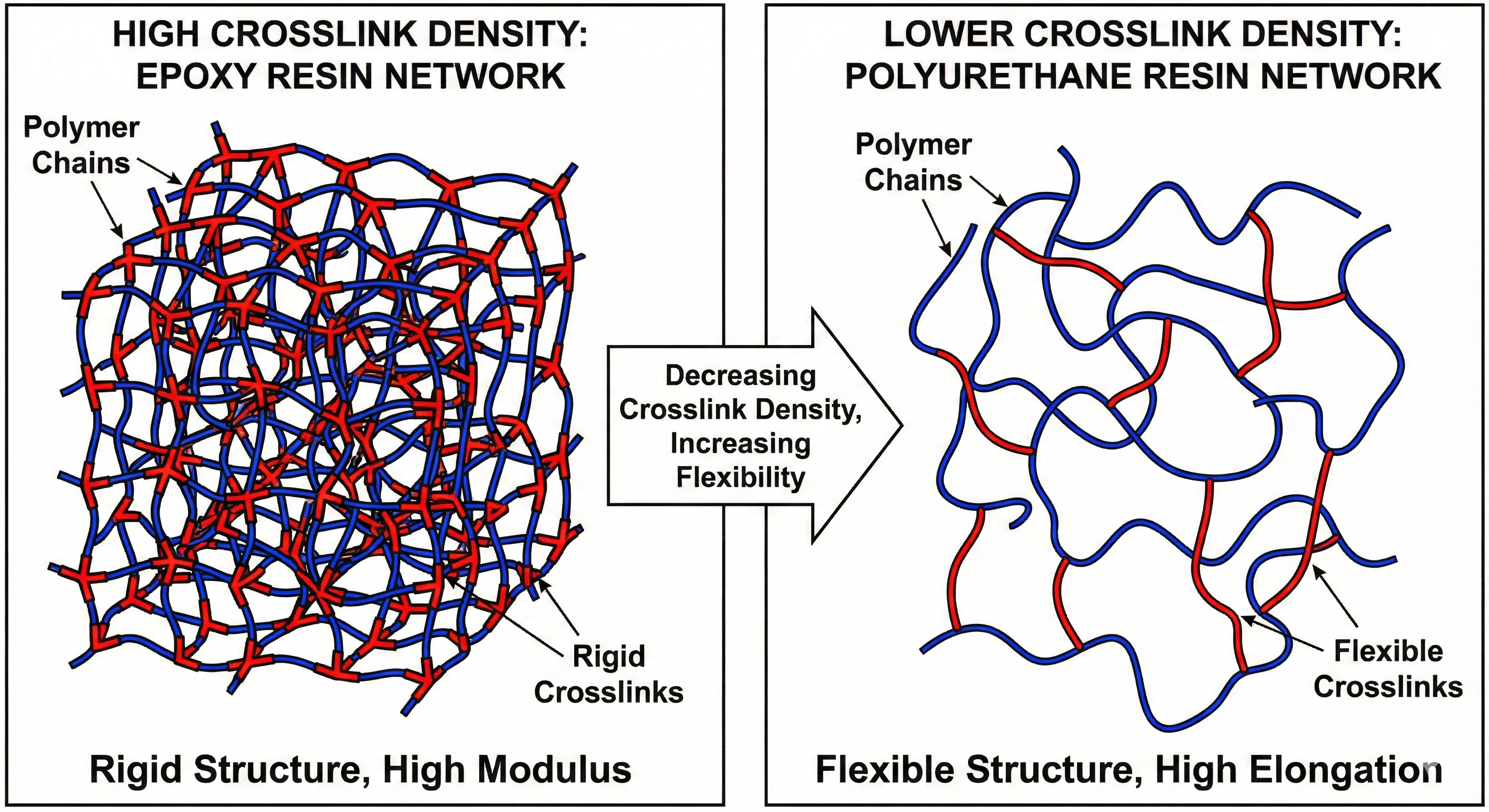
2K Polyaddition Systems: The hydroxyl-functional polyol (Part A) and the polyisocyanate cross-linker (Part B) are physically separated and mixed right before application. Once mixed, the system has a finite "pot life" during which the isocyanate groups add across the hydroxyl groups, generating a highly dense cross-linked network that offers the absolute maximum chemical and abrasion resistance.
1K Moisture-Cure Systems: Contain reactive, isocyanate-terminated prepolymers that remain stable in sealed containers. Upon application, the isocyanate groups react with ambient atmospheric humidity to form unstable carbamic acid intermediates, which rapidly decarboxylate to release carbon dioxide gas and yield primary amine groups; these generated amines then react with the remaining isocyanates to cross-link the film.
Key Technical Properties
Polyurethanes are characterized by their remarkable toughness, combining surface hardness with deep mechanical elasticity.
- Exceptional Abrasion and Scratch Resistance — Tough, flexible urethane linkages absorb mechanical energy, resisting scratches, impacts, and heavy physical wear.
- Highly Tunable Flexibility — Can be engineered as rigid glossy clear coats or highly elastic waterproof membranes that stretch over concrete cracks.
- Outstanding Weather and UV Stability (Aliphatic Grades) — Resists solar radiation, maintaining pristine gloss and color over decades of outdoor exposure.
- Excellent Adhesion and Versatility — Bounds strongly to plastics, wood, concrete, composite fibers, and pre-primed metals.
- Strict Moisture Sensitivity — Uncured isocyanates react aggressively with water, generating carbon dioxide bubbles that cause blistering and pinholes if applied during high humidity.
Typical Applications
Due to their superior visual quality and durability, polyurethanes are the standard for high-exposure consumer and industrial applications.
- Automotive OEM clear coats and high-durability refinish topcoats
- Aircraft and aerospace protective exterior finishes
- Premium wood finishes for high-wear hardwood floors and outdoor marine decking
- Elastomeric waterproof membranes and industrial joint sealants
- High-wear industrial floor coatings and heavy-duty structural steel topcoats
Because aliphatic polyurethanes hold both mechanical toughness and UV stability at once, they are frequently the finish layer applied over an epoxy primer rather than a substitute for it — see our direct polyurethane vs epoxy comparison for how the two are paired in practice.
7. Interfacial Performance and Application-Based Selection Matrix
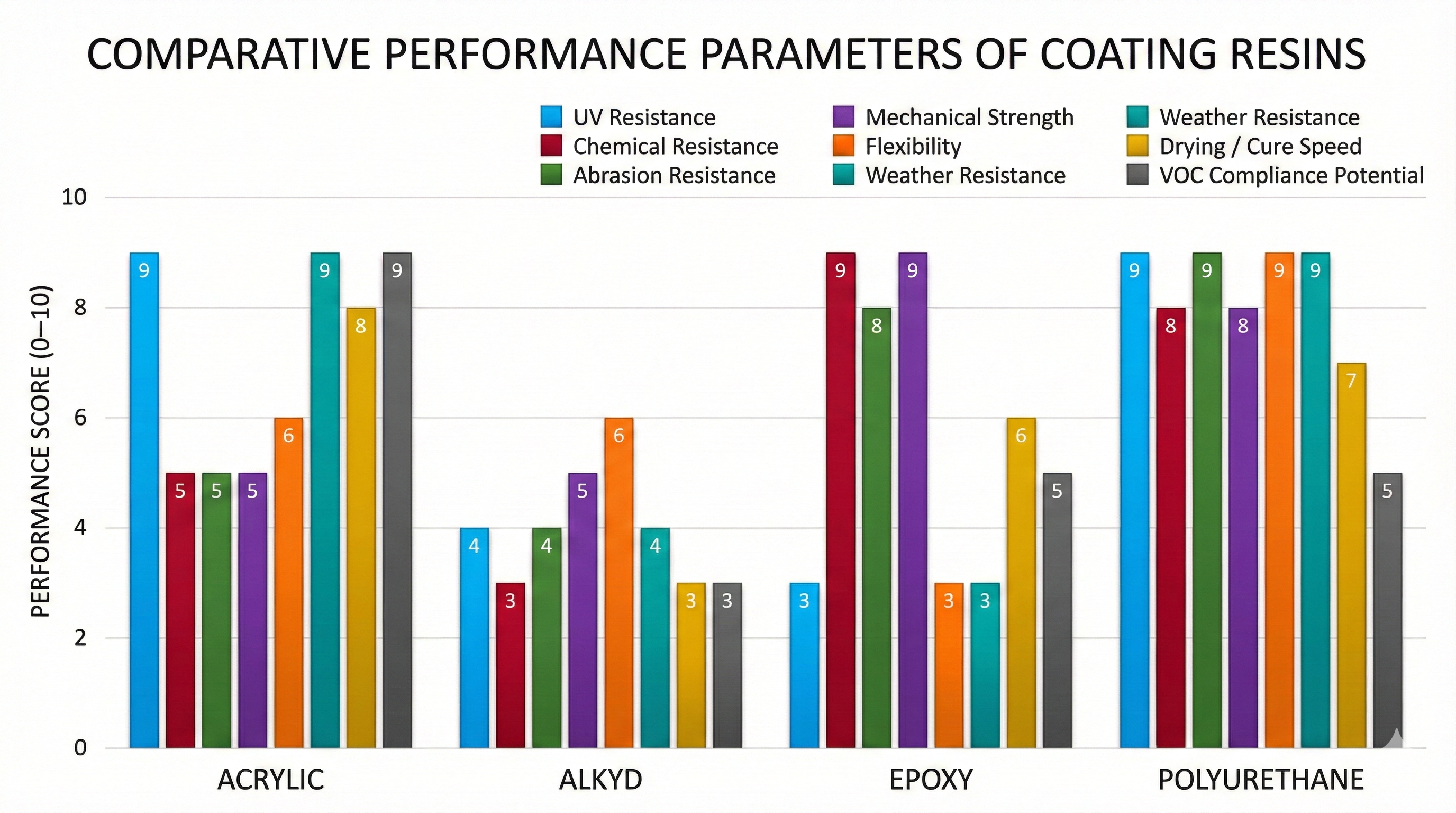
To design a successful coating or composite product, the formulator must compare the core physical and chemical properties of these four resin families. Each chemistry presents a distinct set of trade-offs that directly affect film performance, process complexity, and product lifespan. The following comparative data highlights the real functional differences relevant to engineering and initial product design.
| Performance Parameter | Acrylic Resins | Alkyd Resins | Epoxy Resins | Polyurethane Resins |
|---|---|---|---|---|
| Primary Curing Chemistry | Physical drying (TPA) or Cross-linking (TSA) | Ambient oxidative autoxidation | Amine-epoxide nucleophilic addition | Isocyanate-polyol polyaddition |
| UV & Weathering Resistance | Outstanding (Non-yellowing) | Moderate to poor (Yellows outdoors) | Extremely poor (Chalks rapidly under UV) | Excellent (Aliphatic) / Poor (Aromatic) |
| Chemical & Solvent Resistance | Moderate (Soluble in polar solvents) | Limited (Vulnerable to alkalis/acids) | Exceptional (Resists acids, alkalis & solvents) | Very good to excellent (High resistance) |
| Abrasion & Mechanical Durability | Moderate (Prone to physical scratches) | Moderate (Soft, flexible film build) | Very high (Rigid, stiff, hard surface) | Superior (Highly flexible, elastomeric toughness) |
| Substrate Adhesion Profiles | Good (Concrete, masonry, primed metal) | Excellent (Exceptional wood & steel wetting) | Extraordinary (Extremely strong chemical bonding) | Strong (Versatile adhesion across substrates) |
| Environmental & VOC Alignment | Outstanding (Water-borne emulsion standards) | Traditionally high VOC (Solvent carriers) | Medium VOC (High-solids/solvent-free options) | Variable (PUDs offer low VOC; 2K is solvent-rich) |
8. Operational and Economic Considerations for Chemical Startups
For chemical startups and manufacturing entrepreneurs, resin selection represents a critical decision that directly governs factory design, production safety, and corporate profitability. Setting up a production line for water-borne acrylic emulsions introduces minimal regulatory complexity and capital investment, as it primarily involves low-shear blending, water filtration, and zero explosion-proof infrastructure. In contrast, manufacturing solvent-borne alkyds, epoxies, or handling reactive diisocyanates demands strict hazardous area electrical compliance, advanced ventilation, and robust personal protective equipment to mitigate chemical exposure risks.
From an economic standpoint, raw material costs fluctuate significantly between these resin families. While basic long oil alkyds and vinyl-acrylic emulsions offer highly competitive, high-volume pricing ideal for entering cost-sensitive decorative markets, specialty aliphatic polyurethanes and novolac epoxies represent premium-tier chemical components. Startups must carefully balance the cost-performance ratio of their formulations — a discipline covered in more depth in our formulation cost vs market price analysis — since over-specifying a high-performance polyurethane for a simple interior wall coating will destroy market competitiveness, while under-specifying an acrylic for an offshore marine environment will lead to catastrophic field failures and ruin the brand's reputation. Regulators also weigh into this calculus: consumer and industrial coating VOC content is capped under frameworks like the EPA's national VOC emission standards, which push solvent-borne alkyd and epoxy lines toward water-borne or high-solids reformulation over time.
9. Common Engineering Pitfalls in Commercial Resin Selection
In commercial product development, early-stage manufacturers frequently make systematic, highly expensive errors during resin selection — several of the most common ones are cataloged in our broader guide to dangerous formulation mistakes. One of the most common pitfalls is applying a standard Bisphenol A-based epoxy as an outdoor industrial floor coating or structural steel topcoat, neglecting its extreme UV vulnerability. Within months, the epoxy undergoes rapid photo-degradation, resulting in deep surface chalking, severe gloss loss, and micro-cracking that leaves the substrate completely unprotected; this error is easily resolved by applying the epoxy strictly as an adhesive primer and topcoating it with a UV-stable aliphatic polyurethane finish.
Another frequent engineering error is failing to account for the extreme moisture sensitivity of two-component polyurethane isocyanates during on-site application. If a 2K polyurethane coating is applied onto concrete containing high moisture vapor transmission, or in high ambient humidity, the isocyanate groups aggressively react with the water molecules instead of the polyol. This competing reaction decarboxylates the isocyanate to release carbon dioxide gas, generating microscopic bubbles that manifest as severe dry film blistering, pinholing, and complete loss of adhesion; physical moisture barrier epoxy primers must always be applied to seal damp substrates before polyurethane topcoating.
10. Why Professional Resin Selection and Formulation Support Matters
Developing a market-ready chemical product is a disciplined engineering process that requires bridging laboratory polymer chemistry with large-scale industrial manufacturing. Selecting the wrong resin family, miscalculating cross-linking stoichiometry, or utilizing incompatible wetting agents can lead to phase separation, incomplete curing, and catastrophic product failure in the field. Partnering with a dedicated chemical consulting team ensures that your formulation is chemically stable, environmentally compliant, and economically optimized for high-volume commercial production.
Optimize Your Resin Formulation with Expert Consulting
Align your polymer selection, calculate precise stoichiometry, design low-VOC water-borne coatings, optimize batch mixing cycles, and resolve outdoor weathering challenges under the direct guidance of lead industrial consultant Absar Khan.
Email: consulting@globalformulation.com
Phone: +91 9819548320 +91 8169102990
11. Frequently Asked Questions (FAQ)
Q1: Which resin is best for exterior coatings?
A1: Acrylic and aliphatic polyurethane resins provide the best long-term UV and weather resistance for exterior use. Aliphatic polyurethanes offer superior mechanical durability and chemical resistance alongside UV stability, while acrylic emulsions are exceptionally cost-effective and highly breathable.
Q2: Is epoxy stronger than PU?
A2: Epoxy has higher compressive strength, stiffness, and chemical resistance, whereas polyurethane (PU) offers superior impact resistance, abrasion resistance, and flexibility. The selection between the two depends on whether the application demands high rigid resistance (epoxy) or dynamic durability under impact and physical expansion (PU).
Q3: Why are epoxies not used as topcoats outdoors?
A3: Epoxy resins contain aromatic ether bonds derived from Bisphenol A which absorb UV radiation. This energy triggers a photo-Fries rearrangement, breaking down the polymer backbone and leading to rapid gloss loss, color fading, surface chalking, and eventual degradation of the coating film unless protected by a UV-stable topcoat.
Q4: Are alkyd paints becoming obsolete?
A4: Traditional alkyds are declining in heavily regulated markets due to their high VOC (Volatile Organic Compound) content associated with solvent carriers. However, bio-based water-borne alkyds and modified alkyd emulsions are gaining popularity, keeping this cost-effective, high-adhesion polyester chemistry relevant in modern decorative and wood coatings.
Q5: Which resin is most environmentally compliant?
A5: Water-based acrylic emulsions and polyurethane dispersions (PUDs) offer the lowest VOC levels and best environmental profiles. These systems rely on water as the primary carrier phase, eliminating hazardous air pollutants (HAPs) and complying with stringent global VOC limits like those set by the EPA and European REACH regulations.
Q6: What is the difference between 1K and 2K polyurethane coatings?
A6: Two-component (2K) polyurethanes ship as a separate hydroxyl-functional polyol and polyisocyanate cross-linker that are mixed immediately before application, forming the densest, most chemically resistant network but with a limited pot life. One-component (1K) moisture-cure polyurethanes contain isocyanate-terminated prepolymers that stay stable in a sealed container and cure only on contact with ambient humidity, trading some ultimate film density for simpler single-pack handling.
About the Specialist
Absar Khan is a senior industrial consultant with cross-disciplinary expertise spanning pharmaceutical manufacturing, cosmetics and personal care, home and institutional care chemicals, aerosols, lubricants, and advanced process engineering. His work integrates multiple scientific and engineering domains, including formulation chemistry, GMP facility design, validation science, quality systems, regulatory compliance, and large-scale manufacturing optimization.
LinkedIn Portfolio: Connect with Absar Khan on LinkedIn
Explore Professional Insights
Deepen your understanding of polymer chemistry, coating science, and industrial scale-up with our expert-led resources. Our technical blog provides crucial insights to help chemical startups and established manufacturers optimize processes and comply with global standards:
- The Complete Guide to Paints and Coatings: Formulations & Manufacturing Excellence Read Article
- Mastering Paint Formulation: A Comprehensive Guide for New Manufacturers Read Article
- Understanding Volatile Organic Compounds (VOCs) and Their Impact on Pollution Read Article
- From Lab to Market: Key Differences Between R&D, Pilot Scale & Commercial Manufacturing Read Article
- Pigment Dispersion in Paints: The Role of Dispersants Read Article
- Manufacturing Without a Factory Read Article
- The Future of Eco-Friendly Chemical Products Read Article
- Choosing the Right Product Consultant Read Article