Pharmaceutical Manufacturing: GMP, Licensing & Market Entry
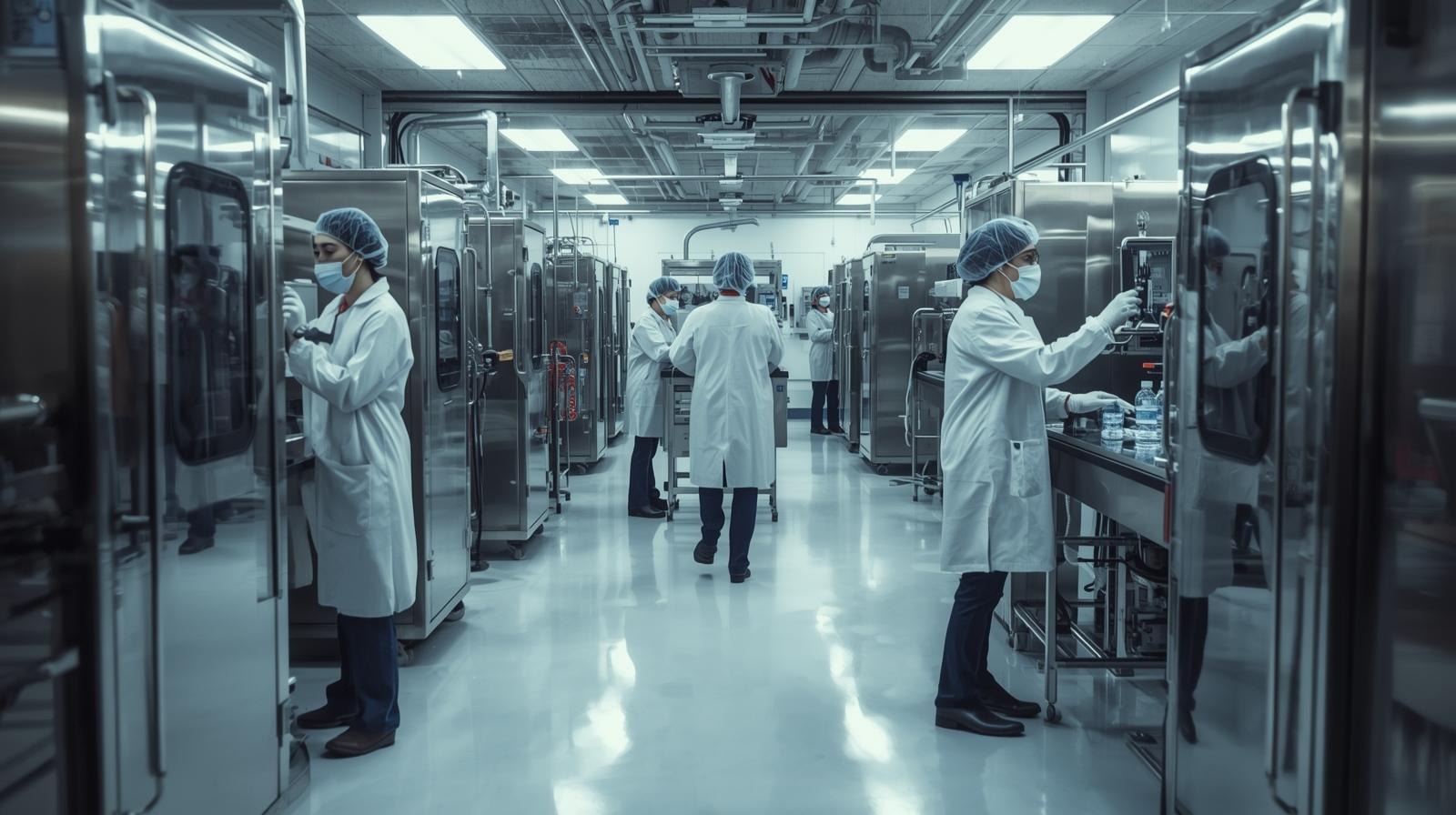
Pharmaceutical and healthcare manufacturing is a highly regulated, capital-intensive industrial activity governed by strict public health laws, rigorous engineering controls, and absolute quality standards. Unlike consumer manufacturing sectors, this industry operates under continuous statutory oversight, where every single batch production, utility configuration, and packaging line is subject to strict regulatory validation. For entrepreneurs and investors, navigating this compliance-first landscape requires a systematic, scientific approach to facility design, technology selection, and quality systems.
Guide Contents
- 1. Industry Overview
- 2. Manufacturing Segments
- 3. Manufacturing Process & Kinetics
- 4. Plant Setup & HVAC Cleanrooms
- 5. Licenses & Regulatory Approvals
- 6. Investment, Costing & Profitability
- 7. Staffing & Technical Expertise
- 8. Quality Assurance & Validation
- 9. Risks & Challenges
- 10. Opportunities & High-Growth Areas
- 11. Export & Distribution
- 12. Frequently Asked Questions (FAQ)
1. Overview of the Global and Indian Pharmaceutical Manufacturing Industry
The global pharmaceutical manufacturing sector is one of the most critical components of the modern healthcare ecosystem, responsible for the chemical synthesis and physical formulation of life-saving therapeutics. Because of the direct impact on human health, the market is defined by high barriers to entry, complex global supply chains, and extensive regulatory scrutiny. For institutional investors and entrepreneurs, entering this sector offers robust, recession-proof revenue streams, but demands continuous alignment with evolving regulatory expectations.
In India, pharmaceutical manufacturing is regulated under the Drugs and Cosmetics Act, 1940 and the Drugs and Cosmetics Rules, 1945, overseen by the Central Drugs Standard Control Organization (CDSCO) alongside State Licensing Authorities. India holds a preeminent position globally, supplying over 20% of global generic medicines by volume and serving as the primary hub for WHO-prequalified vaccine production. The scale of operation ranges from small-scale domestic formulation plants to massive, FDA-approved active ingredient and sterile injectable complexes.
The broader pharmaceutical and healthcare manufacturing landscape also extends into medical devices, diagnostic systems, hospital consumables, and health supplements. Driven by public health initiatives, expanding insurance penetration, and a global shift toward supply chain diversification, the sector offers significant growth. However, long-term commercial viability is determined by a facility's ability to maintain high compliance standards and efficient cost structures.
- Global Hub: India is the world's largest provider of generic medicines, meeting significant global demand.
- Regulatory Scope: All manufacturing must comply with CDSCO rules and BIS standards nationally.
- Diverse Categories: Encompasses Active Pharmaceutical Ingredients (APIs), oral solids, liquids, sterile products, and medical instruments.
- Export Competitiveness: Local production capacity is bolstered by highly competitive operational cost structures.
- Compliance Priority: Regulatory compliance and validation determine long-term facility survival.
2. Major Segments in Pharmaceutical & Healthcare Manufacturing
The pharmaceutical manufacturing industry is structured into distinct segments based on the chemical nature of the product, the dosage form, and the regulatory pathway required. Each segment demands unique processing equipment, raw materials, facility footprints, and environmental controls. Understanding these divisions helps investors allocate capital efficiently based on target risk profiles and financial returns.
2.1 API (Active Pharmaceutical Ingredient) Manufacturing
API manufacturing involves the chemical synthesis, purification, or fermentation-based production of the active therapeutic compounds (e.g., paracetamol, metformin, atorvastatin). This segment is characterized by heavy industrial engineering, utilizing glass-lined reactor vessels, high-efficiency solvent recovery systems, and advanced crystallization units. Because of chemical waste generation, API plants require sophisticated effluent treatment plants (ETP) and strict environmental compliance.
- Organic chemical synthesis, extraction, or biological fermentation processes.
- High solvent use and recovery systems requiring explosion-proof facility zoning.
- Rigorous effluent management and environmental clearances.
- Heavy capital expenditure with long plant commissioning lead times.
2.2 Finished Dosage Form Manufacturing
Finished dosage formulation converts bulk APIs and inactive excipients (such as microcrystalline cellulose, lactose, magnesium stearate, and PVP) into patient-ready therapeutic units. This includes:
- Oral Solids (Tablets & Capsules): Involving dry blending, wet granulation, high-speed tableting, film coating, and blister packaging — see our guide to excipient selection for oral solid dosage forms.
- Oral Liquids (Syrups & Suspensions): Utilizing stainless steel mixing vessels, filtration equipment, and automated bottle filling lines.
- Sterile Injectables & Infusions: The most sensitive segment, requiring absolute sterility, ISO 5 aseptic filling lines, and terminal autoclaving, covered in depth in our guide to parenteral formulation development. Many heat-sensitive biologics and vaccines instead rely on freeze-drying, detailed in our guide to pharmaceutical lyophilization fundamentals.
- Semi-Solids (Creams, Ointments, & Gels): Requiring high-shear emulsification vessels to prepare stable topical formulations — see our guide on starting a topical gel and ointment manufacturing business.
2.3 Medical Devices and Diagnostics
Medical device manufacturing covers a broad spectrum of products, from simple sterile consumables (syringes, catheters) to highly complex diagnostic instruments and implantable devices (stents, pacemakers). Facility designs must comply with ISO 13485 (Medical Devices Quality Management Systems), utilizing precise mechanical assembly and cleanrooms.
2.4 Nutraceuticals and Supplements
Nutraceuticals (vitamins, minerals, botanical extracts) operate in the boundary zone between food and pharmaceuticals. While their regulatory licensing pathway is less intensive than pharmaceutical drugs, modern facilities adopt pharmaceutical-grade GMP standards to prevent cross-contamination and ensure accurate active dosing, as covered in our guide to starting a herbal supplement manufacturing business.
2.5 Herbal and Ayurvedic Products
Ayurvedic and herbal manufacturing focuses on the extraction, concentration, and stabilization of natural botanical active ingredients. Process machinery includes solid-liquid extractors, vacuum concentrators, and spray dryers, which convert raw plant materials into standardized powders, tablets, and liquid formulations.
3. Pharmaceutical Manufacturing Process – Step-by-Step Technical Flow
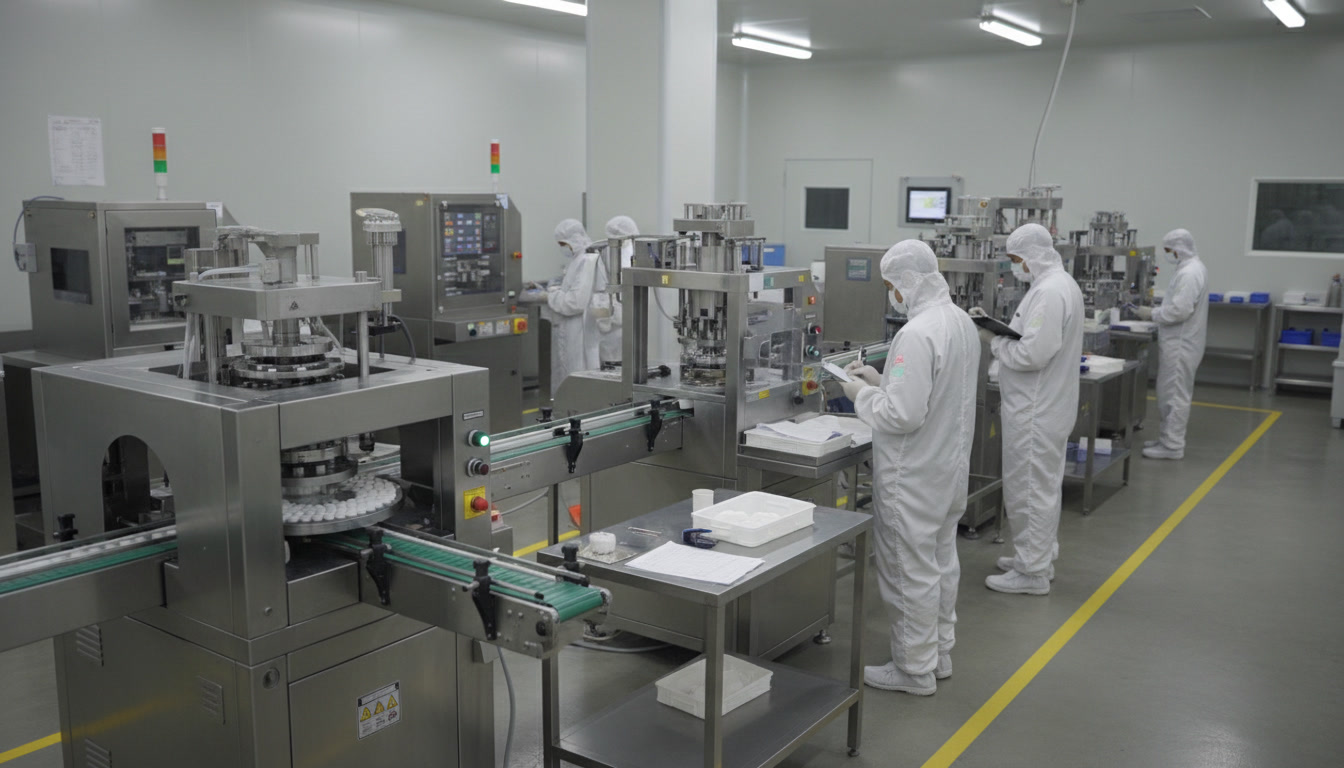
A pharmaceutical manufacturing process is a strictly validated sequence of physical and chemical operations where every parameter is monitored. Formulations cannot be altered without formal regulatory approval. The objective is to achieve absolute batch-to-batch uniformity, ensuring that active ingredients release in a predictable, safe manner in the human body.
3.1 Dissolution Kinetics and the Noyes-Whitney Equation
For solid oral dosages (tablets and capsules), the rate at which the active pharmaceutical ingredient dissolves in gastrointestinal fluids is the primary determinant of bioavailability. This physical process is governed by the Noyes-Whitney Equation:
Where:
- dC / dt is the dissolution rate of the active ingredient.
- D is the diffusion coefficient of the drug molecule in the solvent.
- A is the effective surface area of the drug particles.
- Cs is the saturation solubility of the drug in the boundary layer.
- C is the concentration of the drug in the bulk dissolution medium at time $t$.
- h is the thickness of the stagnant diffusion boundary layer.
To optimize drug release ($dC/dt$), formulators and process engineers control two key variables:
- Particle Surface Area (A): Decreasing the drug particle size (micronization or nano-sizing) significantly increases the effective surface area ($A$), accelerating dissolution of poorly soluble molecules.
- Boundary Layer thickness (h): Controlled in the manufacturing process through wet granulation, selection of wetting agents (surfactants like Polysorbate 80), and specific tablet disintegration agents that accelerate the breakdown of the physical tablet matrix in-vivo.
Some formulations deliberately delay dissolution rather than accelerate it — our guide to enteric-coated formulations covers how gastric-resistant coatings protect acid-sensitive actives or the stomach lining itself, and modified-release tablet technology extends these dissolution-control principles into matrix and reservoir systems for once-daily dosing.
3.2 Granulation, Tableting, and Batch Control Flow
The standard sequence of finished solid oral formulation comprises:
- Dispensing and Sifting: Raw APIs and excipients are weighed in dedicated dispensing booths under laminar airflow, followed by sifting through specific mesh screens to ensure uniform particle distributions.
- Granulation (Wet or Dry): Wet granulation utilizes high-shear mixer-granulators (Rapid Mixer Granulator - RMG) and fluid bed dryers (FBD) to bind fine powders into free-flowing, cohesive granules.
- Compression & Tooling: The dried granules are compressed into tablets on rotary tablet presses under tons of force, utilizing specialized punch-and-die tooling sets.
- Coating & Blister Packaging: Compressed cores are coated in automated perforated coating pans to protect active molecules from light and moisture, then sealed into PVC/Alu blister packages — see our comparison of film vs sugar tablet coating technology.
4. Pharmaceutical Plant Setup – Infrastructure & HVAC Cleanrooms
Pharmaceutical plant architecture must comply with strict Good Manufacturing Practices (GMP) engineering codes. The facility is designed to serve as a physical barrier against external contaminants, while inner zones manage internal dust generation and cross-contamination. Layout designs must separate raw material storage, processing rooms, packaging zones, and quality control laboratories.
4.1 Cleanroom HVAC and Air Change Rate (ACR)
To maintain strict sterile boundaries, pharmaceutical cleanrooms rely on advanced Heating, Ventilation, and Air Conditioning (HVAC) systems fitted with High-Efficiency Particulate Air (HEPA) filters. The air purity inside a cleanroom is maintained by continuously cycling and filtering room air. The Air Change Rate (ACR) is calculated using the volumetric airflow rate and room volume:
Where:
- ACR is the Air Change Rate per hour.
- Q is the volumetric airflow rate entering the room in Cubic Feet per Minute (CFM).
- V is the total physical volume of the cleanroom in cubic feet ($ft^3$).
Cleanrooms are classified globally according to ISO 14644 standards. Below are the airborne particulate limits governing standard pharmaceutical cleanroom grades:
| Cleanroom Grade | ISO Equivalent | Max Particles/m³ (≥ 0.5 μm) - At Rest | Max Particles/m³ (≥ 0.5 μm) - In Operation | Standard ACR (per hour) |
|---|---|---|---|---|
| Grade A (Sterile Area) | ISO 5 | 3,520 | 3,520 (Aseptic Filling) | Laminar Flow (0.45 m/s) |
| Grade B (Sterile Support) | ISO 5 / 6 | 3,520 | 352,000 | 40 - 60 |
| Grade C (Granulation/Mixing) | ISO 7 | 352,000 | 3,520,000 | 20 - 40 |
| Grade D (Primary Packaging) | ISO 8 | 3,520,000 | Not Defined | 15 - 20 |
4.2 Pure Utilities: Purified Water & WFI
Water is the most critical raw material in pharmaceutical processing. Facilities must operate highly validated Purified Water (PW) and Water for Injection (WFI) systems. WFI systems utilize multi-stage distillation or advanced reverse osmosis with electrodeionization (EDI) and ultrafiltration to ensure that bacterial endotoxin levels are maintained below 0.25 EU/mL. Water must circulate constantly in closed loops at 80°C to prevent biofilm development.
5. Pharmaceutical Manufacturing Licenses & Regulatory Approvals
Pharmaceutical manufacturing operates under strict regulatory oversight globally. Regulatory compliance is critical; non-compliant labeling, unapproved excipients, or validation failures can lead to product recalls, customs seizures, and legal penalties. Understanding the regulatory landscape in target markets is essential for global distribution.
Authoritative Regulatory Databases
For formal compliance filings and current banned ingredient schedules, consult the official portals:
5.1 India CDSCO Licensing
In India, setting up a pharmaceutical manufacturing plant requires obtaining a Drug Manufacturing License from the respective State Licensing Authority. Product approvals must be registered with the CDSCO. Facilities must comply with Schedule M of the Drugs and Cosmetics Rules, which details strict requirements for GMP, layout, equipment, and validation.
5.2 USFDA, EU-GMP, and PIC/S Export Standards
To export generic formulations to regulated markets like the US or EU, facilities must obtain specific approvals:
- USFDA Approval: Requiring a pre-approval inspection (PAI) and compliance with current Good Manufacturing Practices (cGMP) under 21 CFR Part 211.
- EU-GMP: Audited by EU member state national competent authorities, focusing heavily on validation, sterile assurance, and data integrity.
- PIC/S (Pharmaceutical Inspection Co-operation Scheme): Streamlining inspections across member countries globally.
6. Investment, Costing & Profitability Analysis
Setting up a pharmaceutical manufacturing facility requires significant capital expenditure and continuous working capital support. The total investment varies widely with product category, production capacity, and compliance level. Facilities targeting domestic markets require lower initial capital compared to highly automated complexes engineered for export to regulated markets.
Key cost and investment components include:
- Fixed Assets: GMP-compliant industrial land, civil structure (cleanroom partitioning, epoxy flooring), and advanced utilities (HVAC ducting, pure water loop, and process steam boilers).
- Processing Equipment: Jacketed mixing reactors, granulators, tableting presses, sterile liquid fillers, autoclavs, and packaging machinery.
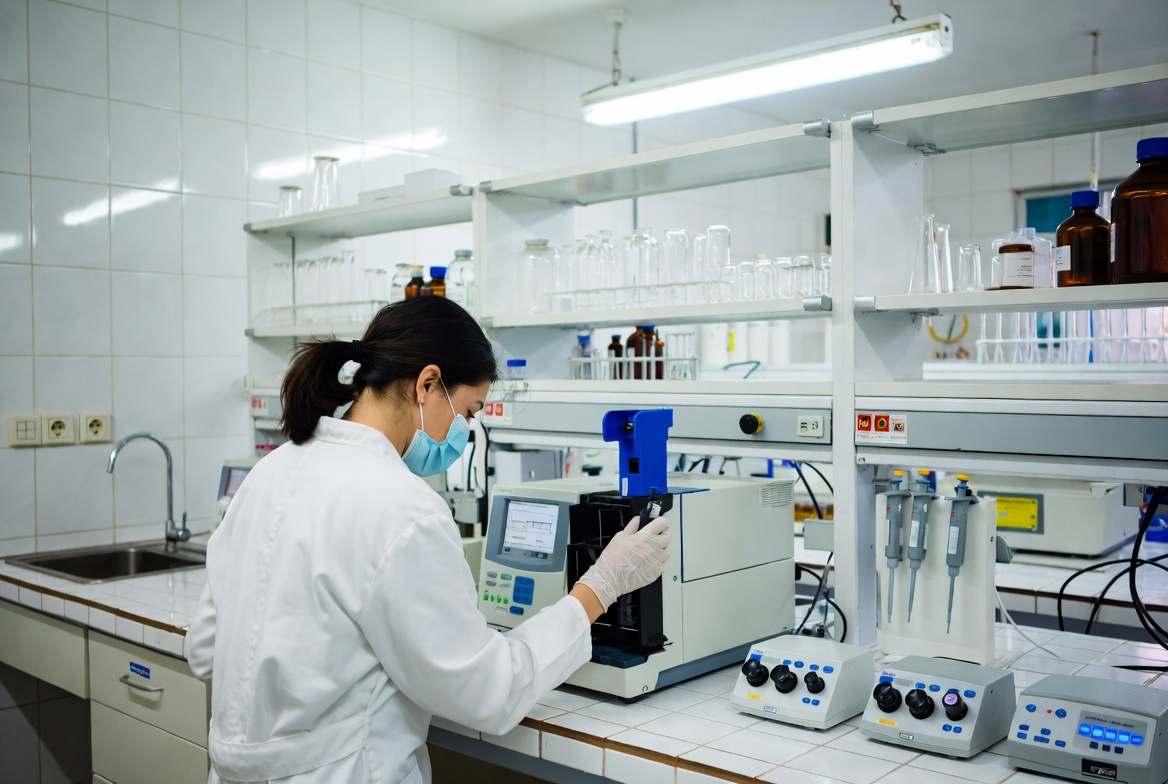
- Quality Control Setup: Analytical instrumentation including High-Performance Liquid Chromatographs (HPLC), Gas Chromatographs (GC), UV-Vis Spectrophotometers, and microbiological testing setups.
- Working Capital: Financing raw materials (APIs, active chemicals), excipients, primary and secondary packaging materials, utilities, and wages throughout prolonged regulatory lead times.
7. Talent, Staffing & Technical Expertise Requirements
Unlike consumer sectors, pharmaceutical manufacturing requires highly trained, qualified, and certified technical professionals to manage operations. Good manufacturing practices dictate that key production and quality positions must be held by individuals possessing specific academic degrees and years of hands-on industrial experience.
Critical staffing divisions include:
- Production Supervisors: Qualified pharmacists or chemical engineers who manage the daily execution of batch manufacturing records (BMR).
- Quality Control Chemists: Analytical scientists who perform chemical assays, dissolution studies, and microbiological testing on raw materials and finished products.
- Quality Assurance Officers: Regulatory specialists who manage the documentation loop, CAPA tracking, deviation management, and final batch releases.
- Engineering Personnel: Facility engineers who perform cleanroom calibrations, maintain HVAC pressure differentials, and manage sterile pure utility loops.
8. Quality Assurance, Validation & Compliance Systems
In a modern pharmaceutical facility, the Quality Assurance (QA) department operates as an independent authority that oversees all processing steps. A product cannot be released for commercial distribution without formal batch record review, identity verification, and chemical analysis. Establishing robust quality management systems (QMS) is critical to prevent regulatory non-compliance, import alerts, or product recalls.
8.1 Process Validation and the DQ/IQ/OQ/PQ Protocol
Every piece of equipment, cleanroom, and utility loop must undergo a systematic validation sequence before active production begins:
- Design Qualification (DQ): Verifies that the equipment is designed in compliance with GMP guidelines and user requirements.
- Installation Qualification (IQ): Confirms that the equipment is installed correctly, with all connections, piping, and wiring properly documented.
- Operational Qualification (OQ): Tests the equipment's operating limits, verifying that alarms, speeds, and controls function within defined parameters.
- Performance Qualification (PQ): Verifies that the system performs consistently under load over extended production trials, producing compliant batches.
8.2 Batch Documentation and Traceability
Every single production batch must be accompanied by a detailed Batch Manufacturing Record (BMR) and Batch Packaging Record (BPR). These documents record every raw material lot number, exact weight dispensed, processing times, temperatures, and operator signatures, ensuring absolute traceability.
9. Risks, Challenges & Failure Points in Pharma Manufacturing
Pharmaceutical manufacturing is a high-reward business but presents significant technical and regulatory risks. Operating a facility requires continuous vigilance, since quality failures can quickly lead to severe financial and legal liabilities. Investors must carefully assess these risks and implement strong operational controls at the outset of any project.
Common failure points include:
- Regulatory Non-Compliance: Unfavorable audit results (such as FDA Form 483 warnings or Import Alerts) can halt production or bar exports, directly threatening the business's survival.
- Data Integrity Failures: Any manipulation, unauthorized deletion, or incomplete recording of quality control raw data can lead to immediate regulatory rejection and loss of licenses.
- Product Recalls: Contamination, sub-potency, or packaging mix-ups can trigger costly voluntary or mandatory product recalls, damaging the brand's reputation.
- Supply Chain Dependency: Heavy reliance on import of raw APIs or key chemical intermediates can leave the business vulnerable to global pricing shocks or shipping delays.
10. Opportunities & High-Growth Pharmaceutical Product Categories
Despite high barriers and operational challenges, the pharmaceutical sector offers highly lucrative avenues for innovative entrepreneurs. Successful market entry relies on targeting high-growth product niches, leveraging professional R&D teams, and adopting modern manufacturing technologies.
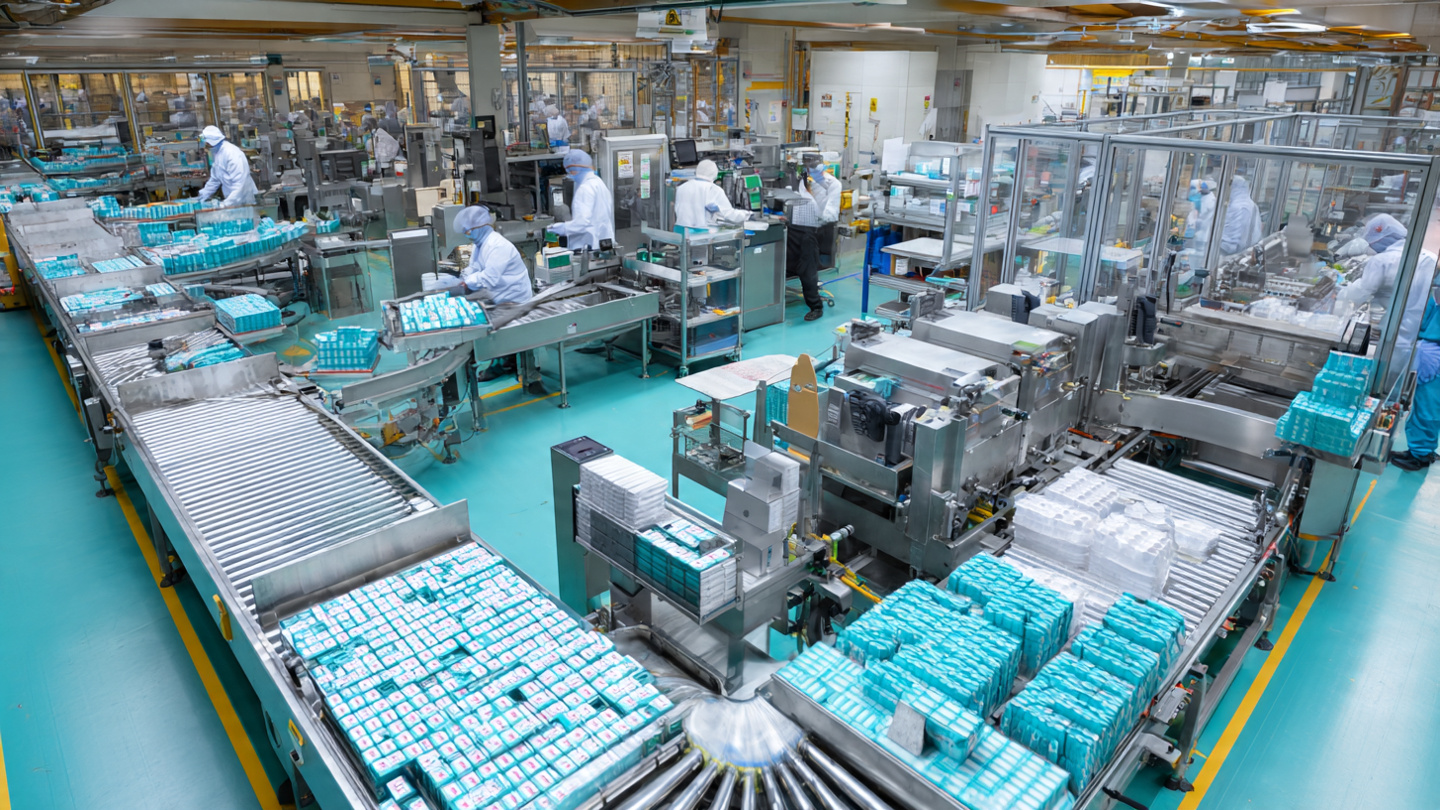
High-potential areas include:
- Oncology & Specialty Formulations: High-value cancer therapeutics requiring specialized containment and low-volume, high-margin processing.
- Sterile Injectables & Ophthalmic Products: Demand for sterile products remains robust, driven by global market shortages and specialized clinical applications.
- Contract Development & Manufacturing Services (CDMO): Providing R&D, scale-up, and contract production services to global generic and innovator brands.
- Complex Generics: Developing value-added formulations, such as extended-release tablets or liposomal injections, which face less competition due to high technical barriers.
11. Export, Marketing & Distribution Strategy
Commercial success in pharmaceutical manufacturing requires a robust marketing and distribution model. Unlike consumer products, distribution is highly structured, requiring specific drug wholesale licenses and controlled storage temperatures.
Primary distribution models include:
- Wholesale & Stockist Networks: Distributing finished goods through a network of regional clearing and forwarding (C&F) agents, super-stockists, and local retail pharmacies.
- Institutional Sales & Government Tenders: Bidding for large-volume supply contracts with government health ministries, defense forces, and public hospital systems.
- International Export B2B Channels: Partnering with regional distributors in export markets (such as Southeast Asia, Africa, or Latin America) to manage local product registrations and marketing.
Frequently Asked Questions (FAQ)
1. How much capital is required to start pharmaceutical manufacturing?
Initial capital requirements vary based on target dosage forms, production capacity, automation level, and regulatory targets. A simple non-sterile solid oral plant for domestic markets requires significantly less capital than an export-oriented sterile injectable facility.
2. How long does licensing take in India?
The entire process—including facility design, civil work, utility commissioning, inspection, and final State Drug Control approval—typically takes 12 to 18 months, depending on project complexity and documentation accuracy.
3. Is pharmaceutical manufacturing profitable in India?
Yes. With strong domestic generic consumption and extensive export networks to semi-regulated and regulated markets, pharmaceutical plants can achieve excellent operational margins when managing product portfolios efficiently.
4. Can a non-pharmacist own a pharmaceutical manufacturing company?
Yes, anyone can invest in or own a pharmaceutical company. However, the factory must employ statutory qualified technical staff—such as approved manufacturing chemists and analytical chemists—to run daily operations.
5. Which pharmaceutical products have strong export demand?
Generic oral solids (tablets/capsules), life-saving injectables, oncology therapeutics, dry-powder inhalers, and standardized diagnostic test kits show strong and consistent demand across international markets.
6. What is WHO-GMP prequalification and why does it matter for exports?
WHO prequalification is a World Health Organization assessment programme that evaluates whether a manufacturing facility and its products meet WHO quality, safety, and efficacy standards. It matters for exporters because United Nations agencies, Gavi, the Global Fund, and many national procurement bodies in Africa, Asia, and Latin America restrict tenders to WHO-prequalified suppliers, particularly for vaccines, antimalarials, and antiretrovirals. Facilities pursuing WHO prequalification generally already hold WHO-GMP or equivalent certification, since the assessment builds directly on GMP compliance history and product dossier quality.
Conclusion
Pharmaceutical and healthcare manufacturing is a highly precise industrial business that operates under strict scientific standards and continuous regulatory oversight. Success in this field requires thorough design of facility infrastructure, advanced HVAC cleanrooms (ISO classifications), robust pure water systems, and complete compliance with validation protocols (DQ/IQ/OQ/PQ).
The future of healthcare manufacturing belongs to entrepreneurs and investors who prioritize quality assurance, data integrity, and modern engineering practices from day one.
Need Technical Formulation or Plant Design Services?
Discuss your pharmaceutical manufacturing or formulation project with Global Formulation. Get professional GMP plant layouts, utility validation protocols, and product registration support from Specialist Consultant Absar Khan.
Email: consulting@globalformulation.com
Phone: +91 9819548320 +91 8169102990
About the Specialist
Absar Khan is the principal consultant and chemical formulation architect at Global Formulation. He possesses cross-disciplinary engineering expertise spanning pharmaceutical manufacturing, sterile injectables, cosmetics and personal care, aerosols, and green chemical plant setups. Absar leads scientific and engineering advisory teams supporting manufacturers globally in technology selection, GMP layouts, validation frameworks, and regulatory strategies.
LinkedIn Portfolio: Connect with Absar Khan on LinkedIn